
To tell if your frizz is caused by humidity or damage, check your hair’s appearance and texture. Humidity makes your hair fluffy and soft, especially in humid weather, while damage creates rough, brittle strands that resist smoothing. damaged hair often shows split ends, dullness, or breakage. Understanding these signs helps identify the cause so you can choose the right treatment—continue exploring to discover how to repair and prevent frizz effectively.
Key Takeaways
- Humidity-induced frizz lifts hair cuticles, making hair soft and manageable, while damage causes rough, brittle strands resistant to smoothing.
- Sudden frizz after humid days suggests humidity as the cause; persistent roughness and dullness point to damage.
- Damage weakens the cuticle, leading to uneven reflection and frizz, whereas humidity temporarily swells and lifts the cuticle.
- Signs of damage include split ends, dullness, and excessive tangling; humidity-related frizz is typically soft and easy to style.
- Proper assessment involves checking for roughness, brittleness, and response to humidity to distinguish between environmental and damage causes.
How Can You Tell If Frizz Is From Humidity or Damage?
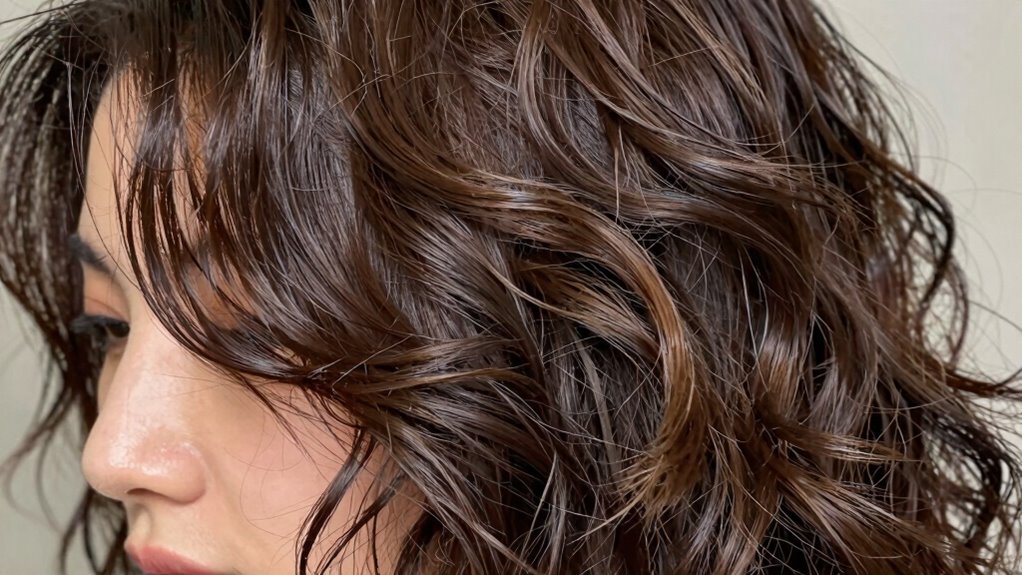
Understanding whether your frizz comes from humidity or damage is key to choosing the right treatment. One way to tell is by evaluating your hair’s porosity—how well it absorbs and retains moisture. High-porosity hair tends to frizz more in humid conditions because it struggles to hold moisture evenly. Damage, on the other hand, often results in rough, brittle strands that frizz regardless of humidity levels. Additionally, scalp health plays a role; a healthy scalp supports strong, resilient hair less prone to damage, while an unhealthy scalp can contribute to frizz and breakage. If your hair feels soft and manageable in humid weather, it’s likely humidity-related. Conversely, persistent frizz and roughness suggest damage, especially if your scalp shows signs of irritation or dryness. Recognizing the signs of hair porosity can help you better understand your hair’s response to environmental factors and damage. Proper hair care routines that focus on balancing moisture and minimizing damage can further prevent unnecessary frizz and breakage, ensuring healthier hair overall. Understanding hair health and its impact on frizz can further guide your hair care routine.
Signs Your Hair Is Frizzing Due to Humidity

When humidity levels rise, your hair often reacts by frizzing more than usual, especially if it’s naturally prone to moisture absorption. Weather effects like high humidity cause your hair cuticles to lift, leading to that uncontrollable frizz. If your hair suddenly becomes fluffy and difficult to manage after humid days, it’s a clear sign humidity is the culprit. You might also notice that product buildup makes your hair more susceptible to frizz in these conditions, as excess residue traps moisture and prevents smoothness. Additionally, if your hair feels dry or brittle despite the humidity, it indicates your hair is absorbing moisture from the air rather than retaining it properly. These signs help you distinguish humidity-induced frizz from other causes. Understanding Free Floating can also help you adapt your hair care routine to better manage humidity effects. Recognizing the effect of weather conditions on hair health enables more effective preventative measures against frizz. For example, using humidity interaction resistant styling products can help protect your hair from environmental moisture. Knowing how humidity interacts with hair structure can guide you in choosing the right styling products to combat frizz effectively. Being aware of hair porosity can further assist in customizing your hair care to minimize frizz caused by humidity.
How to Recognize Damage-Related Frizz
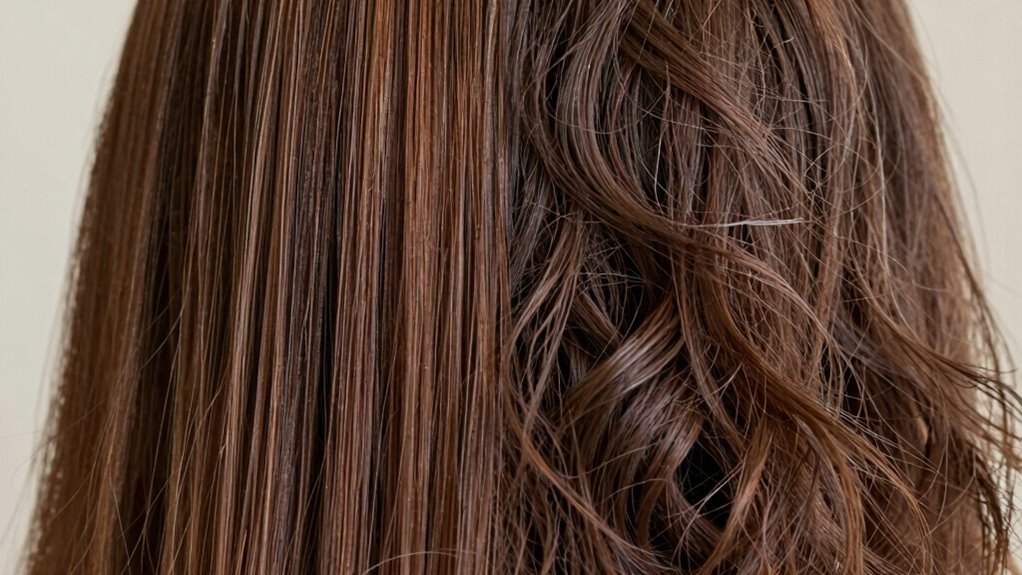
Damage-related frizz often shows up as rough, unruly strands that resist smoothing, even with styling products. If your hair feels consistently coarse or brittle, it might be a sign of damage. High hair porosity can cause your strands to absorb moisture quickly but also lose it just as fast, leading to frizz that’s hard to tame. Additionally, product buildup can weigh down your hair and make it appear dull and frizzy, especially if excess products clog the cuticle. To recognize damage-related frizz, check for split ends, excessive tangling, or a lack of shine. If your hair seems resistant to smoothing despite good products, damage is likely the culprit, not just humidity. Addressing damage often involves clarifying shampoos and deep conditioning treatments. Understanding your hair’s porosity can help in selecting the appropriate care to prevent further damage, which may include choosing energy-efficient styling tools and products that minimize heat damage and preserve hair health.
How Humidity Damages Your Hair Cuticle and Causes Frizz
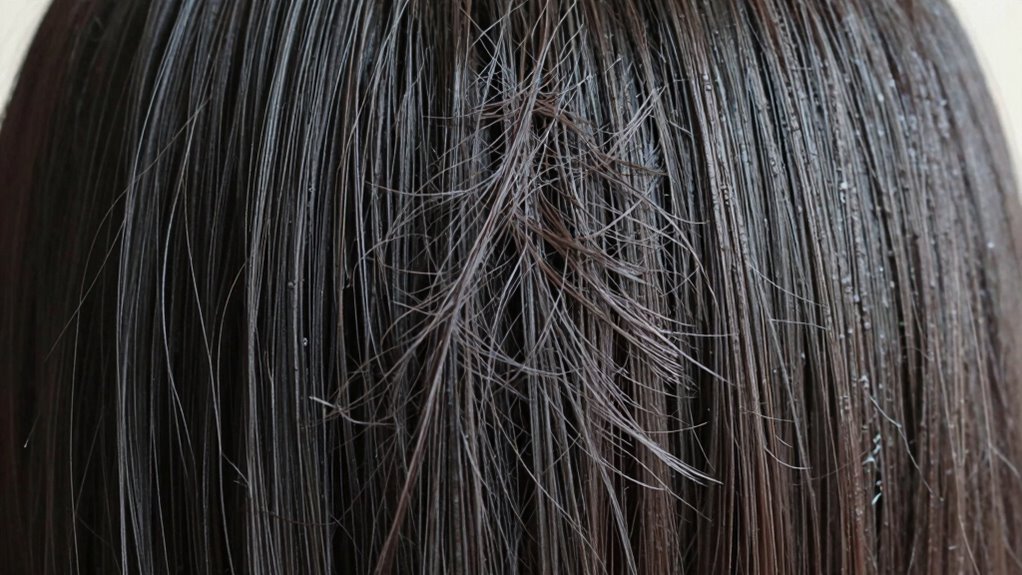
Humidity introduces moisture into the air, which can directly impact your hair’s cuticle—the outermost layer that protects your strands. When humidity rises, excess moisture penetrates the hair cuticle, causing it to swell and lift. This disrupts the natural moisture balance of your hair, making it less smooth and more prone to frizz. As the cuticle lifts, your hair loses its sleek, shiny appearance and becomes more susceptible to tangles. Over time, repeated exposure to humidity can weaken the cuticle, leading to persistent frizz and dullness. Additionally, understanding hair cuticle health options for hair care products can help you choose the best treatments to protect your hair from humidity damage. To keep your hair looking its best, it’s essential to maintain a healthy moisture balance and implement protective strategies that shield your cuticle from excessive humidity. Proper hydration and the use of protective styling can also minimize humidity-related damage and preserve your hair’s natural shine. Being aware of how environmental factors like humidity affect your hair can guide you in selecting the most effective hair protection methods to prevent damage. Developing a comprehensive hair care routine that includes understanding humidity effects can further aid in preventing damage.
How Hair Damage Contributes to Frizz and How to Spot It
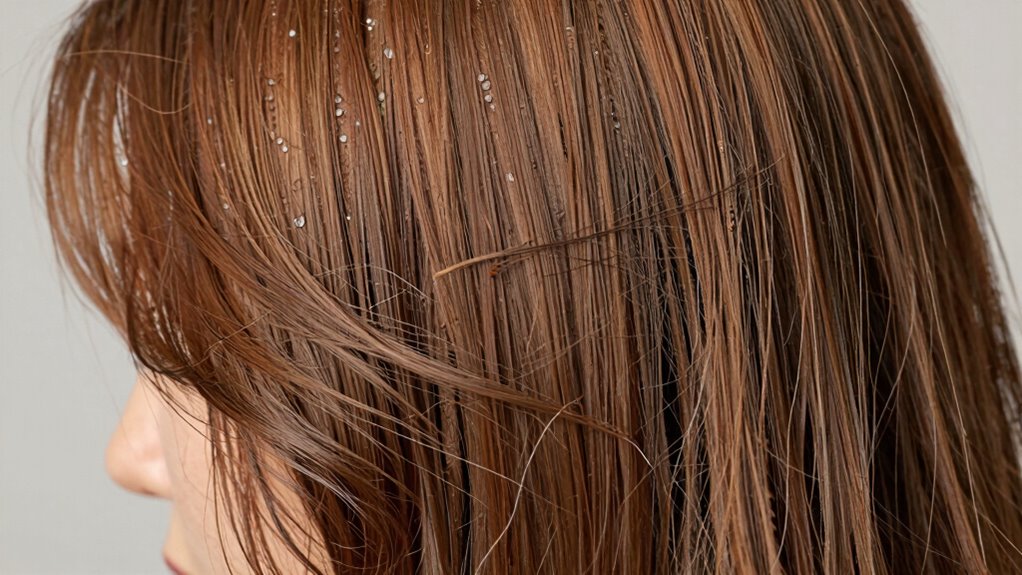
When your hair shows visible damage like dullness or split ends, it’s a clear sign that frizz is likely to worsen. Changes in texture, such as roughness or stiffness, also indicate compromised strands. Keep an eye out for breakage and split ends, which signal weakened hair that’s prone to frizz and further damage. Paying attention to hair damage signs can help prevent further issues and maintain healthy hair. Recognizing early damage indicators allows for timely interventions that can restore hair strength and reduce frizz. Additionally, understanding the role of humidity and damage in hair health can help you better manage frizz in different weather conditions. Being aware of hair care practices that support repair can further improve hair resilience against environmental stressors. Incorporating targeted hair repair techniques can accelerate recovery from damage and improve overall hair texture.
Visible Damage Indicators
Visible damage signs are key indicators that your hair may be contributing to frizz. If your hair looks dull, brittle, or has split ends, these are clear signs of damage. Damaged hair often struggles to hold moisture, leading to frizz and flyaways. Check the product ingredients in your hair care; harsh chemicals like sulfates and alcohol can weaken strands. Also, consider how you style your hair—frequent use of high heat from styling tools can cause visible damage. Look for signs like rough texture, excessive breakage, or uneven curls. These indicators suggest your hair’s cuticles are compromised, making it harder to manage and more prone to frizz. Identifying these damage signs helps you decide whether to repair or protect your hair better.
Changes in Texture
Damaged hair often undergoes changes in texture that make frizz more noticeable and difficult to control. You might notice your hair feels rough, uneven, or more brittle than before. These texture changes occur because damage weakens the hair’s cuticle, causing it to lift or become irregular. As a result, the hair’s surface no longer reflects light evenly, leading to a frizzy appearance. Humidity effects can worsen this, as moisture penetrates the damaged cuticle, causing the hair to swell and lose its smoothness. When your hair’s texture shifts from sleek or soft to coarse and unruly, it’s a clear sign damage is compromising its integrity. Recognizing these texture changes helps you understand that your hair’s frizz isn’t just humidity—damage plays a big role too.
Breakage and Split Ends
Breakage and split ends are common signs that your hair’s damage is worsening and contributing to frizz. When your hair experiences frequent hair breakage, strands become weak and prone to snapping, creating uneven lengths and a rough texture. Split ends, where the hair shaft splits into two or more strands, prevent smoothness and make your hair look frizzy even when it’s healthy. You might notice your hair feels brittle, dull, or difficult to manage, especially after styling or washing. These issues occur when your hair’s cuticle is damaged, allowing moisture to escape and leading to further breakage. Regularly trimming split ends and addressing the root causes of hair damage can help reduce breakage and tame frizz, restoring your hair’s natural smoothness.
Easy Ways to Prevent Humidity-Induced Frizz
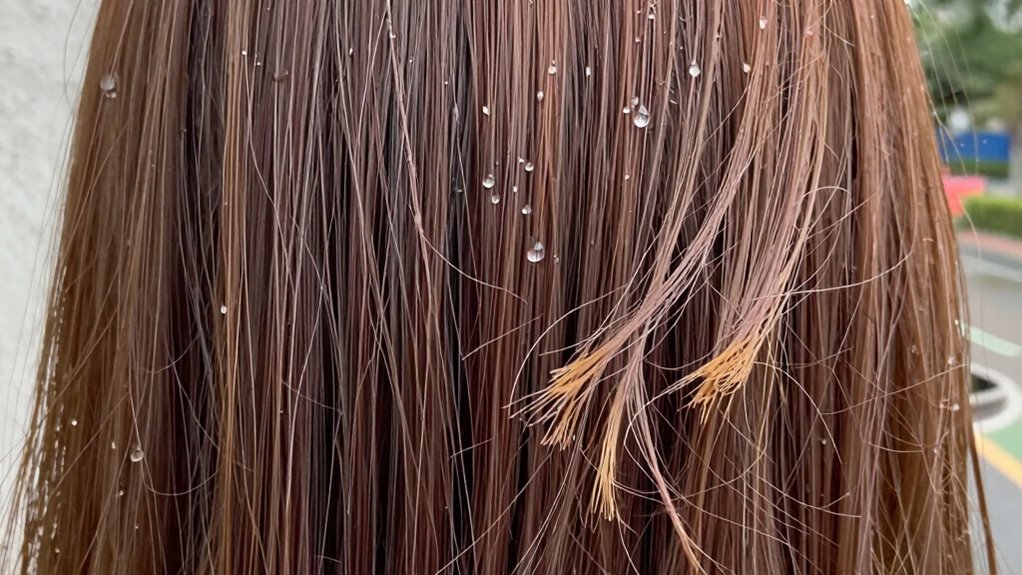
Humidity can quickly turn smooth, sleek hair into a frizzy mess, but there are simple strategies to keep it in check. Start with humidity control by using anti-humidity sprays or serums that create a barrier against moisture. When styling, opt for products designed to lock in moisture and smooth hair strands. Avoid over-washing, which strips natural oils that protect against humidity, and try to towel-dry gently instead of rubbing. Using a diffuser attachment on low heat helps maintain your hairstyle without exposing it to excess humidity. Additionally, consider wearing a silk or satin scarf or pillowcase to reduce friction and keep your style intact overnight. With these styling tips, you can better manage humidity and keep frizz at bay.
Best Treatments to Repair Damage and Reduce Frizz
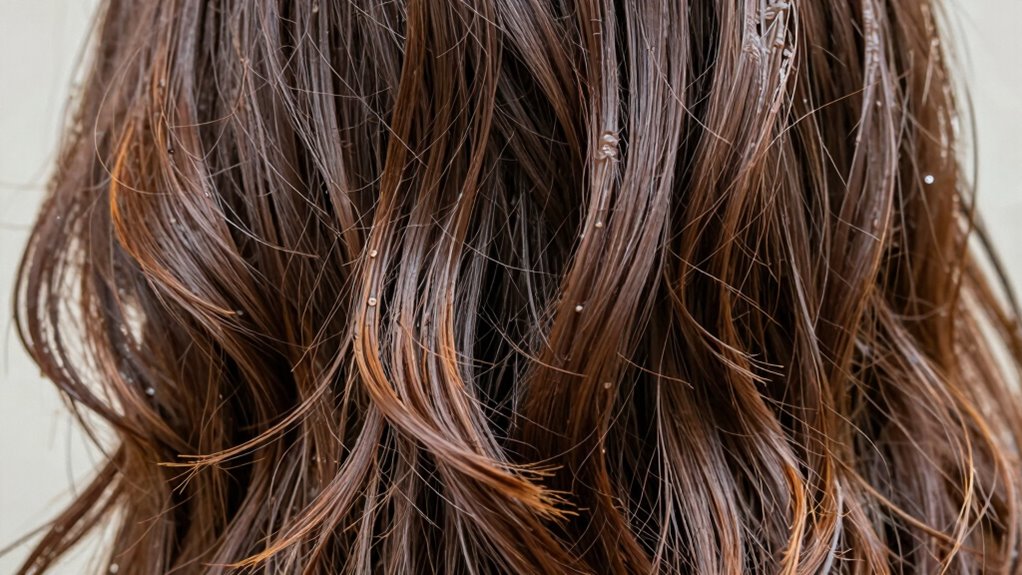
To effectively repair damage and reduce frizz, choosing the right treatments is essential. Your hair’s porosity plays a key role in determining the best approach. If your hair is highly porous, it absorbs moisture quickly but struggles to retain it, leading to frizz and damage. Low porosity hair resists moisture, causing buildup and dullness. Protein treatments are highly effective for all porosity levels because they strengthen hair strands by replenishing lost keratin, making your hair more resilient and less prone to frizz. Regular use of deep conditioning masks and repairing serums can also help restore moisture balance. Understanding your hair’s porosity and incorporating targeted protein treatments can significantly improve hair health, especially when combined with appropriate hair care routines.
When Should You See a Professional About Frizz?
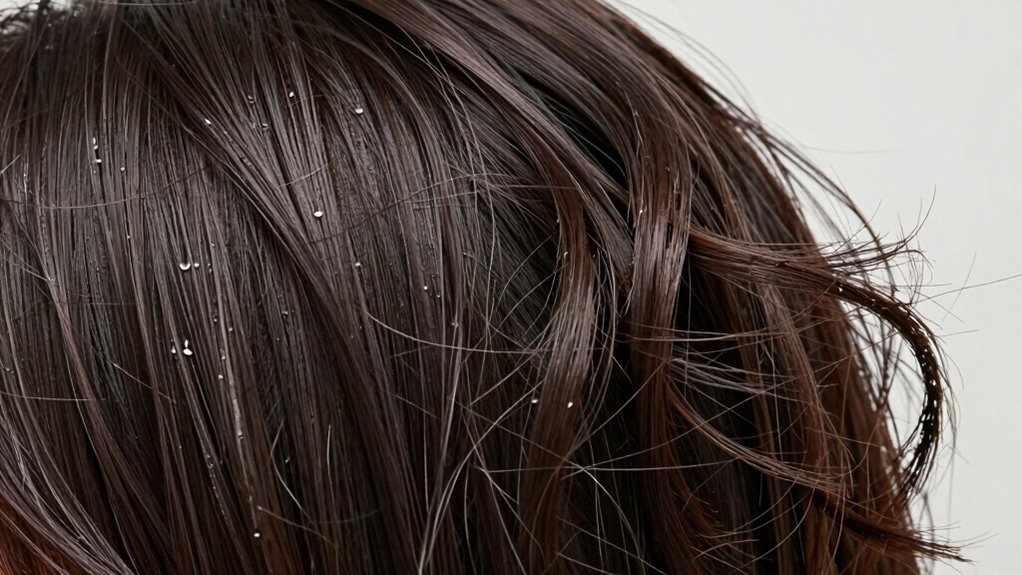
If your frizz persists after styling or worsens despite your efforts, it’s time to see a professional. Severe hair breakage or a sudden change in texture are clear signs that something more serious is happening. Don’t wait—consult a specialist to protect your hair’s health.
Persistent Frizz After Styling
Persistent frizz after styling can be frustrating, especially when your usual methods no longer seem effective. If you notice your hair remains frizzy despite proper techniques, it might be time to contemplate underlying factors like hair porosity and scalp health. High-porosity hair tends to absorb moisture unevenly, leading to persistent frizz, while low-porosity hair can trap products, causing buildup. Additionally, poor scalp health can affect hair’s moisture balance, making it harder for styling products to work effectively. If you’ve tried adjusting your routine without success or notice scalp issues like itching or flakiness, seeing a professional is wise. They can assess your hair’s condition, identify underlying problems, and recommend targeted treatments to restore your hair’s moisture and reduce frizz.
Severe Hair Breakage Observed
Severe hair breakage is a clear sign that you should consult a professional about your frizz issues. If your hair is breaking off in large sections or feels weak despite regular maintenance, it could be linked to your hair porosity or scalp health. High porosity hair absorbs moisture quickly but struggles to retain it, leading to fragile strands prone to breaking. Additionally, poor scalp health—caused by buildup, dryness, or irritation—can weaken hair anchors, increasing breakage risks. When you notice significant hair loss or breakage beyond normal shedding, don’t ignore it. A specialist can assess your scalp condition and hair porosity, helping you identify underlying damage and recommend targeted treatments to restore strength and reduce frizz.
Sudden Hair Texture Change
A sudden change in your hair’s texture can be alarming and may signal underlying issues that require professional attention. If your hair feels drastically different—coarser, limp, or unusually frizzy—you should consider consulting a stylist. It might be a sign that your hair product selection isn’t suited for your current needs or that styling techniques are causing damage. You could also be experiencing scalp or health issues affecting texture. Pay attention to these signs:
- Unexpected brittleness or softness
- Persistent frizz despite regular care
- Changes after using new products
- Difficulty managing your usual styling routine
- Sudden loss of shine or elasticity
Seeing a professional helps determine whether your texture change stems from damage, health, or product reactions, guiding appropriate treatment and styling advice.
Frequently Asked Questions
Can Hair Products Influence Whether Frizz Is Caused by Humidity or Damage?
Yes, hair products can influence whether frizz is caused by humidity or damage. Product formulation and ingredient effects play a role in how your hair responds; for example, anti-humidity products with sealing ingredients help combat humidity frizz, while nourishing formulas with repair ingredients can reduce damage-related frizz. Choosing the right products based on their formulation helps you manage your frizz effectively, regardless of the cause.
Are Certain Hair Types More Prone to Humidity-Induced Versus Damage-Related Frizz?
Do you notice your curly hair becomes frizzy in humidity, while fine hair seems more damaged? If so, your hair type influences whether humidity or damage causes your frizz. Curly hair, with its natural texture, tends to be more prone to humidity-induced frizz, while fine hair is more sensitive to damage, leading to frizz from breakage. Understanding your hair type helps you choose the right products and care routines.
How Does Hair Porosity Affect the Way Humidity or Damage Causes Frizz?
Your hair porosity considerably affects how humidity or damage causes frizz. High porosity hair absorbs moisture quickly, making it prone to humidity-induced frizz, but it also shows damage more visibly, aiding in damage differentiation. Low porosity hair resists moisture, so it’s less affected by humidity but can become damaged more subtly. Understanding porosity effects helps you identify whether frizz stems from humidity or damage, guiding better hair care decisions.
Can Diet or Hydration Levels Impact the Likelihood of Frizz From Humidity or Damage?
Imagine you’re a knight in shining armor—your diet and hydration are your shield against frizz. Proper nutrition impacts your hair’s strength, reducing damage, while hydration effects help lock in moisture, fighting humidity-induced frizz. Staying well-hydrated and eating nutrient-rich foods can make your hair more resilient, less prone to frizz from humidity or damage. So, drink water and eat well to keep your hair smooth and strong.
What Role Do Environmental Pollutants Play in Worsening Damage-Related Frizz?
Environmental pollutants worsen damage-related frizz by increasing pollutant accumulation on your hair. These pollutants, from environmental contamination, can weaken your hair cuticles and cause dryness, making frizz more noticeable. When pollutants settle on your hair, they trap moisture and dirt, amplifying damage and frizz. To combat this, wash your hair regularly and use protective products to minimize pollutant buildup, keeping your hair smoother and healthier.
Conclusion
By understanding whether your frizz is a playful dance with humidity or a quiet whisper of damage, you can better nurture your hair’s natural beauty. Think of your hair as a delicate garden—tenderly tending to its needs keeps it lush and vibrant. With a little care and attention, you’ll find your locks flowing freely, like a gentle breeze on a warm day, instead of battling the unruly storm within.