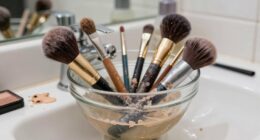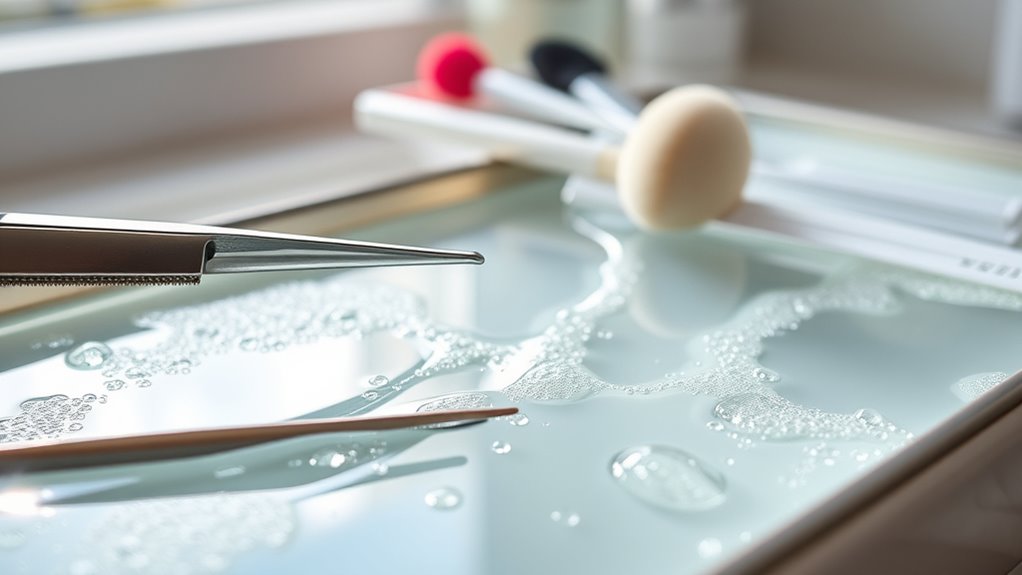
To properly clean and sanitize your beauty tools, rinse them immediately after use with warm water and gentle soap. Disinfect by soaking in a solution like 70% isopropyl alcohol or a specialized sanitizer, following the manufacturer’s instructions. Dry tools thoroughly on a clean towel to prevent bacterial growth, and store them in a dry, dust-free container. Regular maintenance guarantees safety and hygiene—keep going to discover more tips for effective tool care.
Key Takeaways
- Clean tools immediately after use with warm water and gentle soap or brush cleaner.
- Disinfect tools using 70% isopropyl alcohol or specialized sanitizers, following manufacturer instructions.
- Thoroughly dry tools with a clean towel or air-dry in a dust-free environment to prevent bacterial growth.
- Store tools in a clean, dry container away from moisture and dust to maintain hygiene.
- Regularly inspect for damage and sterilize metal tools using boiling water or sterilizers to prevent cross-contamination.
Keeping your beauty tools clean and sanitized is essential for maintaining healthy skin and preventing infections. When you think about best practices, it’s important to remember that regular cleaning isn’t just about appearance; it’s about safeguarding your skin from bacteria, fungi, and other germs that can cause breakouts or infections. Many people overlook simple steps, leading to common mistakes that compromise safety. To avoid these pitfalls, you need to develop a routine that’s thorough and consistent.
Maintaining clean, sanitized beauty tools is vital for healthy skin and infection prevention.
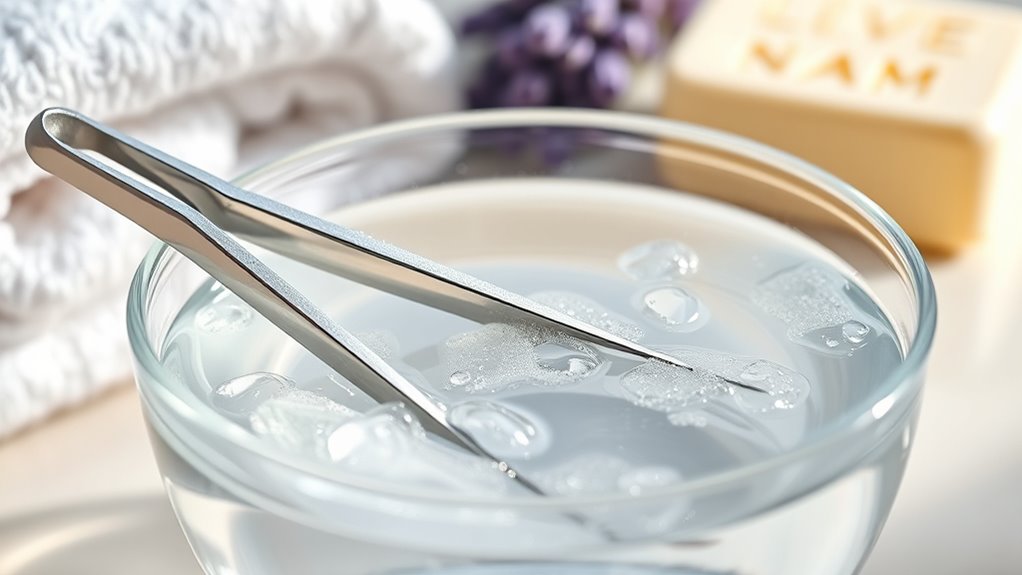
One of the most common mistakes is neglecting to clean tools after each use. Whether it’s your makeup brushes, tweezers, or facial devices, bacteria can build up quickly if not properly disinfected. For best practices, always wash your tools immediately after use with warm water and a gentle soap or brush cleaner. This helps remove surface dirt, oil, and makeup residue. For items that can withstand it, soaking in a disinfectant solution designed for beauty tools is a good idea. For example, some tools benefit from a quick dip in 70% isopropyl alcohol or a specialized sanitizer. Remember to follow the manufacturer’s instructions to ensure effective disinfection without damaging your tools.
Another common mistake is failing to dry your tools thoroughly after cleaning. Moisture promotes bacterial growth, so air-drying on a clean towel or using a disinfected cloth is necessary. Avoid storing damp tools, as this creates an environment conducive to germs. Proper storage is also key; keep your tools in a clean, dry container away from dust and potential contaminants. Some people neglect to check for damage or wear—cracked or broken tools can harbor bacteria or cause skin injuries. Regularly inspecting your tools helps catch these issues early and prevents infections.
It’s also a mistake to skip the sterilization process for tools used on multiple parts of your face or on different people. For shared tools, sterilization must be thorough to prevent cross-contamination. Using boiling water for metal tools or specialized sterilizers designed for beauty equipment can ensure safety. Meanwhile, plastic or delicate tools may require specific cleaning methods to avoid warping or damage. Incorporating these best practices into your routine ensures you’re not just cleaning your tools, but truly sanitizing them to the highest standard. Additionally, understanding the importance of HEPA filtration in cleaning environments underscores the need for thorough sanitation practices to eliminate airborne contaminants that could settle on your tools.
Frequently Asked Questions
How Often Should I Replace My Beauty Tools?
You should replace your beauty tools when their tool lifespan ends or if you notice replacement indicators like cracks, rust, or dullness. Typically, tools like brushes and sponges need replacing every 3 to 6 months, while devices like tweezers or eyelash curlers last longer but should be substituted if they become bent or damaged. Regularly inspecting your tools ensures they stay effective and hygienic.
Can I Use Household Disinfectants on All Tools?
You should check tool compatibility before using household disinfectants, as not all are safe or effective. Some disinfectants can damage certain materials or surfaces, so avoid using them on tools like porous sponges or delicate brushes. Always read the label and manufacturer’s instructions to guarantee proper use. When in doubt, opt for professional sanitizers or alcohol-based solutions specifically designed for beauty tools, ensuring safe and effective sanitation.
Are There Eco-Friendly Cleaning Options Available?
Yes, eco-friendly cleaning options are available for your beauty tools. You can use natural disinfectants like vinegar or tea tree oil, which are effective and gentle. Look for eco-friendly products labeled as biodegradable or non-toxic, and avoid harsh chemicals. These natural disinfectants help you keep your tools clean while protecting the environment and your skin, making your beauty routine safer and more sustainable.
How Do I Sanitize Tools With Intricate Designs?
To sanitize tools with intricate designs, you should start by soaking them in a disinfectant solution that reaches all the crevices. Use a soft brush or toothbrush to gently scrub those detailed areas, ensuring no residue remains. Rinse thoroughly with water and dry completely. This approach tackles the cleaning challenges posed by intricate designs, ensuring your tools are properly sanitized and safe for use.
What Are Signs My Tools Need Replacing?
Signs your tools should be swapped stem from visible wear, warping, or corrosion, signaling that their durability has diminished. If tools become difficult to clean, show material sensitivity, or develop rust, it’s time to replace them. Regularly inspect for cracks or dullness, as these indicate compromised quality. Staying vigilant guarantees you avoid potential infections, maintaining safety and style while safeguarding your skin’s health.
Conclusion
Properly cleaning and sanitizing your beauty tools isn’t just about prolonging their life—it’s about protecting your health. Did you know that bacteria can survive on makeup brushes for up to 24 hours? Regular cleaning reduces the risk of infections and breakouts. So, make it a habit to clean your tools frequently. Your skin will thank you, and you’ll enjoy safer, healthier beauty routines every day. Stay consistent, and your tools will serve you well!