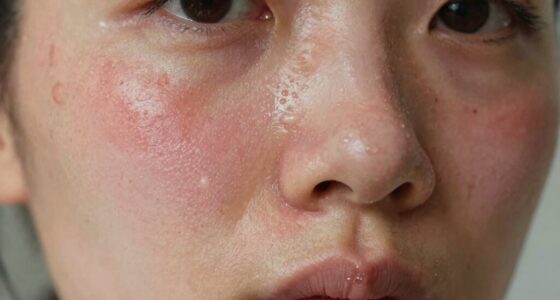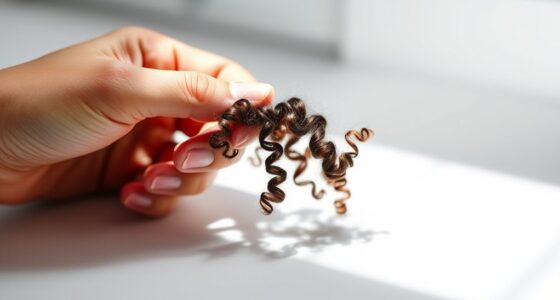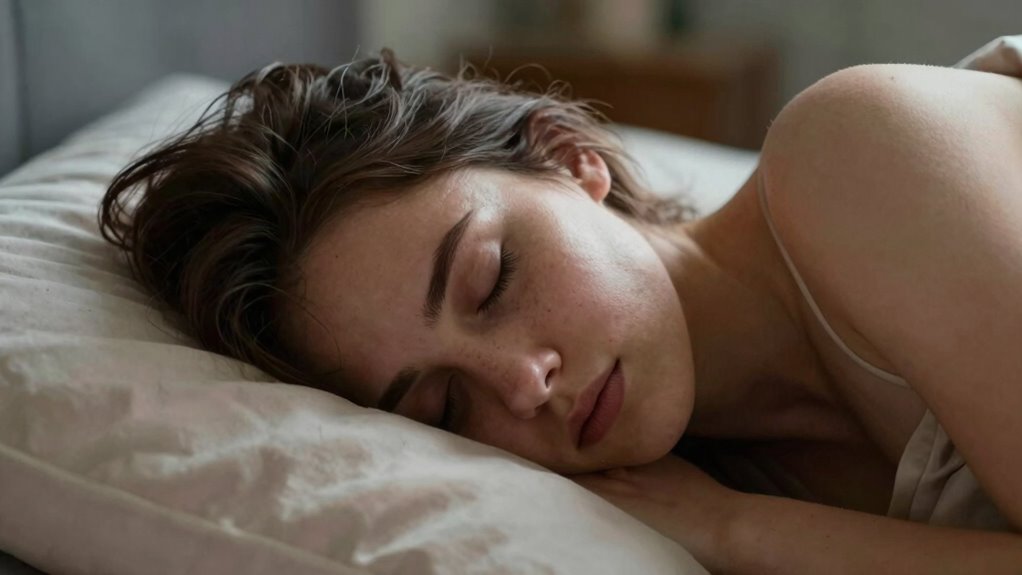

Sleeping on your stomach or side with your face pressed into the pillow can mess with your skin and hair. This position causes friction, pressure, and skin contact that leads to wrinkles, irritation, and breakouts, while also tugging or tangling your hair. Using a satin or silk pillowcase, adjusting your sleep posture, and practicing good hygiene can help protect your skin and hair. Keep going to discover how you can optimize your sleep for better skin and hair health.
Key Takeaways
- Sleeping on your stomach increases pillow friction, leading to wrinkles and hair breakage.
- Side sleeping with the face pressed against the pillow causes skin creases and irritation.
- Contact with bedding transfers oils and dirt, promoting breakouts and dullness.
- Rough pillow materials can tug hair and worsen skin irritation.
- Poor sleep hygiene and unclean pillowcases exacerbate skin and hair damage.
What Is the Best Sleep Position for Healthy Skin and Hair?
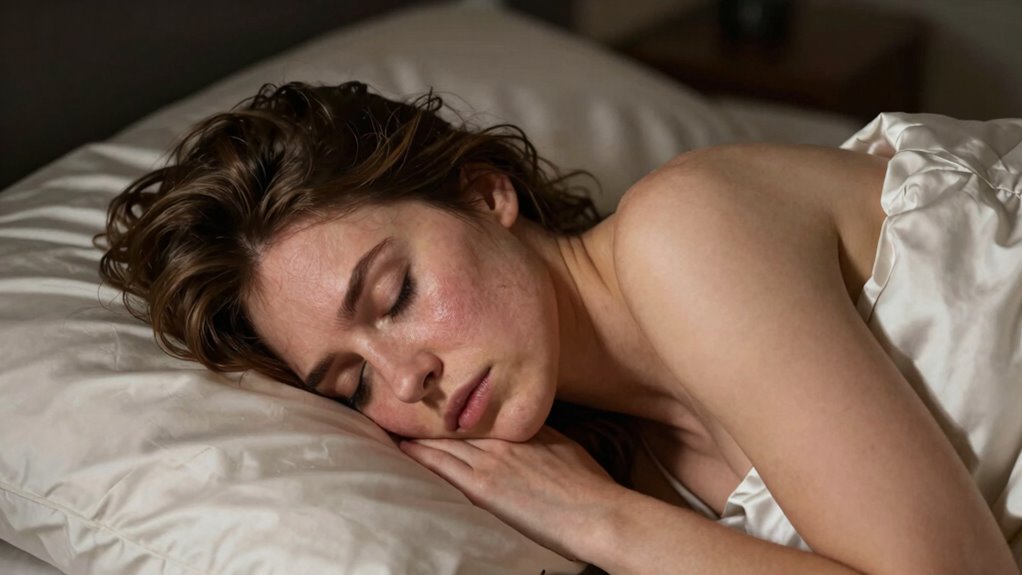
The best sleep position for healthy skin and hair is one that minimizes friction and pressure. When you sleep on your back, you reduce contact between your face and the pillow, preventing creases and irritation that can damage skin over time. This position also helps avoid unnecessary tugging on hair, reducing breakage. Many beauty routines emphasize gentle skincare, but sleeping position is often overlooked—skincare myths suggest that applying products alone can prevent aging, yet your sleep habits play a vital role too. By choosing to sleep on your back, you support your skincare routine and hair health simultaneously. It’s a simple change that can make a noticeable difference in maintaining your skin’s elasticity and your hair’s strength. Additionally, natural sleep environments can further enhance skin and hair health by promoting restful sleep and reducing environmental stressors. Creating an ideal sleep environment by controlling light, noise, and temperature can amplify the benefits of your sleep position and support overall skin and hair wellness.
How Different Sleep Positions Impact Your Skin and Hair Health

Your sleep position can directly affect your skin and hair health through pillow friction, which may cause wrinkles and skin irritation, and through hair breakage or tangles from constant movement. When you sleep on your stomach or side, your skin and hair are more likely to transfer oils and dirt onto your pillow, leading to breakouts or dullness. Additionally, smart home technology such as sleep monitoring devices can help you optimize your sleep posture, reducing the negative effects on your skin and hair. Using sleep tracking devices can provide insights into your sleep position and help you make adjustments for better skin and hair health. Being aware of sleep position and how it influences skin contact can help you make informed choices to protect your appearance. Understanding these impacts helps you choose a sleep posture that keeps your skin and hair looking their best. Proper sleep hygiene can also support overall skin and hair health by promoting more restful and restorative sleep. Incorporating techniques to reduce pillow friction can further minimize skin irritation and support healthier skin and hair.
Pillow Friction and Wrinkles
Sleeping with your face pressed against a pillow causes friction that can lead to the formation of fine lines and wrinkles over time. This pillow friction damages skin fibers, promoting wrinkle formation, especially in areas where your face contacts the pillow frequently. Your sleep position influences how much pillow friction you experience. Additionally, air quality can impact skin health, making it even more important to maintain a clean sleeping environment. Ensuring proper sleep hygiene can help minimize skin stress and support overall skin and hair health. Being mindful of your sleep position can further reduce unnecessary pressure and friction on your skin and hair. Moreover, adjusting your sleep environment to reduce exposure to pollutants can further protect your skin’s integrity during rest.
Hair Breakage and Tangles
Choosing how you sleep not only affects your skin but also impacts your hair’s health. Poor sleep positions can lead to hair frazzle, breakage, and tangles. To minimize damage, consider these points:
- Sleeping face down can cause friction, leading to tangles and hair breakage.
- Resting on rough or textured pillows increases hair frazzle and weakens strands.
- Tossing and turning disturbs hair alignment, making tangles worse in the morning.
- Using silk or satin pillowcases helps with tangle prevention, reducing hair breakage and preserving your hair’s integrity.
Adopting gentle sleep habits and better pillow choices can protect your hair from unnecessary damage and keep it smooth and healthy. Proper sleep positioning plays a key role in maintaining your hair’s strength and reducing tangles.
Skin Oil Transfer
The way you position yourself while sleeping directly influences how skin oils transfer between your face, hair, and bedding. If you sleep face-down or on your side, you’re more likely to experience skin oil transfer, which can clog pores and cause breakouts. This transfer also affects your hair, leaving it greasy and dull faster. Maintaining good sleep hygiene, like sleeping on your back, helps minimize this issue by reducing contact between your skin and bedding. Using clean pillowcases and avoiding excessive product buildup further decreases skin oil transfer. Being mindful of your sleep position not only promotes better skin health but also supports overall hair vibrancy. Additionally, choosing oil-free skincare products can help prevent excess oil buildup on your skin and hair during sleep. Implementing proper sleep habits can also significantly improve skin and hair health over time. For example, adjusting your sleep environment to enhance hygiene can make a noticeable difference, especially when considering the impact of bedroom cleanliness on skin health. Prioritizing sleep hygiene and sleep position can also make a noticeable difference in your skin and hair quality.
How Sleeping on Your Face Can Cause Wrinkles and Breakouts

When you rest your face directly against your pillow, you’re putting unnecessary pressure on your skin, which can lead to wrinkles over time. This pressure causes repeated friction and stretching that break down collagen, accelerating aging. It can also trap bacteria and oils, increasing breakout risk. According to dermatologist advice, sleeping on your face can compromise your skincare routines by rubbing off serums and creams. To minimize damage, consider these steps:
- Switch to a silk or satin pillowcase to reduce friction.
- Avoid pressing your face into the pillow for extended periods.
- Use gentle skincare routines that include collagen-boosting ingredients.
- Try sleeping on your back to prevent unnecessary skin stress. This way, you protect your skin’s elasticity and keep breakouts at bay.
Why Sleeping on Your Side or Stomach Might Damage Your Skin and Hair
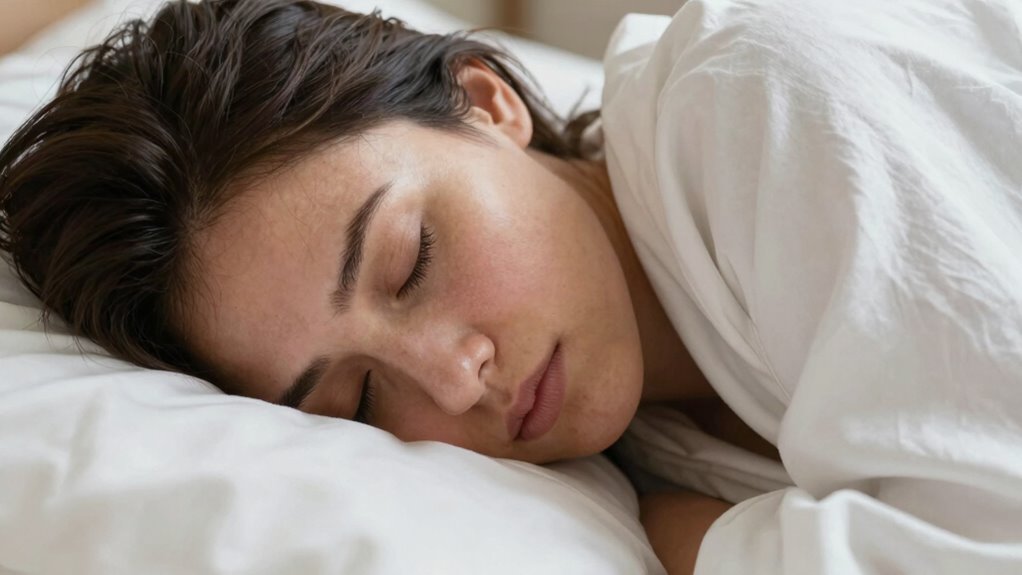
Sleeping on your side or stomach can put uneven pressure on your skin and hair, leading to persistent creases and breakouts. The type of pillow you choose matters; a pillow with too much firmness can increase friction, causing skin irritation and hair breakage. Conversely, a softer pillow may reduce pressure but might lack support, affecting your sleep hygiene. Constant contact with a rough or overly firm pillow can trap dirt and oils, worsening skin problems. Side and stomach sleepers often press their face into the pillow, increasing the risk of creases and visible lines over time. To protect your skin and hair, opt for a pillow that balances firmness and softness, and develop good sleep hygiene practices to minimize friction and maintain healthier skin during your sleep. Additionally, choosing appropriate sleep accessories can help reduce pressure points and promote better skin health. Using breathable pillowcases made from natural fibers can further decrease skin irritation and help keep your face cleaner overnight. Incorporating skincare routines before bed can also help mitigate some of the damage caused by pressure and friction during sleep. For added protection, consider using a silk pillowcase, which can reduce friction and skin irritation even further. Furthermore, paying attention to sleep position can significantly impact skin and hair health, making conscious choices beneficial.
What Are the Top Sleep Positions to Protect Your Skin and Hair?

To protect your skin and hair, adopting sleep positions that minimize pressure and friction is essential. The best positions for beauty sleep and skin preservation are:
- Back Sleeping: Keeps your face free from contact, reducing wrinkles and irritation.
- Fetal Position: Slightly curled on your side, avoiding excessive pressure on your cheeks and forehead.
- Supine with a Pillow: Elevate your head slightly to prevent fluid retention and reduce skin creases.
- Loose-Faced Side Sleeping: If you prefer sleeping on your side, lie with your face away from the pillow to lessen friction.
These positions help maintain skin elasticity, prevent creases, and keep hair free from unnecessary tugging, supporting healthy, youthful skin during your beauty sleep.
How to Sleep Better for Skin and Hair: Tips and Habits

Switching to satin or silk pillowcases reduces friction and helps protect your skin and hair overnight. Keep your pillowcases clean to prevent dirt and oils from causing breakouts or damage. Small habits like these can make a big difference in your skin and hair health over time.
Sleep On Satin or Silk
Have you ever wondered how the materials you rest on can impact your skin and hair? Choosing satin or silk pillowcases can markedly improve your sleep hygiene and protect your skin and hair. These smooth fabrics reduce friction, minimizing hair breakage and skin creases. Here’s how they help:
- They create less tugging compared to cotton, preserving your hair’s health.
- Their gentle surface reduces skin irritation and prevents wrinkles.
- Satin and silk help retain moisture, keeping your skin hydrated.
- They minimize the buildup of oils and dirt, supporting cleaner, healthier skin.
Switching your pillow material to satin or silk is a simple step to boost your beauty sleep and maintain skin and hair vitality.
Maintain Clean, Pillowcases
Keeping your pillowcases clean is a simple yet effective way to improve your skin and hair health while you sleep. Good pillow hygiene prevents dirt, oil, and bacteria from building up, reducing breakouts and skin irritation. Make sure to wash your pillowcases regularly—at least once a week—to keep them fresh and free of debris. When choosing fabric, opt for smooth, breathable materials like silk or satin, which reduce friction and help prevent hair breakage. Avoid rougher fabrics that can cause friction and snag hair strands or irritate your skin. Clean pillowcases also help maintain the benefits of your skincare products and prevent transfer of dirt from pillow surfaces back onto your face. Prioritizing pillow hygiene and fabric choices can make a noticeable difference in your skin and hair health overnight.
How Pillowcases and Your Sleep Environment Affect Skin and Hair

Your sleep environment plays a crucial role in maintaining healthy skin and hair. The pillowcase materials and overall sleep factors directly impact your skin’s glow and hair’s strength. Consider these key points:
- Pillowcase materials like silk or satin reduce friction, preventing wrinkles and hair breakage.
- Cotton pillowcases can cause more friction, leading to creases and hair damage.
- A cool, dark, and clean sleep environment minimizes skin irritation and bacteria buildup.
- Humidity levels and allergens in your sleep space influence skin hydration and hair health.
How to Transition to a Sleep Position That Supports Your Skin and Hair
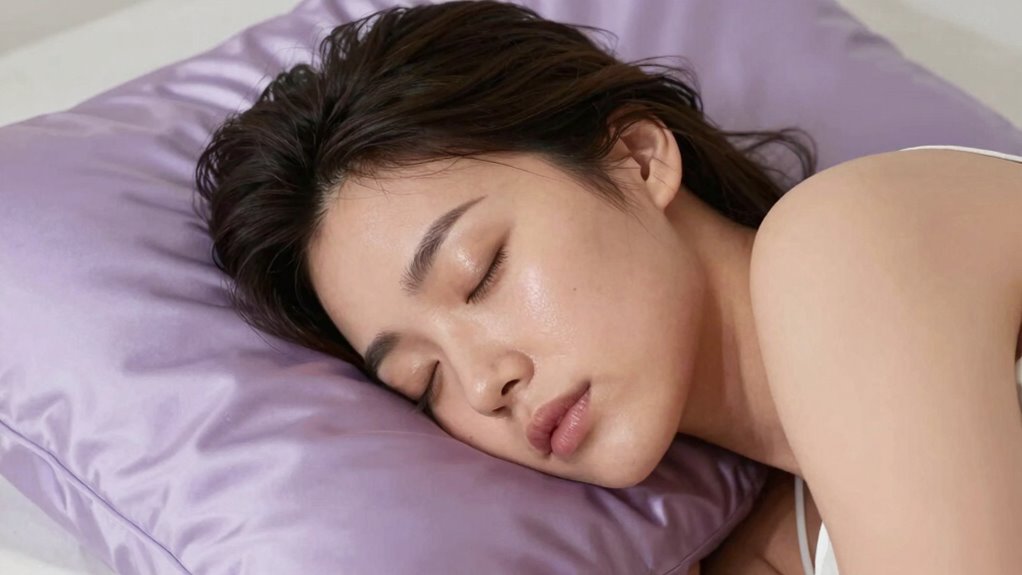
Switching to a sleep position that benefits your skin and hair requires mindful adjustments and consistency. Begin by choosing a pillow material that minimizes friction and reduces pressure, such as satin or silk, which support better sleep hygiene. Gradually train yourself to adopt the new position by using pillows strategically—placing one under your hips or behind your back to encourage alignment. Maintain a consistent routine, going to bed and waking up at the same time to reinforce the habit. Avoid sudden changes that could disrupt your sleep quality. Over time, your body will adapt, and you’ll notice improvements in your skin’s clarity and your hair’s health. Patience and persistence are key to making this positive progression sustainable.
Frequently Asked Questions
Can Sleeping on a Specific Side Prevent Hair Thinning?
Sleeping on your side can help prevent hair thinning if you switch sides regularly, reducing constant pressure on one area. By varying your sleep position, you minimize stress on your scalp, which may promote healthier hair growth. While side sleeping isn’t a guaranteed fix, it can be part of a routine that supports hair health. Remember, maintaining a balanced diet and proper hair care are also essential for preventing hair thinning.
Does Sleeping With a Certain Pillow Type Improve Skin Health?
Did you know that using the right pillow can boost your skin health? Choosing pillows made of natural materials like silk or memory foam can reduce friction and prevent wrinkles. A pillow with medium firmness supports proper alignment, minimizing creases that cause skin lines over time. Switching to a pillow tailored to your sleep surface firmness and materials can help keep your skin smoother and healthier overnight.
How Does Sleep Position Influence Scalp Oil Production?
Your sleep position directly influences scalp oil production by affecting scalp pressure and oil buildup. Lying on your stomach or side can increase pressure on your scalp, stimulating excess oil production and trapping oil, dirt, and sweat. This buildup can lead to greasy hair and clogged follicles. To reduce these issues, try sleeping on your back, which minimizes scalp pressure and helps maintain a healthy balance of scalp oils.
Are There Sleep Aids That Can Help Maintain Skin Elasticity?
Did you know that some sleep aids can boost your skin’s elasticity? Using serum treatments before bed nourishes your skin overnight, helping it stay firm. Pair that with facial exercises during the day to strengthen your muscles and improve elasticity. Incorporating these routines into your sleep and skincare habits can make a noticeable difference, giving you a more youthful, radiant appearance without extra effort.
Can Changing Sleep Habits Reverse Skin Damage Caused by Poor Positions?
Yes, changing your sleep habits can help reverse skin damage caused by poor positions. You should focus on reducing pillow pressure and facial compression by switching to a silk pillowcase or sleeping on your back. This minimizes friction and prevents creasing, giving your skin a chance to recover. Consistent adjustments, combined with good skincare, can improve skin elasticity and reduce the effects of previous damage over time.
Conclusion
Choosing the right sleep position is like selecting the perfect canvas for your skin and hair to flourish. By avoiding positions that tug or press against your face, you protect your natural glow and liveliness. Think of your pillow and environment as nurturing guardians, ensuring your beauty wakes refreshed each morning. Embrace gentle habits and mindful shifts—your skin and hair will thank you, blossoming into radiant expressions of your care and comfort, night after night.