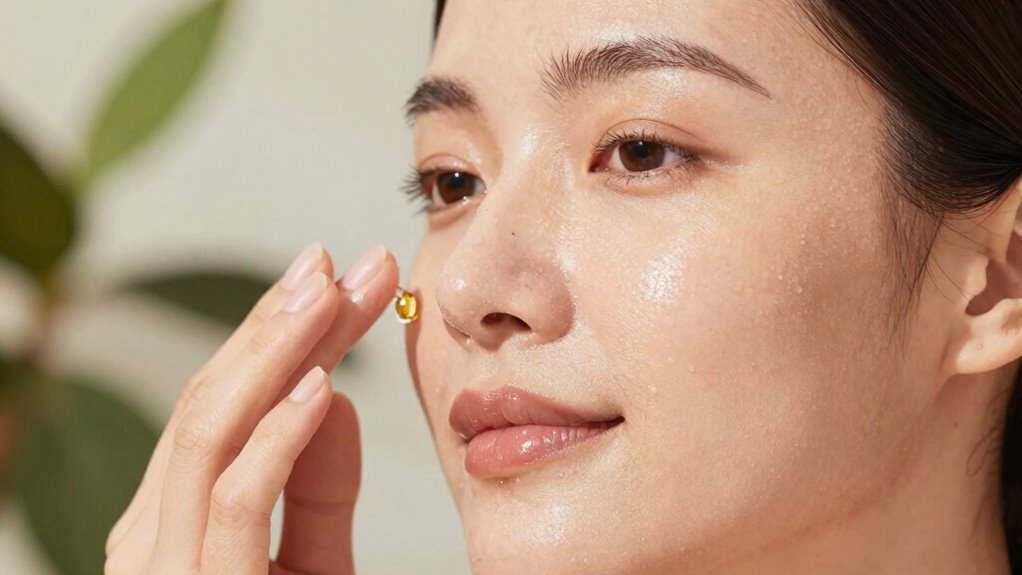

To use face oils without feeling greasy, start with a small amount and apply on slightly damp skin after cleansing and toning. Warm a few drops between your palms and gently press or pat the oil onto your face, focusing on areas that need hydration. Layer with a lightweight moisturizer or sunscreen if needed, but avoid overapplying. Mastering these simple steps helps you enjoy the benefits without heaviness, and there’s more to discover for radiant, balanced skin.
Key Takeaways
- Apply only a small amount of oil to avoid excess and greasiness.
- Warm the oil between palms and press gently onto slightly damp skin for better absorption.
- Use oils suitable for your skin type to prevent heaviness or shine.
- Layer with lightweight moisturizer or sunscreen if needed, but avoid overapplying.
- Pat the oil into skin rather than rubbing to promote quick absorption and a matte finish.
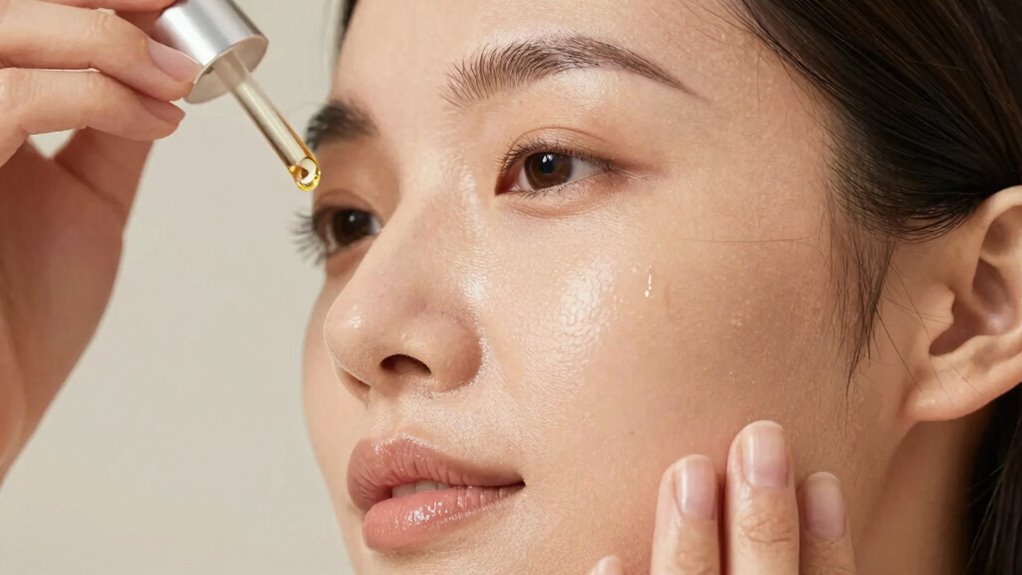
Face oils can be a game-changer for your skincare routine, but many people hesitate to use them for fear of feeling greasy. The good news is that when you choose the right oil and apply it correctly, you can enjoy their benefits without that heavy, oily sensation. One of the best options is jojoba oil, known for its remarkable jojoba benefits. Its composition closely resembles your skin’s natural sebum, which means it absorbs easily and balances oil production. Jojoba benefits include hydrating without clogging pores, controlling excess oil, and calming irritation. When you incorporate jojoba into your routine, it feels lightweight and smooth, making it suitable for all skin types, even oily or acne-prone skin. Using proper application techniques can make all the difference in preventing that greasy feeling.
Jojoba oil mimics your skin’s natural sebum, hydrating and balancing without feeling greasy.
To avoid that greasy feeling, start with a small amount of face oil. After cleansing and toning, warm a few drops between your palms. Gently press the oil onto your face, focusing on areas that need extra hydration. This patting method helps the oil absorb quickly, rather than sitting on top of your skin. If you prefer, you can mix a few drops of essential oil blends into your face oil. These blends not only add a soothing or invigorating scent but can also target specific skin concerns. For example, tea tree and lavender blends help with acne-prone skin, while rose and chamomile are calming for sensitive skin. Just make sure to dilute essential oils properly to avoid irritation and always patch-test first.
Applying your face oil at the right time is key. The best moment is right after cleansing and toning, when your skin is still slightly damp. Damp skin helps lock in moisture and allows the oil to penetrate better. You can also enhance absorption by choosing appropriate oils that suit your skin type, further reducing the risk of feeling greasy. Understanding the composition of different oils can help you select the best one for your skin. Additionally, incorporating knowledge about skin types and oil compatibility can help you customize your routine for optimal results. Being aware of passive voice and other grammatical considerations can also improve the clarity of your writing. You don’t need much—just a few drops are enough. If you find your skin feels greasy, reduce the amount or switch to a lighter oil. Remember, the goal is to hydrate and nourish, not to create a shiny film. You can also layer your face oil under a lightweight moisturizer or sunscreen if needed, but avoid overdoing it.
Consistent use is essential. Over time, you’ll notice your skin becoming more balanced, supple, and less oily. The secret is to choose oils like jojoba that complement your skin type and to apply them with care. With the right technique, face oils can give you glowing, healthy skin without any greasy residue. Once you master the application, you’ll wonder why you ever hesitated to include them in your routine.

Cliganic Organic Jojoba Oil, 100% Pure (4oz) | Moisturizing for Face, Hair, Skin & Nails | Natural Cold Pressed Hexane Free | Base Carrier Oil
- Packaging Variations: New look, same quality
- Certified Organic: USDA organic certified
- Pure and Single Ingredient: No additives, 100% pure
As an affiliate, we earn on qualifying purchases.
As an affiliate, we earn on qualifying purchases.
Frequently Asked Questions
Can Face Oils Be Used on Oily Skin?
Yes, you can use face oils on oily skin. Face oil benefits include balancing oil production and providing hydration. To avoid feeling greasy, use oil application techniques like applying a small amount after cleansing and toning, preferably in the evening or during dry skin seasons. Choose lightweight, non-comedogenic oils, and always warm the oil in your hands before gently pressing it onto your face for best absorption.
Should I Apply Face Oil Morning or Night?
Imagine your skin as a canvas, ready to be painted with nourishment. You should apply face oil both morning and night, integrating it into your routine like a gentle brushstroke. In your morning routine, it creates a radiant start, while at night, it works deeply to repair. Consistent night application helps your skin recover from daily stress, leaving you refreshed and glowing come dawn.
How Much Face Oil Is Too Much?
You’re probably using too much face oil if it feels greasy or takes forever to absorb. Start with just a few drops—about a pea-sized amount—and apply using gentle patting or pressing techniques. This helps improve oil absorption and prevents excess buildup. If your skin still feels greasy, reduce the amount you use. Remember, less is often more when it comes to face oils, so adjust based on how your skin responds.
Can Face Oils Cause Breakouts?
Yes, face oils can cause breakouts if you’re not careful. When your skin’s oil absorption is overwhelmed or the oil disrupts your pH balance, pores can clog, leading to acne. To avoid this, choose oils suited for your skin type and apply sparingly. Think of it as walking a tightrope—you want the benefits without tipping over into breakouts. Monitoring your skin’s response helps keep your complexion clear and balanced.
Do Face Oils Expire or Go Bad?
Yes, face oils do expire and can go bad over time. Their shelf life typically ranges from 6 months to 2 years, depending on ingredients. To keep your face oils fresh, store them in a cool, dark place and tightly cap the bottles after each use. Proper storage tips help prevent oxidation and maintain their effectiveness, ensuring you get the best benefits without risking skin irritation or reduced quality.
Conclusion
Now that you’ve mastered the art of applying face oils without feeling greasy, you’re ready to radiate confidence. Remember to start small, gently massage, and choose lightweight formulas. With these tips, you’ll enjoy a luminous look without the lingering slick. So, embrace the ease, elevate your skincare routine, and let your natural glow grow. Because when you use face oils wisely, your skin will shine simply, smoothly, and sensationally!