

If you’re using facial cleansing brushes roughly or with stiff bristles, you risk damaging your skin’s protective barrier, causing redness, dryness, and sensitivity. To fix this, switch to gentle, soft-bristled tools and use light, circular motions without pressing hard. Limit use to once or twice daily and maintain your brush hygiene. Paying attention to how your skin responds and adjusting accordingly helps prevent long-term damage. Discover more tips to keep your skin healthy and resilient.

Get beauty and skincare favorites delivered free with Prime
- Fast, free delivery on millions of items
- Prime Video, Amazon Music and more included
- Member-only deals all year
Key Takeaways
- Use brushes with soft, gentle bristles and avoid firm or coarse textures to prevent skin barrier damage.
- Limit cleansing to once or twice daily and employ light, circular motions without applying pressure.
- Regularly clean brush heads and replace them every three to four months to prevent bacteria buildup.
- Monitor skin reactions like redness or irritation and adjust routine or switch to gentler products accordingly.
- Incorporate soothing ingredients such as aloe vera or ceramides to support skin recovery and barrier repair.
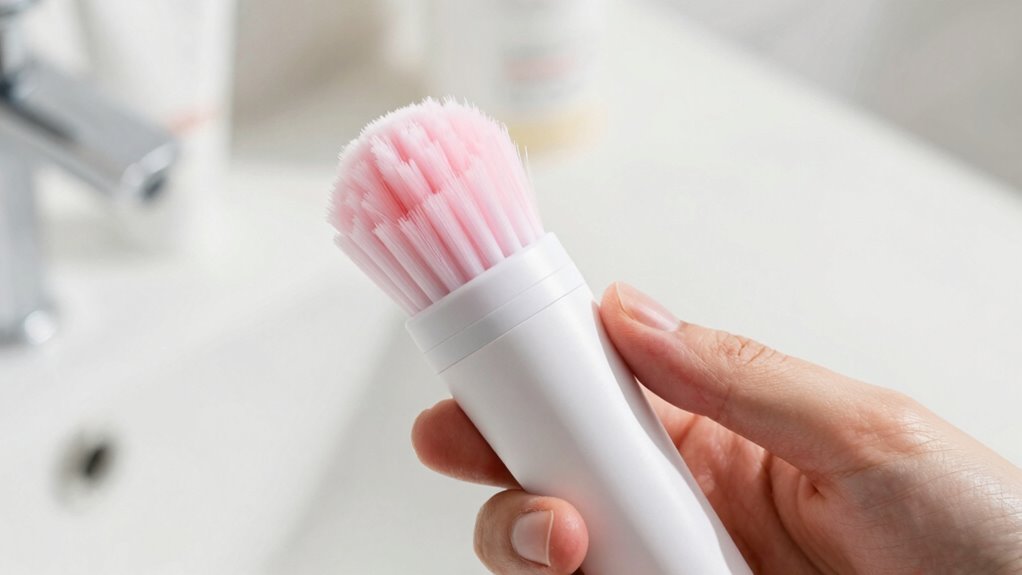
Facial cleansing brushes can make your skincare routine feel more thorough, but they can also damage your skin’s natural barrier if used improperly. One major issue is the presence of harsh bristles that can be too aggressive for delicate skin. When you scrub too hard or use a brush with stiff bristles, you risk causing microtears and stripping away your skin’s essential oils. This not only leads to skin irritation but also weakens your skin’s ability to defend against environmental stressors. Over time, this can result in redness, dryness, and increased sensitivity. If you notice your skin becoming irritated or inflamed after using a cleansing brush, it’s a sign you need to reassess your technique and equipment. Using the wrong skincare tools can significantly impact your skin’s health, so choosing gentle options is crucial.
To protect your skin barrier, start by choosing a brush with soft, gentle bristles. Avoid brushes with firm or coarse textures, especially if you have sensitive or easily irritated skin. Remember, the goal is to cleanse without harming, so gentleness should always be your priority. When using the brush, don’t press too hard. Let the device glide over your skin with light, circular motions, applying minimal pressure. This helps prevent unnecessary friction that can cause irritation. Also, limit your cleansing sessions to once or twice a day. Overdoing it can strip your skin of its natural oils, leading to dryness and increased vulnerability to environmental damage. Incorporating proper cleansing techniques can help maintain your skin’s health and resilience. Additionally, understanding your skin’s individual response can guide you toward more tailored and effective skincare routines.
It’s also helpful to be aware of any underlying skin conditions that might influence how your skin reacts to cleansing tools. If you notice redness, peeling, or discomfort, it’s time to pause and evaluate your routine. Consider switching to a more gentle cleanser or reducing the frequency of use. Incorporating soothing ingredients like aloe vera or ceramides into your skincare can help repair your skin barrier and reduce irritation. Remember that a good skincare routine isn’t just about thorough cleansing; it’s about maintaining the health and resilience of your skin. Research shows that improper use of skincare devices can lead to long-term damage if not managed carefully.
Lastly, don’t forget to clean your cleansing brush regularly. Bacteria and buildup can accumulate on the bristles, leading to breakouts and further irritation. Wash it with a gentle cleanser or soap after each use, and replace the brush head every three to four months. Proper device maintenance can extend the lifespan of your tool and ensure it remains hygienic. By choosing the right brush, using proper technique, and caring for your skin and device, you can enjoy the benefits of a facial cleansing brush without compromising your skin’s natural barrier.
gentle facial cleansing brush with soft bristles
As an affiliate, we earn on qualifying purchases.
As an affiliate, we earn on qualifying purchases.
Frequently Asked Questions
How Often Should I Replace My Facial Cleansing Brush?
You should replace your facial cleansing brush every three to four months for maximum brush longevity. Regular replacement guarantees your brush remains clean and effective, preventing bacteria buildup that can damage your skin barrier. Keep an eye on the bristles; if they become frayed or worn out, it’s time to change it sooner. Following the recommended replacement frequency helps maintain healthy skin and prevents irritation from using an old, less effective brush.
Are There Specific Skin Types That Shouldn’t Use Cleansing Brushes?
If you have sensitive skin or prone to brush irritation, you might want to avoid using facial cleansing brushes. They can exacerbate skin sensitivity, cause redness, or lead to irritation if not used carefully. Instead, opt for gentle cleansers and softer tools. Always listen to your skin’s reactions and avoid aggressive scrubbing — if irritation occurs, it’s best to skip the brush and switch to milder cleansing methods.
Can Improper Cleaning of the Brush Cause Skin Issues?
Improper cleaning of your brush can cause skin issues that feel like a wildfire on your face! Poor brush hygiene allows bacteria and dead skin to build up, leading to skin irritation and breakouts. Always wash your brush thoroughly after each use and replace the brush head regularly. Neglecting this simple step can turn a gentle cleansing tool into a source of irritation, risking your skin’s health and balance.
What Ingredients in Cleansers Are Best for Sensitive Skin?
For sensitive skin, you should look for cleansers with gentle formulations and soothing ingredients. Avoid harsh chemicals like alcohol, fragrances, and sulfates that can irritate your skin. Instead, opt for products with calming ingredients such as aloe vera, chamomile, or oat extract. These help cleanse without stripping your skin’s natural barrier, reducing the risk of redness and irritation. Always choose mild, soothing cleansers tailored for sensitive skin for the best results.
Is It Better to Use a Manual or Electronic Cleansing Brush?
It’s better to choose a manual cleansing brush over an electronic one if you have sensitive skin. Manual brushes give you more control and are gentler, reducing the risk of damaging your skin barrier. A brush vs. sponge debate depends on your preference, but a soft sponge can be just as effective without the risk of over-exfoliation. Always pick gentle tools and avoid harsh scrubbing to protect your skin.
Conclusion
To keep your skin happy and healthy, remember that even the gentlest brush can be a double-edged sword. Think of your skin’s barrier as a delicate fortress—you wouldn’t tear down the walls with reckless abandon. Use your cleansing brush wisely, keep the pressure light, and give your skin the love it deserves. When you treat your skin gently, it’ll shine like a beacon, resilient and radiant, ready to face whatever the day brings.
Fall Picks
fall essentials
As an affiliate, we earn on qualifying purchases.