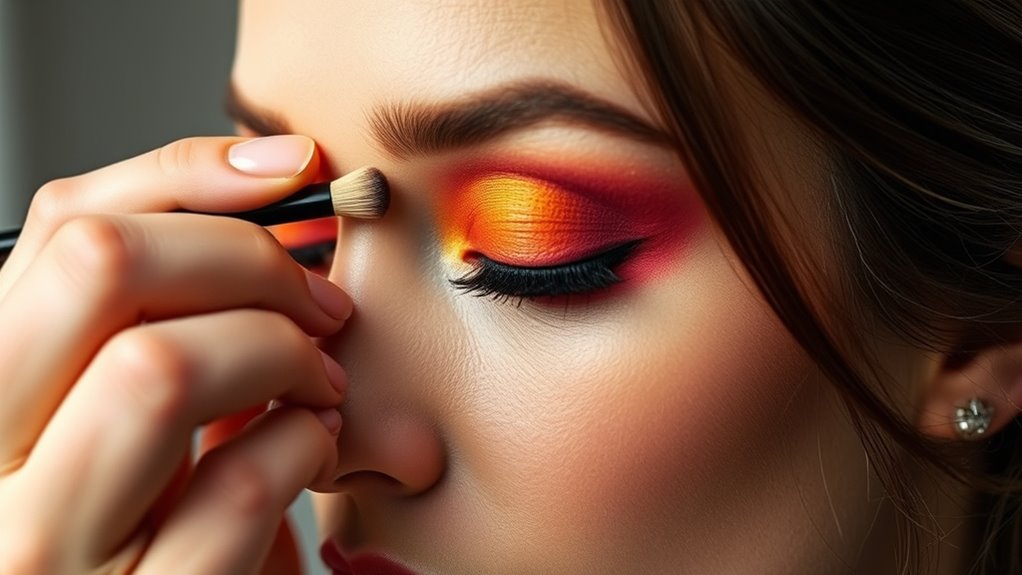

Color theory plays a crucial role in makeup application by helping you choose shades that enhance your features and create visually pleasing looks. It guides you in selecting complementary, analogous, or contrasting colors to highlight your eyes, cheekbones, and lips. Understanding how colors interact with your skin tone and facial structure allows you to craft balanced, harmonious makeup styles. Keep exploring these principles to access the full potential of your makeup artistry.
Key Takeaways
- Color theory guides makeup artists in selecting shades that enhance facial features and create balanced, pleasing looks.
- It helps in understanding how different colors interact with skin tones for personalized and harmonious makeup application.
- Using complementary and analogous colors creates contrast and smooth transitions, highlighting or softening features as desired.
- Proper application of color shades in highlighting and contouring adds depth, dimension, and facial sculpting.
- Color theory provides a visual framework for experimenting confidently and achieving cohesive, tailored makeup looks.
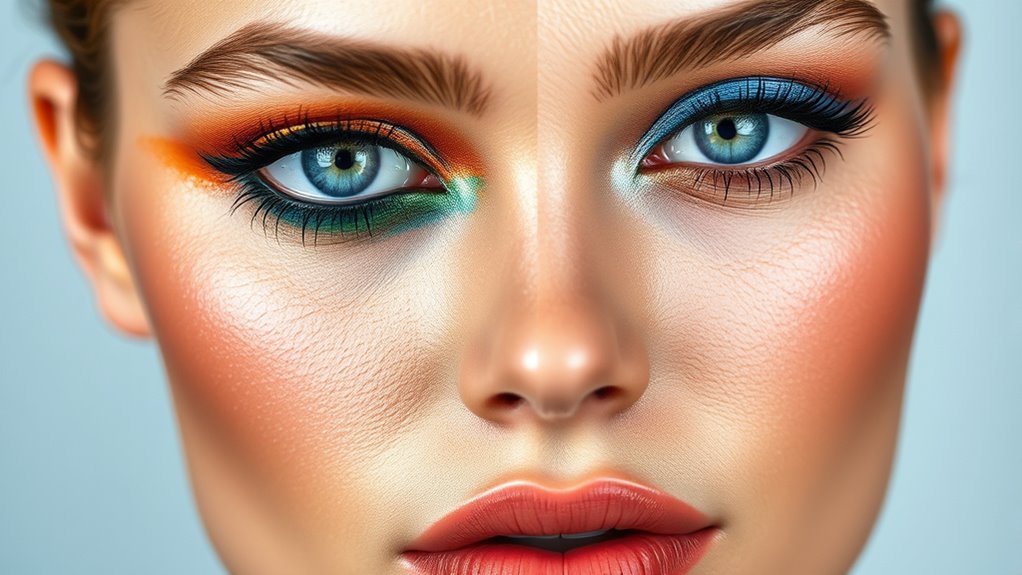
Have you ever wondered how makeup artists choose the perfect shades to enhance your features? The secret lies in understanding color theory, a fundamental tool that guides their decisions. When selecting colors, they consider color harmony, which is about creating a balanced and pleasing look by pairing shades that complement each other. For example, warm tones like peaches and golds work well together, while cool shades such as blues and purples can create a calming effect. By mastering color harmony, makeup artists ensure that your overall look feels cohesive and enhances your natural beauty rather than clashing or overpowering it.
Facial contouring is another critical aspect influenced heavily by color theory. It involves strategically using shades to define and shape your face, emphasizing your best features while softening less desired areas. Makeup artists use lighter shades to highlight certain zones, like the tops of cheekbones, the bridge of your nose, or your brow bones. Conversely, they apply deeper, matte shades in hollows of the cheeks, along the jawline, or around the perimeter of the face to create shadows. This technique relies on understanding how colors interact with your skin tone and how contrasting or blending shades can alter perceptions of depth and dimension. Proper facial contouring can make your face appear more sculpted and balanced, highlighting your natural bone structure.
Facial contouring uses shades to define features, creating depth and a balanced, sculpted look.
Color harmony also plays a significant role in choosing eye shadow, lipstick, and blush shades that enhance your features. For instance, if you have cool undertones, makeup artists might select shades like mauves, plums, or icy blues that harmonize with your skin. If your undertones are warm, they’ll lean toward oranges, corals, and earthy browns. This harmony ensures that each element of your makeup complements your complexion, creating a harmonious overall appearance.
Additionally, understanding color relationships helps in avoiding mismatched or clashing shades. Complementary colors—those opposite each other on the color wheel—are often used to make features pop, like pairing a blue eyeshadow with warm orange tones. Analogous colors, which are next to each other on the wheel, provide a seamless transition and a more natural look. When makeup artists combine these principles, they craft looks that are not only striking but also tailored specifically to your individual features and skin tone. This mastery of color theory allows them to enhance your natural beauty with precision, guaranteeing every application works in harmony with your unique facial structure and coloring.
Furthermore, understanding the color wheel can help you experiment confidently with makeup shades to find what best enhances your features.
Frequently Asked Questions
How Does Skin Undertone Influence Color Choices in Makeup?
Your skin undertone guides your shade selection, making undertone matching vital. If you have cool undertones, opt for makeup with blue or pink bases to enhance your natural glow. For warm undertones, choose shades with golden or peachy tones. By understanding your undertone, you can pick colors that complement your skin perfectly, creating a harmonious look. This approach ensures your makeup enhances your features instead of clashing.
Can Color Theory Help Correct Uneven Skin Tones?
Yes, color theory can help correct uneven skin tones by guiding your color mixing choices. You can neutralize redness or dullness by applying opposite colors on the color wheel, like green for red areas, or peach for dark spots. Understanding skin pigmentation helps you select the right shades to balance your complexion. This strategic use of color mixing enhances your natural skin tone and creates a more even, radiant look.
What Are the Best Complementary Colors for Eye Makeup?
Think of your eye makeup as a symphony, where each color plays in harmony. Using the color wheel, you’ll find that complementary colors—like blue and orange or purple and yellow—create stunning contrast and balance. These color harmonies make your eyes pop and draw attention naturally. When you choose these shades, you’re orchestrating a visual masterpiece, ensuring your makeup is vibrant, balanced, and effortlessly mesmerizing.
How Do Lighting Conditions Affect Makeup Color Application?
Lighting conditions considerably influence how your makeup colors appear. In high contrast lighting, colors may look more vibrant or stark, so you might need to tone them down. Dim or shadowy lighting can soften shades, making bold colors seem more muted. Always check your makeup under different lighting to verify it complements your skin tone and looks natural. Adjust your application accordingly to maintain the desired effect in various lighting contrast and shadow effects.
Are There Cultural Differences in Color Preferences for Makeup?
Like a tapestry woven with diverse threads, cultural differences shape makeup color preferences. You’ll notice that cultural symbolism influences choices, with bold reds symbolizing luck in China or natural tones in Scandinavian regions. Regional trends evolve with local traditions, climate, and history, guiding your palette choices. Embracing these differences helps you create looks that resonate deeply, respecting cultural nuances while expressing your unique style.
Conclusion
By mastering color theory, you become an artist painting your face with confidence and creativity. Think of makeup as your canvas, where choosing the right hues transforms your look from flat to fabulous. When you blend shades thoughtfully, you’re crafting a masterpiece that highlights your unique beauty. So, embrace the magic of colors—they’re your palette, your voice, and your secret weapon to radiant, enthralling confidence every day.