To prevent ingrown hairs, use sharp razors, shave in the direction of hair growth, and avoid pressing too hard. Regularly exfoliate and moisturize your skin, and consider laser hair removal for a long-term solution. After waxing, gently soothe your skin with aloe vera or calming lotions. If you notice ingrown hairs, avoid squeezing and apply exfoliating treatments with salicylic or glycolic acid. Continue exploring these tips to keep your skin smooth and bump-free.
Key Takeaways
- Use proper shaving techniques: shave in the direction of hair growth with sharp blades to reduce irritation.
- Exfoliate regularly and moisturize skin to prevent dead skin buildup and keep hair follicles clear.
- Choose appropriate hair removal methods like waxing or laser to minimize recurring ingrown hairs.
- Post-removal, apply soothing products such as aloe vera to reduce inflammation and prevent bumps.
- Avoid picking or squeezing ingrown hairs; treat with topical exfoliants containing salicylic or glycolic acid.
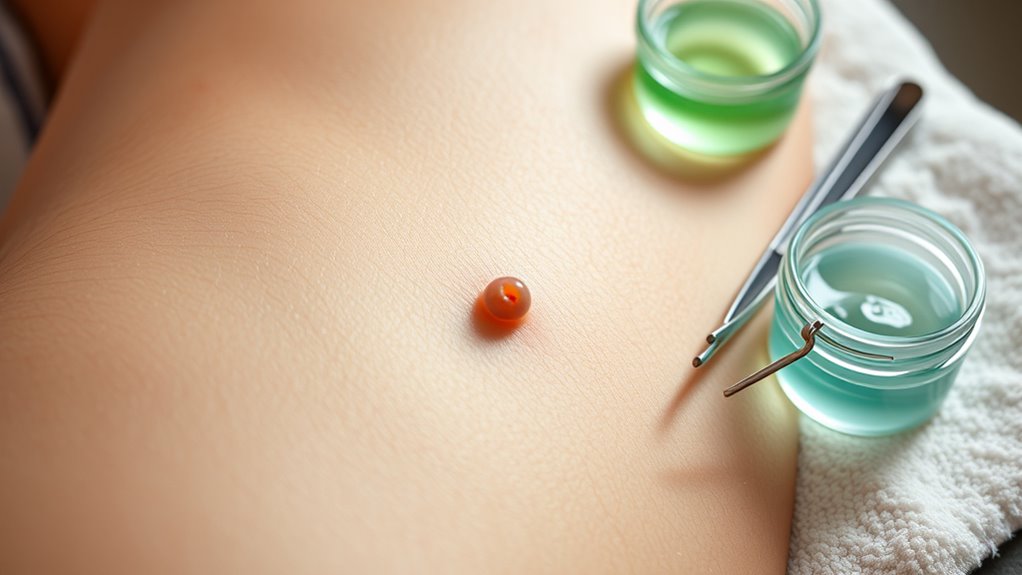
Have you ever wondered why ingrown hairs happen and how to prevent them? These pesky bumps often appear after hair removal methods like shaving or waxing, causing discomfort and sometimes infections. Understanding what causes them is key to avoiding their stubborn appearance. When you shave or wax, you’re removing hair from the surface of your skin, but sometimes, the hair grows back into the follicle instead of outward. This results in inflammation, redness, and those unsightly bumps. Razor bumps, a common term for ingrown hairs, often occur when your razor tugs at the hair or if you shave too closely without proper preparation. To reduce razor bumps, it’s essential to use sharp blades and shave in the direction of hair growth. Avoid pressing too hard or going over the same area repeatedly, as that can irritate your skin and increase the likelihood of ingrown hairs.
Waxing tips can also help prevent ingrown hairs. When waxing, make sure your hair is at the right length—about a quarter of an inch—to ensure the wax grips the hair effectively without breaking it unevenly. Before waxing, exfoliate your skin gently with a scrub or a washcloth to remove dead skin cells that can clog follicles and trap hairs. This step helps the hair grow out properly and reduces the chances of it growing back into the skin. Always choose a reputable waxing professional if you’re getting it done at a salon, or if you do it at home, follow instructions carefully to avoid irritation and ingrown hairs. After waxing, apply a soothing lotion or aloe vera gel to calm your skin and minimize inflammation. Additionally, incorporating laser hair removal can provide a long-term solution to reduce the occurrence of ingrown hairs.
In addition to these tips, regular exfoliation keeps your skin smooth and free of debris that might block hair from growing outward. Moisturizing daily helps maintain skin elasticity, making it less prone to irritation and ingrown hairs. If you already have ingrown hairs, avoid picking or squeezing them, as this can lead to infection or scarring. Instead, treat them with topical solutions containing salicylic acid or glycolic acid, which help exfoliate the skin and free trapped hairs. Wearing loose, breathable clothing after hair removal can also reduce friction and irritation. Remember, patience is key—consistently following these waxing tips and proper shaving techniques can markedly decrease your chances of dealing with ingrown hairs, leaving your skin smoother and healthier.
Frequently Asked Questions
Can Ingrown Hairs Cause Permanent Skin Damage?
Yes, ingrown hairs can cause permanent skin damage if left untreated. You might notice skin discoloration or scar formation, especially if the ingrown hair becomes infected or inflamed. Over time, repeated ingrown hairs can lead to persistent marks or scars that won’t fade easily. To avoid this, you should treat ingrown hairs promptly and take steps to prevent them from recurring, such as proper shaving techniques and exfoliation.
Are There Natural Remedies for Preventing Ingrown Hairs?
You might think natural remedies can prevent ingrown hairs, and some herbal remedies and natural oils do help. Tea tree oil’s antibacterial properties can reduce inflammation, while witch hazel soothes the skin. However, scientific evidence varies, so while these remedies may help, they aren’t foolproof. Incorporate gentle exfoliation and proper shaving techniques alongside herbal remedies and natural oils to best prevent ingrown hairs effectively.
How Long Does It Typically Take for an Ingrown Hair to Heal?
Typically, an ingrown hair takes about one to two weeks to heal, but the healing timeline varies based on factors like inflammation, hair removal methods, and skin type. You can speed up healing by keeping the area clean, avoiding picking at it, and applying soothing treatments. If an ingrown hair persists beyond two weeks or worsens, consider seeing a dermatologist to prevent infection or scarring.
Can Shaving With a Dull Razor Increase Ingrown Hair Risk?
Using a dull razor blade can definitely increase your risk of ingrown hairs. A dull blade pulls and irritates hair follicles, leading to inflammation and ingrown hairs. To avoid this, you should always use a sharp razor and adopt a gentle shaving technique. Keep your skin moisturized, shave in the direction of hair growth, and replace your razor regularly. This way, you minimize irritation and prevent hair from curling back into your skin.
Is It Safe to Squeeze or Pop an Ingrown Hair?
You shouldn’t squeeze or pop an ingrown hair because popping dangers include pushing bacteria deeper into your skin, which can cause a skin infection. Squeezing might also increase inflammation and lead to scarring. Instead, gently exfoliate the area and apply a warm compress to help the hair break through the skin naturally. If the ingrown hair becomes very painful or infected, see a healthcare professional for safe removal.
Conclusion
To keep your skin smooth and happy, it’s best to listen to your body’s whispers and give your hair a gentle break when needed. Regular exfoliation and proper shaving techniques can help prevent those pesky little bumps from making an unwelcome appearance. Remember, patience and kindness to your skin go a long way. With a little care, you’ll enjoy a carefree, soft touch that feels as good as it looks—your skin will thank you for it.