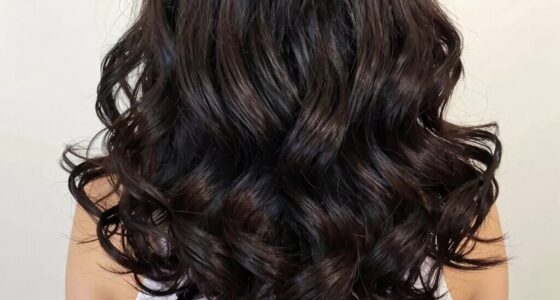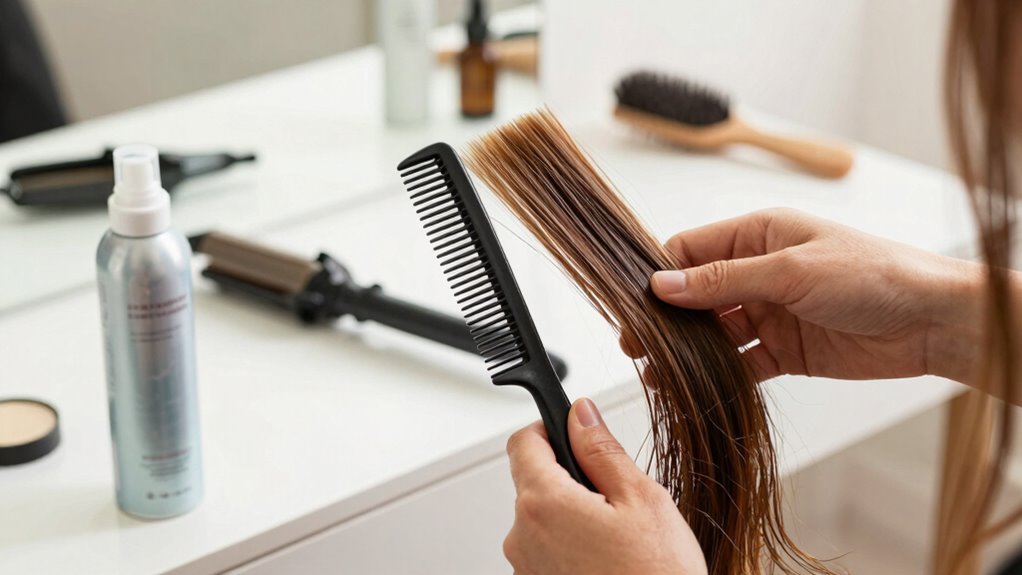

To prep your hair for heat styling, start with clean, dry hair to remove buildup and prevent damage. Apply a heat protectant evenly, focusing on ends and damaged areas. Section your hair into small parts, clipping each section for control and even heat distribution. Use the right temperature setting for your hair type, starting low and increasing only if needed. Proper prep helps safeguard your hair and ensures longer-lasting, healthier styles—keep going to learn even more tips.

Get beauty and skincare favorites delivered free with Prime
- Fast, free delivery on millions of items
- Prime Video, Amazon Music and more included
- Member-only deals all year
Key Takeaways
- Start with clean, thoroughly dry hair to prevent heat damage and ensure smooth styling.
- Apply a heat protectant evenly, focusing on ends and damaged areas for effective barrier formation.
- Section hair into small parts using clips for uniform heat application and better control.
- Set heat tools to appropriate, lower temperatures based on hair type to minimize damage.
- Incorporate proper preparation into your routine to maintain hair health and achieve lasting, shiny results.
Have you ever wondered why your heat-styled hair doesn’t last or feels damaged afterward? The answer often lies in how you prepare your hair before applying heat. Proper preparation is crucial for hair protection and minimizing heat damage. When you skip the right steps, you risk weakening your strands, causing breakage, and losing that sleek, polished look sooner than you’d like. But with some simple, effective techniques, you can safeguard your hair and achieve long-lasting, healthy results.
First, always start with clean, dry hair. Wash your hair to remove any product buildup, oils, or dirt that can hinder your heat protectant from penetrating your strands effectively. Towel-dry gently, removing excess water without roughing up the cuticle. When your hair is damp, it’s more vulnerable to heat damage, so make sure it’s thoroughly dry before you begin styling. Using a blow dryer on a low heat setting can help speed up the drying process, especially if you’re in a rush. Ensuring your hair is properly prepped can also help prevent heat damage. Additionally, considering the use of specialized tools can further enhance your heat styling routine.
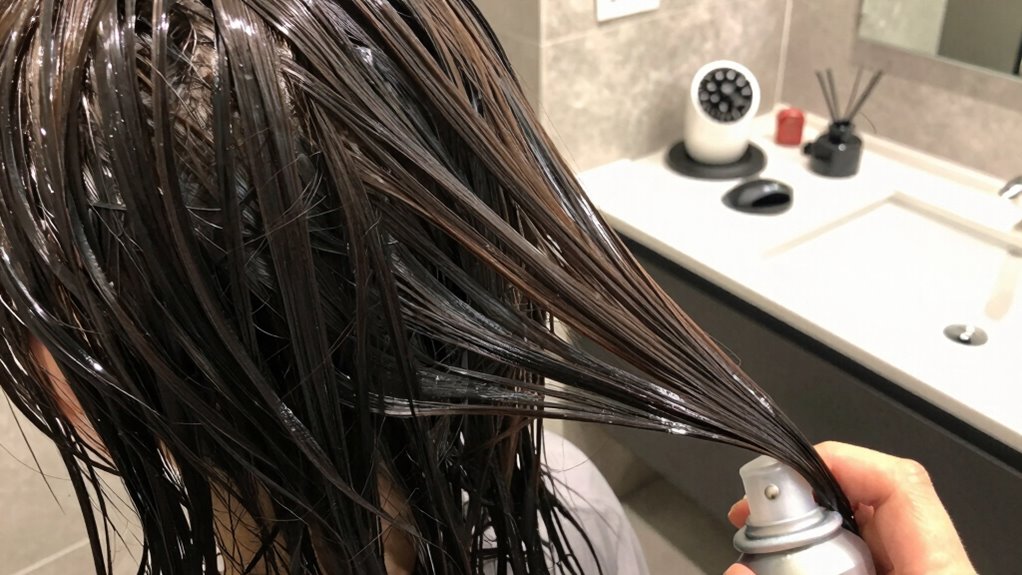
Next, apply a heat protectant spray or serum evenly throughout your hair. This step is essential for hair protection because it creates a barrier between your strands and the heat. Look for products with ingredients like silicones or natural oils that coat the hair, reducing the direct impact of high temperatures. Distribute the protectant evenly, focusing on the ends and any areas prone to dryness or damage. Do not skip this step, even if you plan to use a lower heat setting—protection is always better. Incorporating a heat protectant into your routine is a key step in safeguarding your hair’s health. Proper application ensures the product can work effectively, providing a protective barrier against heat.
Once your hair is protected, consider sectioning it. Working in small, manageable sections ensures you apply heat uniformly and avoid overexposing any one area. Use clips to keep sections separate, which helps prevent accidental overheating and allows you to work more efficiently. Remember, the goal isn’t to maximize heat but to use just enough to style your hair effectively. Overuse of heat tools or setting them too high increases the risk of heat damage and compromises hair health. Proper sectioning also allows you to better control the overall styling process and ensures consistent results.
Finally, set your styling tools to the appropriate temperature for your hair type. Fine or damaged hair needs lower heat settings, while thicker or coarser hair may require a bit more heat but still within safe limits. Always start with the lowest effective temperature and increase only if necessary. Being mindful of heat levels and hair health is essential for maintaining your hair’s integrity, shine, and longevity. Proper prep isn’t just about styling—it’s about caring for your hair today and in the future. Keeping informed about hair protection options and techniques can make a significant difference in your styling routine.
As an affiliate, we earn on qualifying purchases.
Frequently Asked Questions
Can I Prepare Wet Hair for Heat Styling?
Yes, you can prepare wet hair for heat styling, but it’s important to be cautious. First, gently towel-dry your hair to remove excess moisture, then apply a heat protectant suited for damp hair. Use a lower heat setting on your styling tools to prevent damage. Keep the tool moving steadily to avoid overheating one spot, and avoid using heat on very wet hair to reduce breakage and guarantee a smoother, healthier style.
How Long Should I Wait After Washing Before Applying Heat?
You should wait at least 10-15 minutes after washing your hair before applying heat. Studies show that damp hair is 50% more vulnerable to damage from heat styling. For ideal hair care and styling tips, make sure your hair is mostly dry to prevent breakage and achieve the best results. Patience here protects your strands and helps style stay longer, making your hair healthier and more polished.
Is It Necessary to Use a Heat Protectant Every Time?
Yes, you should use a heat protectant every time you style your hair with heat. It forms a barrier that minimizes heat damage and prevents product buildup that can weaken your strands over time. Skipping it increases the risk of breakage and dullness. Applying a protectant guarantees your hair stays healthy, shiny, and resilient, even with frequent heat styling. Always prioritize this step to keep your hair in the best condition.
What Are the Best Heat Protectant Ingredients?
The best heat protectant ingredients include silicones like dimethicone, which form a barrier against heat, and natural oils such as argan or coconut oil that nourish your hair while preventing heat damage. Look for products with keratin or proteins to strengthen hair and reduce product buildup. These ingredients help shield your hair from heat damage and minimize buildup, keeping your strands healthy and shiny after styling.
Can Pre-Styling Products Damage My Hair?
Pre-styling products can damage your hair if you don’t choose the right ones for your hair porosity. Using heavy products can lead to product build-up, making your hair dull and prone to breakage. If your hair has high porosity, look for lightweight formulas to prevent weighing it down. Always wash your hair regularly to remove product build-up, and avoid applying too much product before heat styling to keep your hair healthy.
Conclusion
So, now that you know the secret rituals of prepping your hair, go forth and conquer the world of heat styling like a pro… or at least look like one. Remember, a little prep goes a long way—because nothing screams “I woke up like this” quite like healthy, prepared hair ready to face the heat. Just don’t forget: your hair’s not a grilled cheese sandwich. Treat it with care, or risk ending up with a crispy disaster!
Columbus Day / Indigenous Peoples' Day Picks
long weekend sales
As an affiliate, we earn on qualifying purchases.