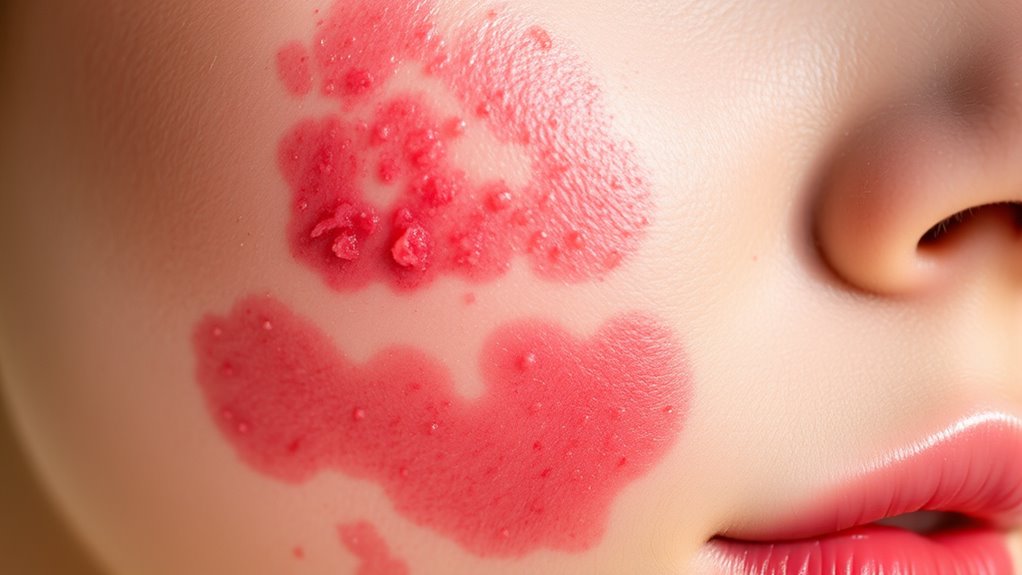

To recognize allergic reactions to cosmetics, look for signs like redness, itching, swelling, or burning on your skin shortly after using a product. You might also notice hives, blisters, or rashes that spread beyond the application area. Symptoms can appear minutes to hours later, and severe reactions may cause systemic issues like watery eyes or nasal congestion. Paying attention to these cues can help you avoid prolonged irritation—keep going to discover how to protect your skin safely.
Key Takeaways
- Look for signs like redness, itching, swelling, burning, or hives on or around the application area.
- Symptoms may appear minutes to hours after using a cosmetic product.
- Reactions can spread beyond the initial site and may include blistering or rash.
- Discontinue use of suspected products immediately if irritation occurs.
- Consult a dermatologist for allergy testing and personalized guidance on ingredient sensitivities.
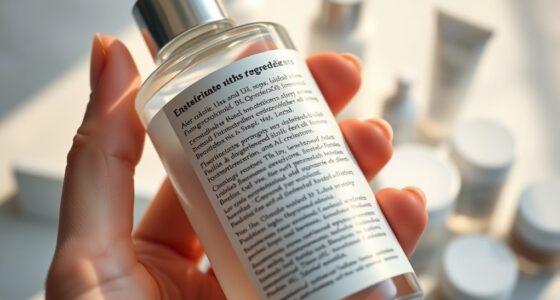
Many people experience allergic reactions to cosmetics without realizing it, making it important to recognize the signs early. One of the key aspects of identifying these reactions is understanding ingredient sensitivities. Cosmetics often contain a mix of chemicals, fragrances, preservatives, and dyes that can trigger adverse responses in sensitive individuals. When you notice unusual skin changes after using a new product, it’s crucial to pay attention to which ingredients might be causing the problem. Common culprits include parabens, formaldehyde-releasing preservatives, artificial fragrances, and certain dyes. By carefully reading labels and noting ingredients that previously caused irritation, you can better pinpoint potential sensitivities and prevent future reactions.
Many people unknowingly react to cosmetics; identify ingredient sensitivities early to protect your skin and prevent reactions.
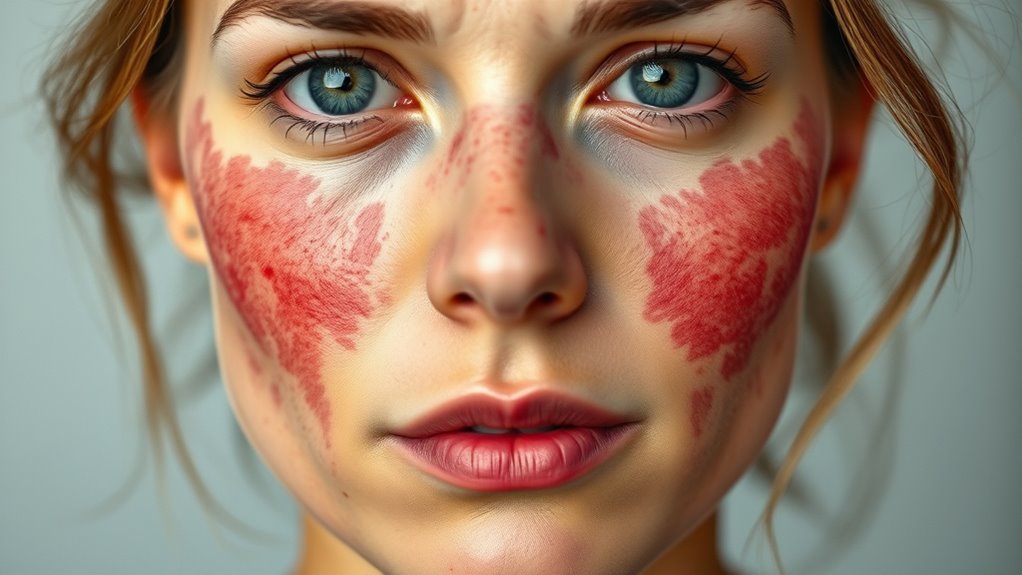
Symptom identification is essential in catching allergic responses early. Typical signs include redness, itching, swelling, or a burning sensation on the skin. You might also develop hives, blisters, or a rash that appears minutes or hours after application. Sometimes, reactions extend beyond the initial area, spreading to surrounding skin or even causing systemic symptoms like nasal congestion or watery eyes if the allergies are more severe. Recognizing these symptoms promptly helps you avoid worsening the reaction or causing long-term skin damage. Keep in mind that not all reactions are immediate; some may develop over time, especially with repeated exposure, so staying vigilant is necessary for early detection. Understanding symptom progression can help you identify allergic reactions more effectively.
Another important aspect of managing ingredient sensitivities involves understanding how your skin reacts to different formulations. For example, if you notice recurring irritation with certain products, even if they’re labeled as hypoallergenic, it’s worth investigating further. Patch testing can help identify specific ingredients that trigger your allergies. Applying a small amount of the product on a discreet patch of skin and monitoring for reactions over 24 to 48 hours can provide valuable insight. This step is especially useful if you have a history of sensitive skin or multiple allergies, as it allows you to tailor your cosmetic choices more effectively.
Being proactive in symptom identification and ingredient sensitivity awareness can dramatically improve your skin’s health. Always pay attention to how your skin responds after trying new products or changing your routine. If you notice persistent irritation or allergic symptoms, stop using the product immediately and consult a dermatologist. They can help you perform allergy testing or recommend alternative products that suit your skin’s needs. Recognizing allergic reactions early not only prevents discomfort but also safeguards your skin from more serious issues down the line. Staying informed about ingredient sensitivities and closely monitoring your symptoms empowers you to make safer, healthier choices in your beauty routine.
Frequently Asked Questions
Can Allergic Reactions Develop Years After Using a Product?
Yes, allergic reactions can develop years after you start using a product. This often happens due to delayed onset, where symptoms appear long after initial exposure. Cumulative exposure over time can sensitize your skin, making you allergic even if you previously tolerated the product. Keep an eye out for new or worsening symptoms, and consult a dermatologist if you suspect a delayed allergic reaction from cosmetic use.
Are Natural or Organic Cosmetics Less Likely to Cause Allergies?
Natural or organic cosmetics aren’t necessarily less likely to cause allergies because ingredient safety varies. Even certified products follow strict certification standards, but natural ingredients can still trigger sensitivities. You should always check labels for potential allergens, regardless of whether a product is labeled natural or organic. Remember, individual reactions differ, so test new products on a small skin area first to avoid unexpected allergic responses.
How Can Patch Testing Prevent Allergic Reactions?
Sure, patch testing isn’t foolproof, but it’s your best bet for allergy prevention. By applying a small amount of the product on your skin, you catch potential reactions early—before an inconvenient or dangerous allergy strikes. This simple patch test helps you identify sensitivities, saving you from future skin irritation. Ironically, a quick test can save you hours of discomfort, proving that prevention really is better than cure when it comes to cosmetics.
Do Allergic Reactions Differ Between Makeup and Skincare Products?
Yes, allergic reactions can differ between makeup and skincare products due to ingredient sensitivity and formulation differences. Makeup often contains dyes, preservatives, and fragrances that may trigger allergies, while skincare products focus on active ingredients like acids or botanicals. You might find reactions more intense with makeup because of its varied ingredients. Always check labels, patch test new products, and be aware of how your skin responds to different formulations.
What Are the Long-Term Effects of Cosmetic Allergies?
Long-term effects of cosmetic allergies can be like a slow-burning candle, gradually impacting your skin. Your skin might become more sensitive over time, causing persistent irritation or redness. Continuous immune responses can weaken your skin’s barrier, leading to chronic issues like dermatitis or hyperpigmentation. If you notice ongoing skin sensitivity, it’s essential to identify and avoid allergens, since ignoring these reactions can cause lasting damage and make future treatments more challenging.
Conclusion
By staying alert to the signs of allergic reactions, you can catch trouble before it spreads like wildfire. Remember, your skin’s response is a map guiding you to what’s safe or harmful. If you notice redness, swelling, or irritation after using cosmetics, don’t ignore these signals—they’re your body’s way of waving a red flag. Pay close attention, and treat your skin with kindness, so it remains a loyal guardian rather than a battlefield.