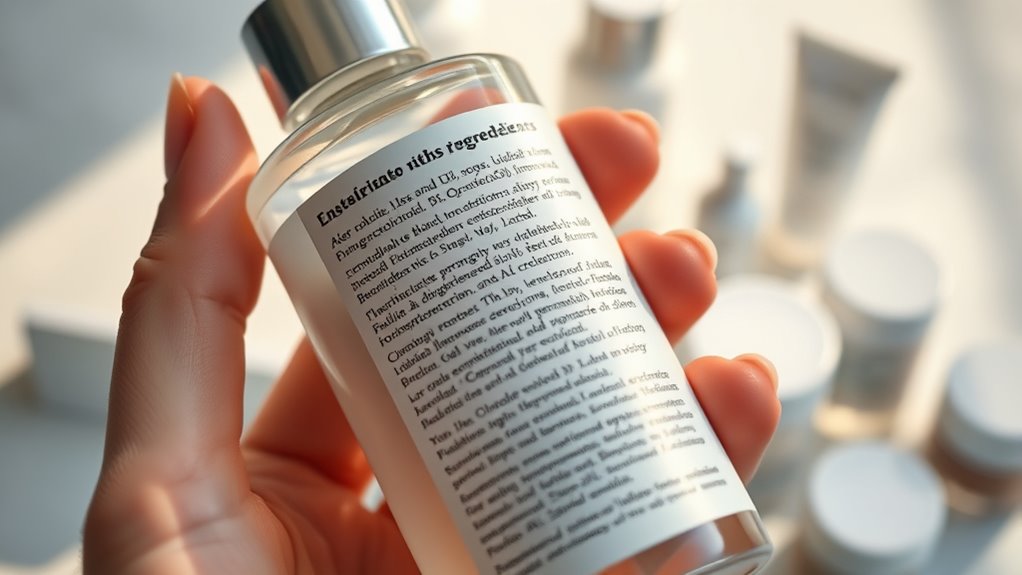
To understand ingredient labels on beauty products, start by checking the list in order; ingredients listed first are most abundant. Look for unfamiliar names and research them to determine their safety. Pay attention to common chemicals like parabens, sulfates, or phthalates, and consider products with transparent labels and natural certifications. While natural ingredients are preferable, always verify their safety for your skin. Keep exploring, and you’ll learn more about picking safer, effective beauty products.

Get beauty and skincare favorites delivered free — and shop member deals
- Fast, free delivery on millions of items
- Access to Prime Big Deal Days deals on October 6–7
- Prime Video, Amazon Music and more included
Key Takeaways
- Check the ingredient list from top to bottom, noting the most prominent ingredients at the beginning.
- Look for and research unfamiliar chemical names to understand their purpose and safety.
- Be aware of key terms like “parabens,” “phthalates,” and “sulfates” that may indicate harmful chemicals.
- Prefer products with transparent labels and certifications for natural or organic ingredients.
- Remember that natural ingredients are beneficial but verify their presence and safety through the ingredient list.
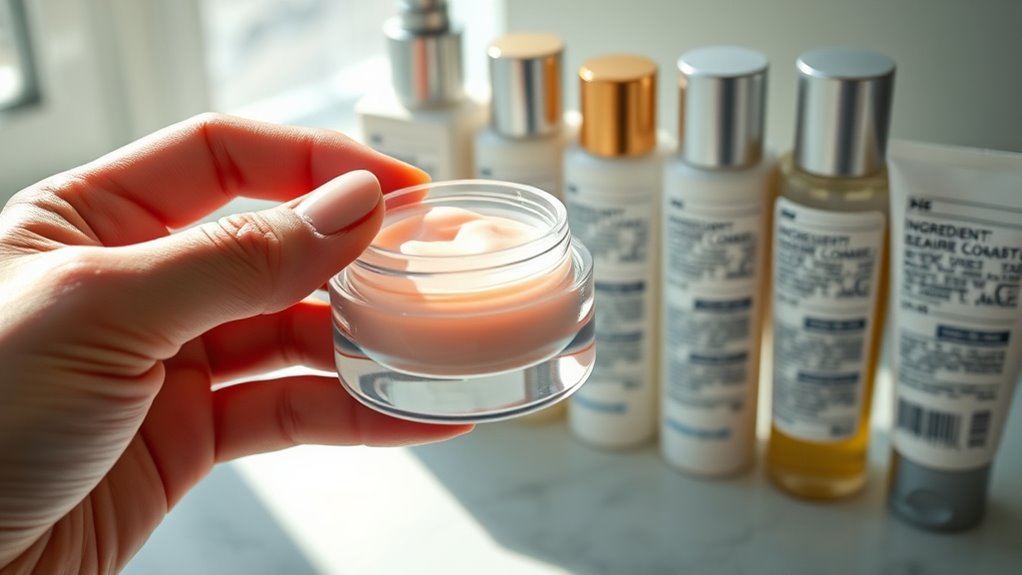
Understanding how to read ingredient labels on beauty products is essential for making informed choices about what you put on your skin. When you pick up a lotion, lipstick, or serum, you’re faced with a long list of ingredients. Knowing how to decode this list helps you avoid potentially harmful chemicals and identify products that align with your preferences for natural ingredients. Many ingredients are listed by their chemical names, which can be confusing and intimidating. Learning to recognize common chemical safety concerns allows you to steer clear of substances that might irritate your skin or pose health risks. Conversely, understanding the benefits of natural ingredients empowers you to choose products that support skin health without unnecessary synthetic additives.
The ingredients are typically listed in descending order by weight, meaning the first few are the most prominent in the product. Look for key terms like “parabens,” “phthalates,” or “sulfates,” which are often associated with chemical safety issues. If you see these, consider whether you’re comfortable with their presence or prefer to avoid them entirely. Many brands now highlight whether they’re free from such chemicals, making it easier for you to select safer options. As you read labels, pay attention to the ingredient names and research unfamiliar ones to understand their purpose and safety profile. This practice helps you avoid potential irritants and identify products that use safer, more natural ingredients. Additionally, understanding self-watering plant pots can inspire you to create a soothing, plant-filled environment that complements your skincare routine.
A growing trend is the shift toward products that emphasize natural ingredients. These often include botanical extracts, plant oils, and minerals that have been used for centuries for skin care. Recognizing these natural ingredients on labels can guide you toward products that are gentler and potentially more effective for sensitive skin. Remember, however, that “natural” doesn’t automatically mean safe or suitable for everyone, so it’s still crucial to read ingredient lists carefully. If you’re concerned about chemical safety, opt for products with transparent ingredient disclosures, preferably with certifications indicating they meet natural or organic standards.
natural ingredient beauty products
As an affiliate, we earn on qualifying purchases.
As an affiliate, we earn on qualifying purchases.
Frequently Asked Questions
How Can I Identify Harmful Ingredients Quickly?
To identify harmful ingredients quickly, focus on reading certifications like cruelty-free or organic labels, which often indicate safer sourcing. Pay attention to ingredient sourcing details, avoiding products with unfamiliar or untrusted sources. Look for common red flags like parabens, sulfates, or phthalates, and research unfamiliar ingredients. Staying informed helps you make smarter choices, ensuring your beauty products are safe and aligned with your health priorities.
Are Natural Ingredients Always Safer Than Synthetic Ones?
Natural ingredients aren’t always safer than synthetic ones, but they often seem gentler. You might assume natural equals safe, yet some can cause allergies or irritations. Synthetic ingredients are created in labs, but they’re rigorously tested for safety. When considering ingredient safety, focus on how your skin reacts rather than just natural versus synthetic labels. Always patch-test new products and consult dermatologists if you have sensitivities or concerns.
How Do I Interpret Ingredient Concentrations on Labels?
To interpret ingredient concentrations on labels, start with the ingredient hierarchy, which lists ingredients from highest to lowest percentage. Look for the ingredient percentage interpretation, usually indicated by terms like “active,” “main,” or specific percentages in some products. Keep in mind, ingredients listed lower are present in smaller amounts, so focus on the top few to understand the key components and their potential effects on your skin or hair.
Can Ingredient Labels Reveal Product Allergen Information?
Oh, the irony—ingredient labels often seem to hide allergen info behind ingredient myths, despite strict allergen labeling laws. You might think they clearly warn you about allergens, but some products don’t list everything or use vague terms. Always check labels carefully, as laws are supposed to protect you, but they don’t guarantee complete allergen disclosure. Be vigilant, and don’t rely solely on label claims for allergy safety.
What Do Cosmetic Ingredient Abbreviations Like “Peg” Mean?
When you see abbreviations like “PEG” on cosmetic labels, they’re part of ingredient code explanations, meaning polyethylene glycol. These abbreviations indicate specific chemical groups or compounds. PEGs are used as emulsifiers or solvents. To understand their safety, you should look up what each abbreviation means, as some may cause irritation or allergies. Recognizing these ingredient code explanations helps you make informed choices about the products you use daily.
Conclusion
Now that you know how to decode those tiny ingredient lists, you’re basically a beauty product whisperer. No more falling for pretty packaging or mysterious claims—you’re armed with the power to spot harmful fillers and sneaky chemicals. So go ahead, read those labels like a pro, and make smarter choices. After all, your skin deserves honesty, not just a fancy label and a promise of perfection. Happy shopping—your face will thank you!
Halloween Picks
halloween
As an affiliate, we earn on qualifying purchases.