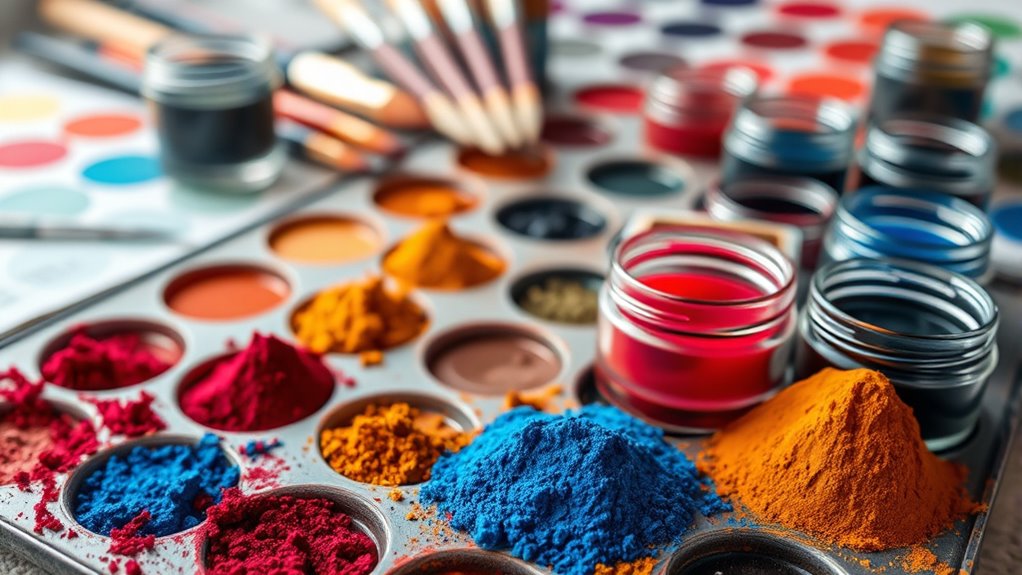

To master mixing pigments for custom shades, understand color theory and pigment chemistry. Start with a basic color wheel, learning how complementary, analogous, and triadic colors interact. Experiment with small amounts, gradually adjusting hues by adding white, black, or other pigments. Knowing each pigment’s opacity and chemical behavior helps prevent muddy or undesirable results. With patience and practice, you’ll develop control over creating vibrant, unique shades tailored to your artistic needs—exploring these principles further will deepen your expertise.

Get beauty and skincare favorites delivered free with Prime
- Fast, free delivery on millions of items
- Prime Video, Amazon Music and more included
- Member-only deals all year
Key Takeaways
- Understand color theory and the color wheel to predict how pigments will interact and create desired hues.
- Know pigment properties such as transparency, opacity, and lightfastness to anticipate mixing outcomes.
- Start with small pigment amounts, blending thoroughly, and adjust gradually for precise custom shades.
- Use complementary and analogous colors strategically to neutralize, tone, or harmonize your mixes.
- Keep detailed notes of proportions and results to replicate successful pigment combinations consistently.
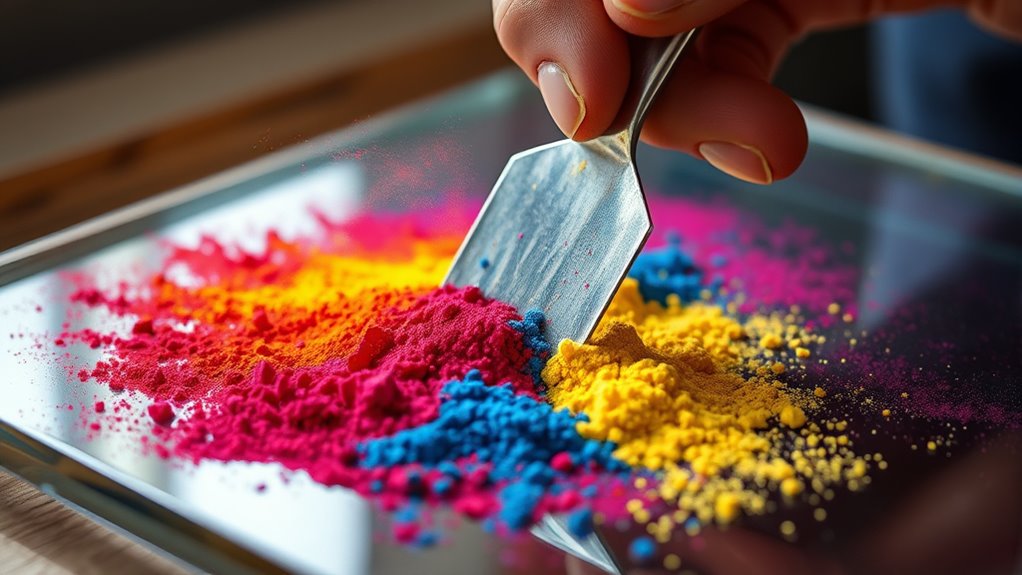
Creating your own custom shades begins with understanding how to mix pigments effectively. To do this, you need a solid grasp of color theory and pigment chemistry. Color theory helps you predict how different colors will interact, blend, and influence each other, giving you a blueprint for creating your desired hue. Pigment chemistry, on the other hand, explains why certain pigments behave the way they do—how they absorb and reflect light, their transparency, and how they chemically react when combined. Mastering both concepts means you’ll have better control over your mixes, reducing guesswork and waste.
Start by familiarizing yourself with the color wheel, which is fundamental to understanding complementary, analogous, and triadic color schemes. When mixing, knowing complementary colors—colors opposite each other on the wheel—can help you neutralize and tone down shades. For example, mixing a bit of green with red will create a muted, earthy tone. Conversely, blending analogous colors—those next to each other—can produce harmonious, subtle variations. This knowledge allows you to create new shades that are rich and balanced, rather than muddy or dull.
Pigment chemistry is equally indispensable. Different pigments have unique properties based on their chemical makeup. Some are transparent, others opaque; some shift in hue depending on the medium or lighting. For instance, certain yellow pigments might be more vibrant and lightfast, while others fade quickly. Understanding these properties helps you select pigments that will behave predictably in your mixes, ensuring your custom shades stay consistent over time. It also means you can anticipate how pigments will interact—whether they’ll blend smoothly or cause undesirable streaks or graininess.
When mixing, start with small amounts and gradually adjust. Use a palette knife or brush to blend thoroughly, paying attention to how the pigments combine. Remember that adding white, black, or gray can alter the tone—making it lighter, darker, or more neutral—which is essential for refining your shades. Keep notes of your mixes, recording proportions and results, so you can replicate successful blends later.
Ultimately, creating your own custom shades is about experimenting within the framework of color theory and pigment chemistry. By understanding how colors relate and how pigments behave chemically, you gain the confidence to craft precise, vibrant hues tailored to your vision. This process is both a science and an art, requiring patience and curiosity. With practice, you’ll develop a keen eye for mixing, revealing endless possibilities for your artistic projects.
As an affiliate, we earn on qualifying purchases.
Frequently Asked Questions
How Do I Prevent My Pigments From Clumping During Mixing?
To prevent your pigments from clumping during mixing, guarantee you achieve a smooth pigment consistency by gradually adding pigment to your medium. Use mixing techniques like stirring slowly and thoroughly, or employing a palette knife. If needed, add a small amount of water or binder to loosen clumps. Consistent, gentle mixing helps keep pigments evenly dispersed, resulting in a smooth, clump-free mixture every time.
What Safety Precautions Should I Take When Handling Pigments?
When handling pigments, safety precautions become your first line of defense. Always wear gloves, a dust mask, and eye protection to prevent inhalation or skin contact. Keep pigments in sealed containers and work in a well-ventilated area—hidden dangers lurk in fine dust particles. Never underestimate the importance of managing safety; a small oversight can lead to health risks. Stay vigilant, because protecting yourself ensures your creative process stays safe and inspiring.
Can I Mix Pigments With Non-Traditional Mediums?
Yes, you can mix pigments with alternative mediums and explore unconventional mixing methods. You might combine pigments with materials like resin, gel mediums, or even digital media for unique effects. Just be sure to test compatibility beforehand, as some mediums may alter pigment stability or color. Use proper safety precautions, and work in a well-ventilated area to enjoy experimenting safely with these innovative combinations.
How Long Does a Custom Pigment Shade Typically Last?
Ever wondered how long your custom pigment shade will last? Generally, a well-mixed pigment can maintain its shade stability for several years if stored properly. Factors like exposure to light, air, and humidity influence pigment longevity, but with proper care, your custom shade can stay vibrant and stable for a long time. So, are you ready to create lasting hues that stand the test of time?
What Are Common Mistakes to Avoid When Blending Pigments?
You should avoid rushing the blending process to maintain color consistency. Over-mixing can lead to pigment instability, causing shades to change or fade over time. Be cautious with the amounts of each pigment, as adding too much can result in unpredictable color shifts. Always document your ratios for future reference. By focusing on precise measurements and thorough blending, you guarantee your custom shades stay stable and consistent.
Conclusion
Now that you’ve learned to mix pigments for custom shades, think of your palette as a garden where each color is a unique flower waiting to bloom. With patience and practice, you become the gardener, nurturing and blending hues into stunning new blossoms. Your creative vision is the sun that fuels this growth, transforming simple drops into vibrant masterpieces. Keep experimenting, and watch your artistic garden flourish with endless, beautiful possibilities.
Fall Picks
fall essentials
As an affiliate, we earn on qualifying purchases.