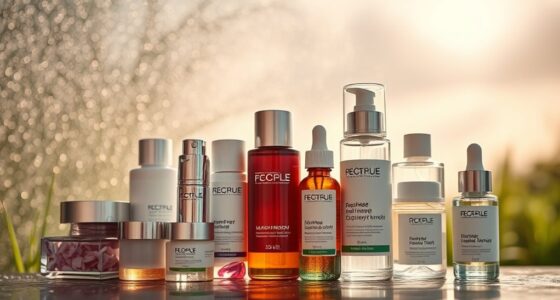

Blue light blocking skincare can help protect your skin from digital emissions, but its effectiveness depends on the ingredients and formulation. Products with antioxidants like niacinamide, vitamin C, or physical filters such as zinc oxide tend to offer better defense. However, no single product can block all blue light exposure completely. To get the best results, combine these products with other protective measures. If you stay curious, you’ll discover more ways to shield your skin effectively.
Key Takeaways
- Blue light can penetrate skin, potentially causing premature aging and inflammation over time.
- Many skincare products contain antioxidants or physical filters like zinc oxide to block blue light effects.
- The effectiveness of blue light blocking skincare varies; not all formulas provide complete protection.
- Combining skincare with other measures, such as blue light glasses and screen breaks, enhances protection.
- Evidence supports some benefits, but no single product offers full blue light shielding alone.

Have you ever wondered how digital screens might be affecting your skin? In today’s tech-driven world, most of us spend hours in front of computers, smartphones, and tablets. While these devices offer convenience and connectivity, they also emit light that can impact your skin over time. Blue light, a high-energy visible light, penetrates deep into your skin and may contribute to premature aging, inflammation, and even skin damage. That’s where blue light blocking skincare products come into play, promising to shield your skin from these effects. But do they really work?
Many of these products contain ingredients designed for UV protection, but their role isn’t limited to blocking ultraviolet rays alone. Instead, they often include antioxidants and other compounds aimed at neutralizing free radicals generated by blue light exposure. Ingredient effectiveness varies, so it’s essential to choose products with proven ingredients like niacinamide, vitamin C, or other antioxidants known for their protective properties. These ingredients can help strengthen your skin’s barrier and combat oxidative stress, which is a key factor in aging and damage.
Choose skincare with niacinamide, vitamin C, and antioxidants to strengthen your skin’s barrier and fight oxidative stress from blue light.
However, it’s important to recognize that not all blue light blocking skincare products are created equal. Some rely on physical filters, such as mineral sunscreens with zinc oxide or titanium dioxide, which reflect and scatter blue light. Others use chemical filters or specific antioxidants to absorb or neutralize the harmful effects. When selecting a product, check for ingredients that specifically target blue light or provide extensive skin protection. It’s also worth noting that many of these products are formulated to deliver additional benefits like hydration, soothing properties, and UV protection, making them versatile additions to your daily routine.
While UV protection is traditionally associated with sunscreen, many blue light blocking skincare items also provide some level of UV defense, helping you protect your skin from multiple wavelengths of light. But don’t forget, no product can entirely block all blue light, especially given the amount you’re exposed to daily. To maximize your defense, combine these skincare products with other protective measures—such as wearing blue light glasses, reducing screen time when possible, and taking regular breaks from devices.

HBlife Makeup Organizer with Brush Holder for Vanity, Large Plastic Bathroom Countertop Organizer Skin Care Storage, Easy to Store Lipsticks, Nail Polishes, Perfumes, Eyeshadow Palettes, All White
- Large Capacity: Holds 30+ makeup items
- Multiple Compartments: 2 drawers and 8 compartments
- Sleek Design: Dedicated slots for brushes and pens
As an affiliate, we earn on qualifying purchases.
Frequently Asked Questions
Can Blue Light Blocking Skincare Prevent Premature Aging?
Blue light blocking skincare can help prevent premature aging by shielding your skin from digital device emissions, but it’s most effective when combined with products offering UV protection and pollution defense. These ingredients work together to reduce oxidative stress, prevent fine lines, and maintain your skin’s elasticity. While blue light blockers are beneficial, don’t forget to incorporate broad-spectrum sunscreens and antioxidants into your routine for all-encompassing anti-aging protection.
Are There Any Side Effects From Blue Light Blocking Ingredients?
You might worry about side effects from blue light blocking ingredients, but they’re generally safe if used properly. While ingredient safety is a top priority, some people could experience allergic reactions, like redness or irritation. Always check labels for potential allergens and do a patch test first. Remember, even the safest ingredients can cause reactions in sensitive skin, so staying mindful helps you avoid unwanted side effects.
How Long Does It Take to See Results From These Products?
You might notice results from blue light blocking skincare within a few weeks, but it varies based on product formulation and your skin type. Consistent use is key, and user testimonials often mention improvements in skin tone and reduced irritation over time. Keep in mind, patience is essential since visible changes depend on individual factors. Stick with the routine, and you’ll likely see positive effects sooner rather than later.
Do Blue Light Blockers Work Better With Other Skincare Routines?
You’ll find blue light blockers shine brightest when combined with your existing skincare routine, offering subtle yet meaningful benefits. By integrating them seamlessly, you create a harmonious blend that nurtures your skin’s natural defenses. This combination benefits your overall routine, enhancing protection against environmental stressors. When you pair blue light blockers with trusted products, you’ll notice a more all-encompassing approach, making your skincare routine more effective and well-rounded.
Are Blue Light Blocking Skincare Products Suitable for Sensitive Skin?
If you have sensitive skin, blue light blocking skincare products can be suitable, but you should check product compatibility carefully. Look for gentle ingredients and avoid harsh chemicals to prevent irritation. Always read ingredient safety labels and do a patch test before regular use. If you notice redness or discomfort, discontinue use and consult a dermatologist. Choosing products designed for sensitive skin guarantees better compatibility and safe blue light protection.
Conclusion
So, does blue light blocking skincare really work? While some find it helpful in reducing irritation and protecting their skin from digital damage, evidence is still limited. It’s worth trying if you’re concerned about screen exposure, but don’t rely solely on these products. After all, isn’t your overall skincare routine just as important? Protect your skin wisely, stay consistent, and remember that no single product is a magic fix.