Seasonal color palettes from spring to winter reflect the changing moods and environments through the year. In spring, soft pinks, greens, and yellows evoke renewal and optimism. Summer brings vibrant turquoise, coral, and blues that energize and relax. Fall features warm oranges, reds, and browns, symbolizing harvest and comfort. Winter’s icy blues, grays, and greens promote calmness and elegance. Exploring these palettes helps you understand how colors influence mood and style throughout the seasons. Keep exploring to discover more about harnessing seasonal hues.
Key Takeaways
- Each season features distinct color palettes: spring with soft pinks and greens, summer with turquoise and coral, fall with burnt orange and reds, winter with icy blues and deep emeralds.
- Seasonal palettes evoke specific emotions and themes, such as renewal in spring or coziness in fall, influenced by color psychology and cultural symbolism.
- Colors in each palette promote particular moods; for example, spring colors inspire freshness, while winter hues encourage calmness and reflection.
- Understanding cultural meanings and psychological effects of colors enhances the selection of appropriate seasonal palettes.
- Personal energy and astrological compatibility can be aligned with seasonal color choices for a more personalized expression.
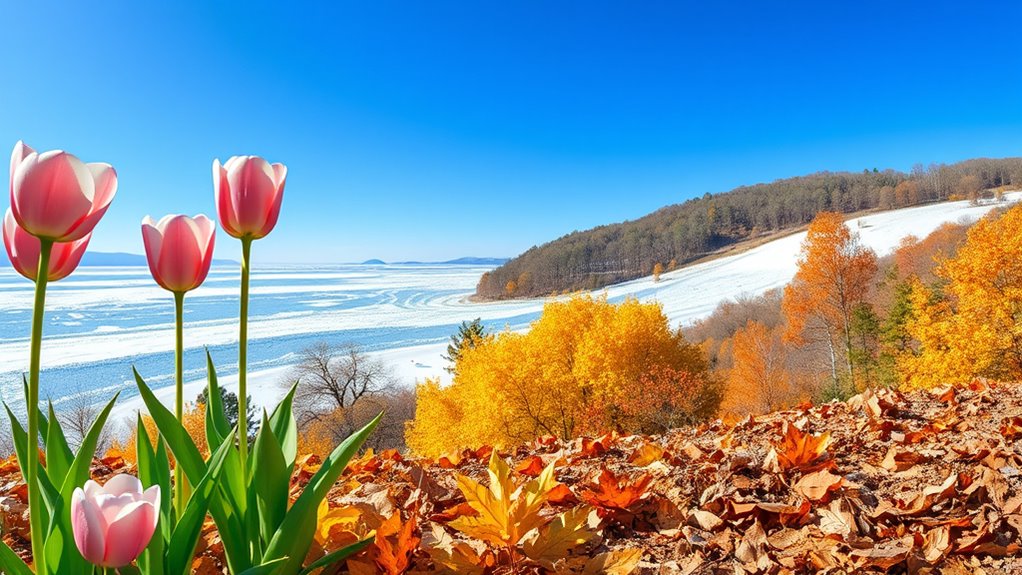
Have you ever noticed how the colors around you change with each season? It’s as if nature itself paints a new picture every few months, and you’re naturally drawn to these shifts. Understanding seasonal color palettes isn’t just about aesthetics; it’s deeply rooted in color psychology and cultural symbolism. These elements influence how we perceive colors and how they affect our emotions and behavior, making them powerful tools for personal style, home decor, or branding.
Seasonal colors influence emotions and style through psychology and cultural symbolism.
In spring, the palette bursts with fresh, lively hues like soft pinks, vibrant greens, and sunny yellows. These colors evoke renewal, growth, and optimism, aligning with the season’s symbolism of new beginnings. Color psychology tells us that green fosters calmness and balance, while pink can evoke feelings of warmth and compassion. Culturally, pink often symbolizes love and affection in many societies, reinforcing the season’s theme of blossoming relationships and renewal. Bright, cheerful colors also stimulate energy and positivity, making spring a perfect time to embrace lively shades that lift spirits and inspire creativity.
As summer arrives, the palette deepens with bold, saturated tones such as turquoise, coral, and rich blues. These colors mirror the vibrancy of long sunny days, beach trips, and outdoor adventures. The psychology behind these hues suggests confidence, vitality, and relaxation. Culturally, turquoise and coral often symbolize protection and celebration, respectively, adding layers of meaning to your seasonal choices. Summer colors are about expressing freedom and joy, so you’ll find many people gravitating toward shades that energize and invigorate. Whether you’re choosing a wardrobe or designing a space, these hues help you feel more lively and connected to the outdoors.
When fall rolls in, the palette shifts to warm, earthy tones like burnt orange, deep reds, and golden browns. These colors symbolize harvest, stability, and comfort, resonating with cultural symbols of abundance and gratitude. Color psychology suggests that warm hues evoke feelings of coziness, safety, and nostalgia. They remind you of cozy sweaters, pumpkin spice, and crackling fires. The rich, muted tones of autumn encourage reflection and grounding, making them ideal for creating environments that feel inviting and soothing. These shades also often carry cultural significance; for example, red can symbolize luck and prosperity in many traditions, adding depth to your seasonal choices.
Finally, winter’s palette is cool and subdued, featuring icy blues, slate grays, and deep emeralds. These colors evoke serenity, reflection, and elegance. The psychology of winter colors leans toward calmness and introspection, encouraging a sense of peace. Culturally, emerald green is associated with renewal and wealth, while icy tones can symbolize clarity and purity. Winter palettes often inspire a sense of sophistication and tranquility, perfect for creating refined aesthetics or calming environments. Whether you’re dressing for the season or decorating your home, these shades help you embrace the quiet beauty and introspection that winter brings. Additionally, understanding astrological compatibility can aid in selecting colors that resonate with your personal energy and subtle influences during each season.

Hotop 36 Bundles Artificial Plants Flowers for Outdoor UV Resistant Greenery & Fake Wildflowers Faux Plastic Plant No Fade for Hanging Planter Porch Window Home Wedding Summer Decor(Classic Colors)
- Vibrant Artificial Plant Variety: 12 types of colorful faux plants
- Realistic and Flexible Design: 11.8-14.9 inch length with 7 stems
- Durable and Weather-Resistant: Made from soft plastic and rust-proof stems
As an affiliate, we earn on qualifying purchases.
As an affiliate, we earn on qualifying purchases.
Frequently Asked Questions
How Do Seasonal Palettes Influence Interior Design Choices?
Seasonal palettes influence your interior design choices by guiding your color selection to match the mood you want to create. You’ll see color psychology at work, as warm hues boost energy in winter, while cool tones promote calm in summer. By choosing colors aligned with the season, you enhance mood and atmosphere, making your space more inviting and emotionally resonant. This thoughtful approach helps craft a harmonious environment throughout the year.
Can Seasonal Colors Be Personalized for Individual Skin Tones?
Think of personalized color matching like tailoring a suit perfectly to fit your body. Yes, seasonal colors can be adapted for your skin tone, creating skin tone harmony. By adjusting the palette to suit your unique complexion, you’ll find colors that enhance your natural glow. This personalized approach guarantees you feel confident and radiant, making seasonal colors work specifically for you rather than just following general trends.
Are Seasonal Color Palettes Consistent Across Different Cultures?
You’ll find that seasonal color palettes aren’t always consistent across cultures because cultural color symbolism varies widely. Different societies associate colors with specific meanings, influencing palette choices. Seasonal palette variations adapt to cultural preferences and symbolism, so what’s regarded as springlike in one culture might differ elsewhere. This diversity highlights how cultural influences shape color perceptions, making it essential to take into account local symbolism when applying seasonal palettes across different cultures.
How Do Weather Patterns Affect Seasonal Color Trends?
Weather patterns dramatically influence seasonal color trends, shaping what you wear and how you feel. Climate change impacts, like unpredictable storms or scorching heat, push designers to rethink palettes, emphasizing earth tones or vibrant hues. This shift taps into seasonal palette psychology, helping you adapt emotionally to changing environments. You might find yourself gravitating toward colors that soothe or energize, reflecting the unpredictable, powerful forces of weather shaping your style choices.
What Are the Best Ways to Incorporate Seasonal Palettes Into Fashion?
To incorporate seasonal palettes into your fashion, start with color mixing by combining complementary hues from the current season for a fresh look. Add accessories in coordinating shades to tie your outfit together effortlessly. Don’t be afraid to experiment with layering different tones or textures within the palette. This approach keeps your style vibrant, cohesive, and perfectly aligned with seasonal trends, making your wardrobe both stylish and versatile.
Conclusion
Now that you’ve explored the vibrant world of seasonal color palettes, you hold the power to transform your wardrobe and surroundings into a breathtaking masterpiece. With just a splash of spring’s freshness or winter’s icy elegance, you can turn everyday moments into extraordinary experiences. Embrace these colors boldly—because when you wear or use them, you don’t just blend in, you become a living, breathing work of art that could inspire entire seasons!