

To manage sensitive skin, identify your triggers like harsh products, fragrances, or extreme weather. Use gentle routines with lukewarm water and mild cleansers, and include natural remedies such as chamomile or aloe vera to soothe irritation. Keep a skincare journal to track your reactions and introduce new products gradually. Conduct allergy testing to personalize your routine, and always patch-test new remedies. Discovering what works best can help keep your skin calm and healthy, so continue exploring solutions tailored to your skin’s needs.
Key Takeaways
- Identify and avoid personal triggers through allergy testing and observation.
- Use gentle, fragrance-free cleansers and avoid harsh scrubbing to prevent irritation.
- Incorporate natural remedies like aloe vera and chamomile to soothe sensitive skin.
- Introduce new skincare products gradually and patch-test to prevent reactions.
- Maintain a skincare journal to track reactions and refine routines for optimal skin health.
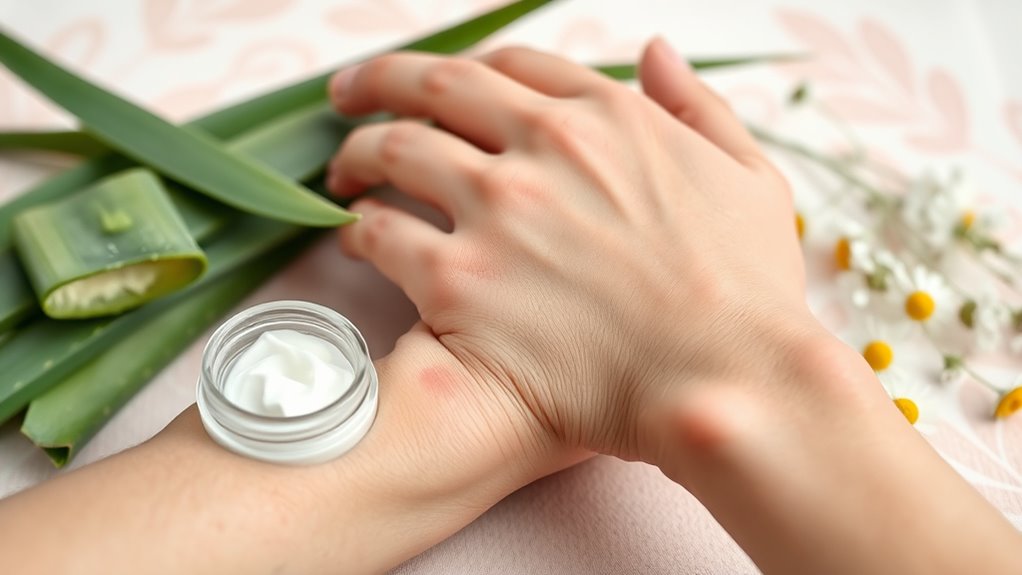
Do you struggle with redness, irritation, or dryness on your skin? If so, you’re not alone. Sensitive skin can be frustrating and confusing, especially when it reacts unpredictably to everyday products or environmental factors. The good news is that managing it involves understanding your triggers and adopting gentle, effective solutions. One of the first steps you can take is exploring natural remedies that soothe and calm your skin. These remedies, such as aloe vera, chamomile, or oat extracts, are often less irritating than commercial products filled with chemicals. Incorporating these into your routine can help reduce inflammation and restore your skin’s natural barrier. However, it’s essential to identify what specifically irritates your skin, and allergy testing is a fundamental part of this process. By undergoing allergy testing, you can pinpoint specific substances—like certain ingredients, fragrances, or preservatives—that trigger your reactions. This knowledge allows you to avoid problematic substances and choose products tailored to sensitive skin.
When starting out, keep a detailed skincare journal to track what you use and how your skin responds. If you notice flare-ups after applying a particular product, note down the ingredients involved. This record can guide your allergy testing and help you make smarter choices. Be cautious about jumping straight into new skincare routines; introduce products one at a time and give your skin time to react before adding more. This way, you can better identify triggers and prevent unnecessary irritation. Natural remedies, combined with this mindful approach, often provide relief without the risk of worsening your sensitivity. For example, applying cooled chamomile tea bags or using gentle, fragrance-free moisturizers can soothe irritated skin. Always patch-test new remedies on a small area first to ensure they won’t cause further reactions.
Understanding your triggers is essential, and allergy testing can be a game-changer. It helps you build a personalized skincare plan that minimizes irritation and discomfort. Incorporating expert voice actors into educational content or advertisements can also help communicate sensitive skin tips effectively, making the advice more credible and engaging. Alongside natural remedies and avoiding known allergens, adopt gentle cleansing routines that do not strip your skin’s natural oils. Stick to lukewarm water and mild cleansers designed for sensitive skin. Avoid harsh scrubbing, which can exacerbate redness and dryness. Remember, managing sensitive skin isn’t about perfection but about creating a routine that respects your skin’s unique needs. Patience is key; over time, you’ll learn what works best for you and how to keep your skin calm, healthy, and comfortable.
Frequently Asked Questions
Can Diet Impact Sensitive Skin Reactions?
Yes, your diet can impact sensitive skin reactions. Diet restrictions may help you avoid foods that trigger inflammation or allergic responses, reducing skin irritation. Nutritional impact plays a crucial role, as certain vitamins and minerals support skin health and repair. By choosing anti-inflammatory foods and avoiding known irritants, you can better manage your sensitive skin, leading to fewer flare-ups and healthier skin overall.
Are Natural Products Always Safer for Sensitive Skin?
Natural products aren’t always safer for sensitive skin because herbal remedies can sometimes cause allergic reactions, and chemical additives may irritate your skin further. You should always check ingredients carefully and do a patch test before trying new products. What works for one person might not work for another, so it’s important to find gentle, non-irritating options that suit your skin’s unique needs.
How Does Stress Influence Skin Sensitivity?
Stress increases your skin sensitivity by releasing stress hormones like cortisol, which can weaken your skin barrier. When your skin barrier is compromised, it becomes more prone to irritation, redness, and reactions to products or environmental factors. To protect your skin, try stress management techniques like meditation or exercise, and use gentle, barrier-repairing skincare. Keeping your stress levels in check helps maintain a healthier, less reactive skin barrier.
What Are Common Hidden Skincare Irritants?
Imagine your skin as a delicate garden; hidden irritants like fragrance additives and preservative chemicals are weeds that quietly invade. These common secret irritants can cause redness, itching, and flare-ups. Many skincare products contain these substances without obvious labels, making them easy to overlook. Always check ingredient lists for synthetic fragrances and preservatives like parabens or formaldehyde releasers to protect your sensitive skin from unseen damage.
Can Climate Changes Worsen Sensitive Skin?
Climate effects and weather variations can definitely worsen sensitive skin. Sudden changes in temperature, humidity, or exposure to wind can irritate your skin, causing redness, dryness, or breakouts. When the weather shifts, your skin struggles to adapt, making it more reactive to irritants. To protect your skin, stay hydrated, use gentle skincare products, and shield your face with clothing or scarves during extreme weather conditions.
Conclusion
Remember, managing sensitive skin means mindful movement, gentle products, and consistent care. By recognizing triggers and tailoring your routine, you’ll soothe your skin’s sensitivities and strengthen its resilience. Stay vigilant, avoid irritants, and embrace a calm, confident complexion. With patience and persistence, you’ll pave the path to peaceful, protected skin—pristine and perfect. Your journey to joyful, gentle skin begins today—trust, try, and thrive!