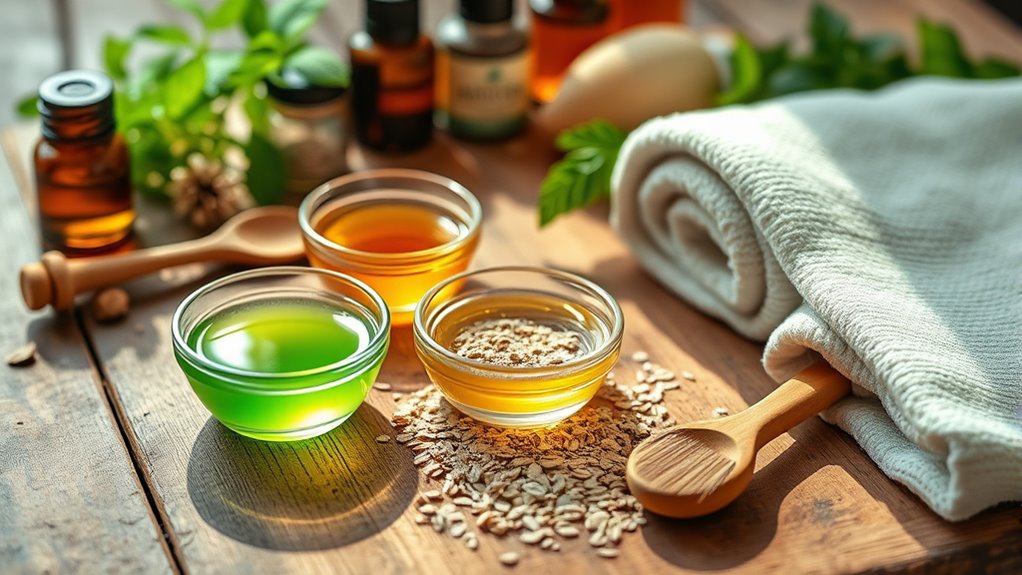

For safe, effective DIY facials at home, choose natural ingredients suited to your skin type. For oily skin, try honey and lemon; for dry skin, mash avocado with yogurt; and for sensitive skin, use chamomile or aloe vera. Always prepare fresh masks, apply for about 15-20 minutes, and rinse with lukewarm water. With the right ingredients and techniques, you can enjoy personalized pampering sessions, and there’s more to discover for glowing, healthy skin.
Key Takeaways
- Choose natural ingredients suited to your skin type, such as honey for acne-prone or avocado for dry skin.
- Prepare fresh masks and scrubs, mixing ingredients thoroughly to ensure safety and effectiveness.
- Avoid harsh chemicals; opt for gentle, soothing ingredients like chamomile, aloe vera, or oatmeal for sensitive skin.
- Follow proper application steps: cleanse, apply the mask or scrub for 15-20 minutes, then rinse with lukewarm water.
- Regularly perform DIY facials to improve skin health, radiance, and maintain a safe, cost-effective skincare routine at home.
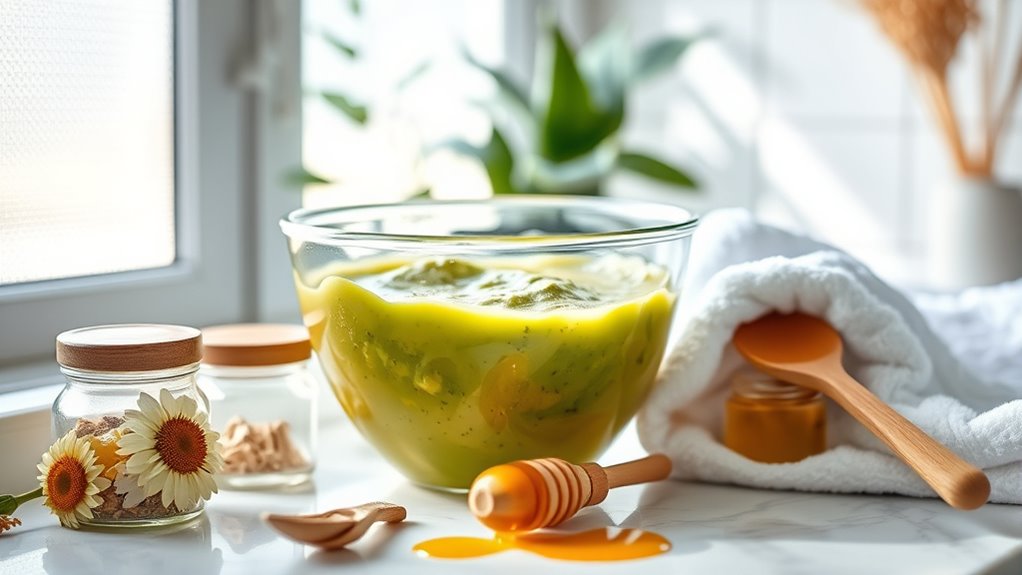
Doing your own facials at home can be a simple and cost-effective way to improve your skin’s health and appearance. When you choose DIY recipes, you have the advantage of customizing treatments with natural ingredients that suit your skin type. Whether you have oily, dry, sensitive, or combination skin, there are specific ingredients that work best for you. Using natural ingredients means you avoid harsh chemicals, making your skincare routine gentler and more nourishing. Plus, preparing your own masks and scrubs gives you control over what goes on your face, ensuring freshness and purity.
DIY facial at home offers a simple, affordable way to nourish your skin naturally.
For oily or acne-prone skin, ingredients like honey, lemon, and tea tree oil are excellent. Honey is a natural antibacterial that helps reduce breakouts, while lemon contains vitamin C and natural acids to brighten your complexion and control excess oil. Tea tree oil, diluted properly, can help combat bacteria and reduce inflammation. You might create a simple mask by mixing honey with a few drops of tea tree oil and applying it to your face for 15-20 minutes. Rinse with warm water, and you’ll notice your skin feels clearer and less greasy. If you have dry skin, look for nourishing ingredients such as avocado, yogurt, and olive oil. Avocado is rich in healthy fats and vitamins, soothing and hydrating your skin. Combining mashed avocado with a tablespoon of plain yogurt creates a moisturizing mask that restores suppleness and glow. Apply it evenly, relax for 15 minutes, then rinse with lukewarm water to reveal softer, more hydrated skin.
Sensitive skin requires gentle, calming ingredients like chamomile, aloe vera, and oatmeal. Brew a chamomile tea, let it cool, and mix it with a little aloe vera gel and finely ground oatmeal to create a soothing mask. This combination helps reduce redness and irritation while providing gentle nourishment. For a quick and effective exfoliation suitable for any skin type, use a mixture of sugar and coconut oil. The sugar acts as a scrub to remove dead skin cells, and coconut oil offers deep hydration. Massage gently in circular motions, then rinse thoroughly. This natural scrub leaves your skin feeling refreshed and smooth without irritation. Incorporating skincare knowledge into your routine can further enhance your results, ensuring you’re using the most effective ingredients for your skin type.
The key to successful DIY facials is understanding your skin type and choosing ingredients accordingly. Natural ingredients are versatile, affordable, and effective, making it easy to craft personalized treatments that cater to your skin’s unique needs. Remember, consistency is essential—regular facials at home can lead to healthier, more radiant skin over time. With a little effort and some simple natural ingredients, you can enjoy the benefits of professional skincare from the comfort of your home.
Frequently Asked Questions
Can I Use These Recipes on Sensitive Skin?
Yes, you can use these recipes on sensitive skin, but you should be cautious. Always check ingredient sensitivity before applying, and do an allergy test by applying a small amount to your skin first. If you notice any irritation or redness, stop using the recipe immediately. Using gentle, hypoallergenic ingredients can help minimize reactions, but it is crucial to listen to your skin’s response and consult a dermatologist if needed.
How Often Should I Do DIY Facials?
You should aim for a gentle rhythm, about once every two weeks, to respect your skin’s delicate balance. Frequency considerations are key, as overdoing it can hinder natural skin renewal. Pay close attention to how your skin responds—if it feels irritated or dry, extend the interval. Regularly pampering yourself with DIY facials can boost your glow, but moderation keeps your skin healthy and vibrant.
Are Homemade Facials Suitable for All Skin Types?
Homemade facials can suit all skin types if you choose your natural ingredients carefully. For sensitive skin, opt for gentle, soothing ingredients like honey or aloe vera. Oily skin benefits from ingredients like clay or lemon, while dry skin needs nourishing oils like coconut or olive. Always test a small patch first to check skin compatibility, and modify ingredients as needed to make certain a safe, effective facial tailored to your skin’s unique needs.
What Should I Avoid After a DIY Facial?
After a DIY facial, you should avoid sun exposure and harsh ingredients. Your skin is more sensitive, so applying sunscreen is essential if you’re going outside. Stay away from makeup, exfoliants, or strong skincare products that could irritate your freshly treated skin. Give your skin time to recover, and opt for gentle, soothing products. This helps prevent redness, irritation, or breakouts and keeps your skin healthy and glowing.
Can I Customize Recipes for Acne-Prone Skin?
Yes, you can customize DIY facial recipes for acne-prone skin by swapping ingredients like honey or aloe vera for harsher options. Focus on soothing and anti-inflammatory ingredients, avoiding heavy oils or fragrances. Store your customized recipes in airtight containers and keep them refrigerated to prevent spoilage. Always do a patch test first to confirm your skin responds well to ingredient swaps, and adjust recipes based on your skin’s reactions.
Conclusion
Now that you know how to create safe, soothing DIY facials at home, you’re armed with a treasure chest of skincare secrets. Think of these recipes as gentle waves washing over your skin, leaving it refreshed and radiant. With a little care and creativity, pampering yourself becomes as natural as breathing. So, embrace these simple rituals and let your glowing complexion shine like a beacon, guiding you to confidence and self-love every day.