
If your cleanser feels tight, irritated, or causes redness and peeling right after washing, it’s probably too harsh for your skin. Notice if your skin becomes dry, flaky, or overly oily shortly after cleansing, as these are signs of barrier disruption. You might also feel discomfort or tightness that doesn’t improve. If these signs seem familiar, keep going to discover how to choose gentler options that protect your skin instead of harming it.
Key Takeaways
- Your skin feels tight, uncomfortable, or pulls after cleansing.
- Notice redness, flakiness, or increased dryness immediately post-wash.
- Skin becomes more oily or prone to breakouts right after cleansing.
- You experience irritation, burning, or increased sensitivity.
- Skin shows signs of dehydration or peeling shortly after use.
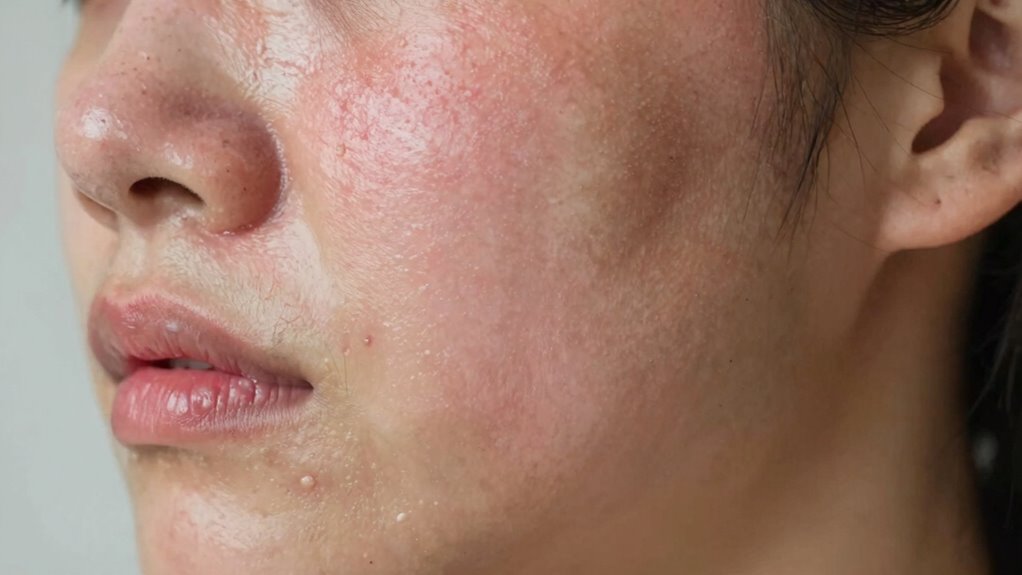
If your skin feels tight, irritated, or starts peeling after cleansing, your cleanser might be too harsh. Harsh cleansers strip away natural oils, leaving your skin vulnerable and irritated. To avoid this, focus on gentle skincare that respects your skin’s barrier. Recognize that not all cleansers are created equal; some contain ingredients that can cause more harm than good, especially if you have sensitive skin. Ingredient awareness is key—look out for alcohol, sulfates, and artificial fragrances, which can strip moisture and trigger inflammation. Instead, opt for products with soothing ingredients like glycerin, ceramides, or aloe vera, which help maintain your skin’s balance.
Choose gentle cleansers with soothing ingredients to protect and balance sensitive skin effectively.
You’ll notice signs of a harsh cleanser if your skin becomes red, flaky, or overly dry immediately after washing. These are clear signals that your skin isn’t responding well. A good rule of thumb is to pay attention to how your skin feels afterward. If it’s uncomfortable or feels like it’s been pulled tight, it’s a sign that the cleanser is disrupting your skin’s natural oils. When you’re choosing a cleanser, read labels carefully and prioritize those formulated for sensitive skin or those labeled as gentle skincare. These typically contain milder surfactants that clean without stripping.
Another way to tell if your cleanser is too harsh is if your skin becomes more oily or breaks out shortly after use. Overly aggressive cleansers can cause your skin to produce more oil as a reaction to dryness, leading to breakouts. Conversely, if your skin feels tight and uncomfortable, it might be dehydrated, which indicates that your cleanser isn’t working in harmony with your skin’s needs. In such cases, switching to a more hydrating, fragrance-free formula can make a significant difference. Additionally, understanding skincare ingredients can help you select products that support your skin’s health rather than compromise it.
Ultimately, understanding your skin type and ingredient awareness will help you choose the right cleanser. Avoid products with harsh chemicals and focus on those that promote skin health. Your skin should feel clean but not stripped or irritated. If you’re unsure, perform patch tests or consult a dermatologist to find the best options for your skin. Remember, consistent use of gentle skincare products will help you maintain a healthy, balanced complexion without sacrificing comfort.

Vanicream Gentle Facial Cleanser with Pump Dispenser – 8 fl oz – Formulated Without Common Irritants for Those with Sensitive Skin
Our mildest cleanser specifically formulated for daily facial use.
As an affiliate, we earn on qualifying purchases.
As an affiliate, we earn on qualifying purchases.
Frequently Asked Questions
Can a Cleanser Be Too Harsh for Sensitive Skin?
Yes, a cleanser can be too harsh for sensitive skin. If it strips your skin’s natural oils or disrupts its pH balance, it’s likely too strong. Look for gentle alternatives labeled for sensitive skin, which usually have a balanced pH and fewer irritants. If you notice redness, dryness, or irritation after cleansing, switch to milder options to protect your skin’s delicate barrier.
How Often Should I Change My Cleanser?
Don’t stick to one cleanser forever; your skin’s needs change, so switch it up every few months. As you do, keep an eye on your skin pH levels and watch for ingredient irritation. If your skin starts feeling dry, itchy, or inflamed, it’s a sign to change your cleanser. Regularly rotating products helps prevent your skin from becoming too accustomed or irritated, keeping it healthy and balanced in the long run.
Are Natural Ingredients Less Likely to Be Harsh?
Natural ingredients like herbal extracts are generally gentler on your skin, but that’s not always the case. Some herbal extracts can cause irritation, and natural products may contain chemical preservatives that could still be harsh for sensitive skin. So, don’t assume natural means milder. Always check ingredient lists and patch-test new products to see how your skin reacts, regardless of whether ingredients are natural or synthetic.
Can a Harsh Cleanser Cause Breakouts?
Yes, a harsh cleanser can definitely cause breakouts. When you use a harsh chemical, it strips your skin’s natural oils, leading to skin irritation and increased oil production as your skin tries to rebound. This cycle clogs pores and sparks breakouts. Think of it like opening a can of worms — your skin reacts negatively, making blemishes more likely. Stick to gentle cleansers to keep your skin happy and clear.
What’s the Best Alternative if My Cleanser Is Too Harsh?
If your cleanser feels too harsh, switch to a gentle exfoliation product with soothing ingredients like chamomile or aloe vera. Look for a mild, hydrating cleanser that maintains your skin’s natural barrier. Avoid harsh chemicals and fragrances. You could also try cleansing with lukewarm water and a soft cloth, then follow up with a moisturizer designed for sensitive skin. This approach helps calm irritation and keeps your skin balanced.

Cetaphil Face Wash, Hydrating Gentle Skin Cleanser for Dry to Normal Sensitive Skin, 20 oz, Fragrance Free, Soap Free and Non-Foaming
CETAPHIL GENTLE SKIN CLEANSER: Clinically proven to cleanse while hydrating, providing 48 hours of hydration when wiped off…
As an affiliate, we earn on qualifying purchases.
As an affiliate, we earn on qualifying purchases.
Conclusion
If your skin feels tight, red, or irritated after cleansing, it’s like trying to wear shoes that are too tight—they might look good, but they’ll cause discomfort. A friend once ignored her harsh cleanser and ended up with flaky skin that looked like cracked paint. Remember, your skin’s health isn’t worth sacrificing for a squeaky-clean feeling. Switch to gentle formulas, and your skin will thank you with a fresh, balanced glow—like a well-tuned garden after rain.

Good Molecules Soothing Azelaic Acid Cleanser – Gentle Creamy Non-Foaming Face Wash for Oily & Sensitive Skin – Vegan & Fragrance-Free – 120 ml
Gentle Daily Cleanser: A creamy, non-foaming facial cleanser powered by a 3% buffered form of azelaic acid to…
As an affiliate, we earn on qualifying purchases.
As an affiliate, we earn on qualifying purchases.
Cetaphil Face Wash, Hydrating Gentle Skin Cleanser for Dry to Normal Sensitive Skin, 20 oz, Fragrance Free, Soap Free and Non-Foaming
CETAPHIL GENTLE SKIN CLEANSER: Clinically proven to cleanse while hydrating, providing 48 hours of hydration when wiped off…
As an affiliate, we earn on qualifying purchases.
As an affiliate, we earn on qualifying purchases.