Understanding acid exfoliants means knowing the differences between AHA, BHA, and PHA. AHAs, derived from fruits and milk, target surface skin and brighten your complexion. BHAs are oil-soluble, penetrate deep into pores, and help with oiliness and acne. PHAs are gentler, ideal for sensitive skin, and promote gentle exfoliation without irritation. If you want to learn how to choose the right one for your skin, keep exploring these options.
Key Takeaways
- AHAs are water-soluble acids that exfoliate surface dead skin cells and brighten skin tone.
- BHAs are oil-soluble acids that penetrate deeper into pores to clear out oil and debris.
- PHAs are gentler, larger molecules suitable for sensitive skin, offering mild exfoliation with anti-aging benefits.
- AHAs improve skin texture, reduce fine lines, and enhance product absorption; BHAs target oily skin and acne.
- PHAs provide a gentle alternative for sensitive skin, promoting even tone with minimal irritation.
Have you ever wondered how acid exfoliants can transform your skin? When you incorporate these products into your routine, you’re fundamentally helping your skin shed dead cells more efficiently. Acid exfoliants work by promoting chemical penetration into your skin, breaking down the bonds that hold dead skin cells together. This process isn’t just about surface-level cleansing; it deeply enhances exfoliation benefits, revealing brighter, smoother skin underneath. Unlike physical scrubs, which can sometimes cause irritation or microtears, acid exfoliants dissolve the bonds between dead cells gently and effectively, making your skin look refreshed and renewed.
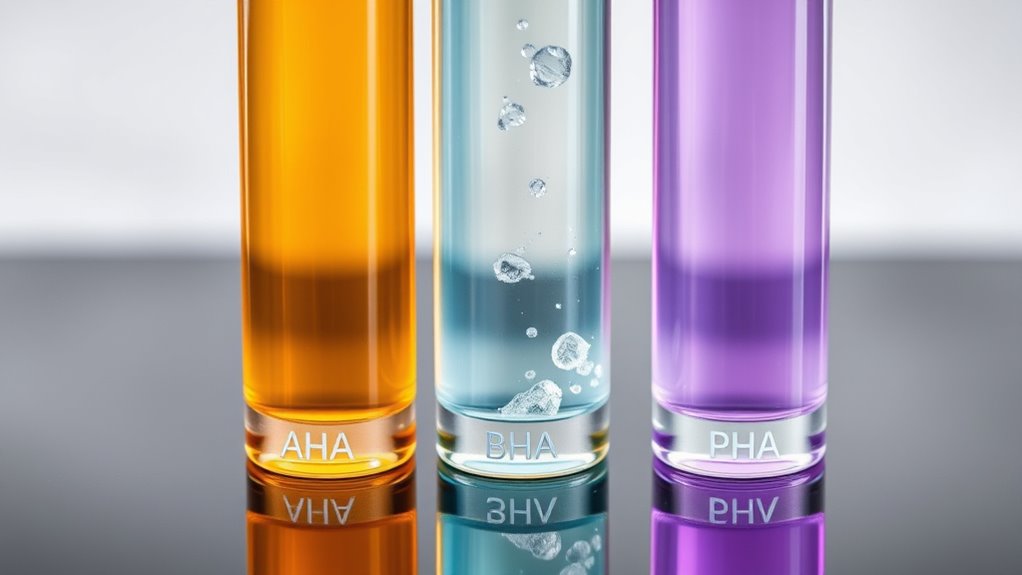
Understanding how each type of acid works can help you choose the right exfoliant for your skin type and concerns. Alpha hydroxy acids (AHAs) are water-soluble acids derived from fruits and milk. They’re particularly effective for surface exfoliation, targeting the outermost layer of your skin. When you use AHAs, you’re encouraging the removal of dead skin cells that sit on the surface, which can brighten dull skin, reduce the appearance of fine lines, and improve skin tone. Their ability to enhance chemical penetration means they also boost the absorption of other skincare products, making your entire routine more effective.
AHAs, derived from fruits and milk, target surface dead cells for brighter, smoother skin.
BHA, or beta hydroxy acids, are oil-soluble, allowing them to penetrate deeper into pores. If you’re dealing with oily skin, blackheads, or acne, BHA can be especially beneficial. Its ability to reach into pores helps clear out excess oil and debris, reducing breakouts and preventing future clogging. Because BHA works on a deeper level, it provides exfoliation benefits that address not just surface issues but also underlying skin problems. The chemical penetration of BHA makes it a powerful tool for improving skin texture and clarity, especially if your skin tends to be congested or prone to acne.
PHA, or polyhydroxy acids, are newer and gentler options for exfoliation. They have larger molecules, which means they penetrate your skin more slowly, making them suitable for sensitive skin types. Despite their gentle nature, PHAs still offer effective exfoliation benefits by removing dead cells and promoting a more even skin tone. Their chemical penetration is milder, reducing the risk of irritation while still providing anti-aging and brightening effects.
Frequently Asked Questions
Can Acid Exfoliants Be Used With Retinoids Safely?
Yes, you can use acid exfoliants with retinoids safely, but you need to be cautious. Start by maintaining a proper pH balance in your skincare routine and avoid layering products too close together to prevent irritation. Use acids and retinoids on alternate nights or with a time gap, and always listen to your skin’s response. This approach minimizes irritation while still giving you the benefits of both ingredients.
How Often Should I Incorporate Acid Exfoliants Into My Skincare Routine?
Think of your skin as a garden that needs just the right amount of water. For acid exfoliants, start with 1-2 times a week, then observe your skin’s response. Follow frequency guidelines based on your skin tolerance, and don’t overdo it to avoid irritation. As your skin adjusts, you can gradually increase usage, but always listen to its signals to keep your glow healthy and balanced.
Are Acid Exfoliants Suitable for Sensitive or Rosacea-Prone Skin?
Yes, acid exfoliants can be suitable for sensitive or rosacea-prone skin if you choose gentle formulations. Look for products with lower acidity and soothing ingredients. Always patch test before regular use to make certain your skin tolerates it well. Start with infrequent application, like once a week, and gradually increase as your skin adapts. This cautious approach helps prevent irritation and keeps your skin calm and healthy.
Do Acid Exfoliants Cause Photosensitivity or Increase Sunburn Risk?
Yes, using acid exfoliants can increase your photosensitivity risk, making your skin more vulnerable to sun damage. It’s essential that you apply broad-spectrum sun protection daily, especially after exfoliating. Always wear a wide-brimmed hat and seek shade when outdoors. This way, you minimize the risk of sunburn and long-term skin damage while enjoying the benefits of your exfoliation routine.
Which Acid Exfoliant Is Best for Acne-Prone Versus Aging Skin?
For acne-prone skin, BHA is your best choice because it penetrates pores to improve clarity and reduce breakouts. If you’re targeting aging skin, AHA works well to enhance skin texture and promote a brighter, smoother appearance. PHA is gentle and suits sensitive skin, offering mild pore clarity benefits. Choose based on your skin’s needs, but always start slowly and monitor your skin’s response.
Conclusion
Now that you understand the differences between AHA, BHA, and PHA exfoliants, you’re better equipped to choose the right one for your skin. Remember, each type offers unique benefits tailored to your skin’s needs. Are you ready to incorporate these powerful acids into your routine and reveal a healthier, glowing complexion? With the right knowledge, you can confidently take control of your skincare journey and achieve the results you desire.