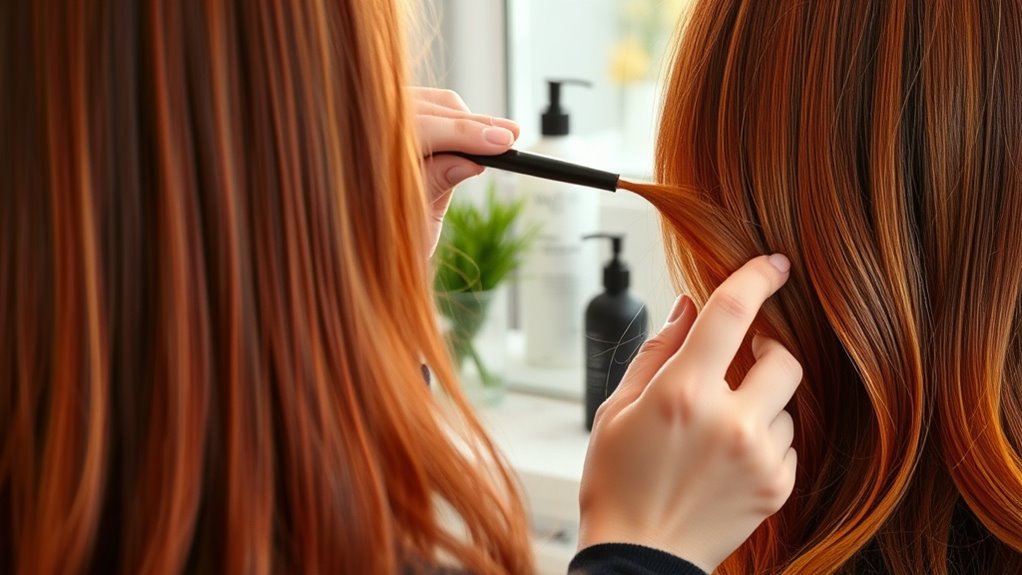

To color your hair safely and avoid damage, choose natural dyes like henna or beetroot that skip harsh chemicals like ammonia or parabens. Always perform an allergy test 48 hours before applying any dye to prevent reactions. Select reputable brands that emphasize purity, and follow their instructions carefully. Incorporating eco-friendly products not only protects your hair and scalp but also supports sustainability. If you’re interested, you’ll find more tips on making hair coloring safer and eco-conscious.
Key Takeaways
- Choose natural, plant-based dyes like henna or beetroot to avoid harmful chemicals and reduce scalp irritation.
- Always perform an allergy test 48 hours before coloring to prevent allergic reactions or sensitivities.
- Use reputable brands that prioritize transparency and avoid synthetic fragrances, preservatives, and heavy metals.
- Follow application instructions carefully and consider layering natural dyes for richer, subtle shades.
- Incorporate eco-friendly hair products and minimize chemical exposure for safer, healthier hair coloring.

Choosing a safe way to color your hair is vital to protect your health and maintain healthy strands. Many commercial hair dyes contain harsh chemicals like ammonia, parabens, and resorcinol, which can cause scalp irritation, allergic reactions, or long-term health concerns. To minimize these risks, exploring natural dyes offers a gentle alternative that’s better for your body and the environment. Natural dyes, made from plant-based ingredients such as henna, indigo, or beetroot, provide vibrant color without the chemical load. They often nourish your hair instead of damaging it, helping you achieve a beautiful look while keeping your scalp safe. However, even natural dyes can sometimes trigger allergies, so allergy testing is a vital step before applying any new product to your hair.
Performing allergy testing involves applying a small amount of the dye to a discreet patch of skin, usually behind your ear or on your inner wrist, at least 48 hours before your intended coloring session. This simple step can prevent uncomfortable reactions like redness, itching, or swelling, which might otherwise ruin your day or require medical attention. Always read the instructions carefully, and follow the recommended patch test procedure to guarantee your skin tolerates the product. If you notice any adverse reactions, avoid using that dye or ingredient altogether and consider consulting a dermatologist for personalized advice.
When choosing natural dyes, pay attention to the ingredients and opt for reputable brands that emphasize purity and transparency. Many natural dyes are free from synthetic fragrances, preservatives, and heavy metals, making them safer choices for sensitive skin and allergy-prone individuals. Additionally, some natural dyes can be combined to achieve a broader spectrum of shades, giving you more control over the final look without exposing yourself to harmful chemicals. Keep in mind that natural dyes often require a different application process and may produce more subtle or layered colors compared to conventional dyes, so patience and proper preparation are key. For example, understanding the farmhouse aesthetic can inspire you to incorporate natural, eco-friendly products into your beauty routine, aligning with sustainable living principles.
Frequently Asked Questions
Are There Natural Hair Dyes That Are Completely Chemical-Free?
Yes, there are natural hair dyes that are completely chemical-free. Herbal alternatives and plant-based dyes like henna, indigo, and cassia offer a safe way to color your hair without harmful chemicals. These options work gently, enriching your hair naturally. You just need to choose the right plant-based dye for your desired color and follow the application instructions carefully for the best results.
How Often Should I Do a Patch Test Before Coloring?
You should do a patch test 48 hours before each coloring session to ensure allergy prevention. Interestingly, about 10-15% of people develop allergic reactions to hair dyes, making patch tests vital. For consistent safety, perform a patch test every time you try a new brand or formula. This simple step helps you avoid irritation and allergic reactions, keeping your hair coloring routine safe and enjoyable.
What Ingredients Should I Avoid in Commercial Hair Dyes?
You should avoid hair dyes with ingredients like ammonia and PPD, especially if you’re sensitive. Ammonia exposure can damage your hair and scalp, while PPD sensitivity may cause allergic reactions. Look for dyes labeled as ammonia-free and PPD-free to minimize risks. Always check the ingredient list before applying, and opt for natural or organic options when possible to keep your hair healthy and safe.
Can Hair Coloring Affect Scalp Health Long-Term?
Yes, hair coloring can affect your scalp health long-term. If you have scalp sensitivity, chemicals in dyes can cause irritation, inflammation, or allergic reactions. Over time, repeated coloring may lead to chemical buildup, which can weaken your scalp’s skin barrier and cause dryness or itchiness. To protect your scalp, choose gentle, ammonia-free dyes, do patch tests, and give your scalp time to recover between treatments.
Are There Any Age Restrictions for Safe Hair Coloring?
You should know that children under age 16 are generally advised to avoid hair coloring, as some chemicals can cause skin irritation or allergic reactions. Although there’s no strict age restriction for adults, it’s best to seek professional guidance if you’re over 50, since aging skin may react differently. Always consult with a professional to guarantee safe coloring tailored to your age and skin sensitivity, reducing potential risks.
Conclusion
Think of your hair as a garden that needs gentle care. By choosing safe coloring methods and avoiding harsh chemicals, you’re planting seeds of health and vigor. With patience and mindful choices, your hair can flourish like a well-tended bloom—vibrant, strong, and full of life. Remember, the true beauty lies in nurturing your roots, allowing your natural colors to shine and grow with confidence. Your hair’s health is the foundation of your radiant self.