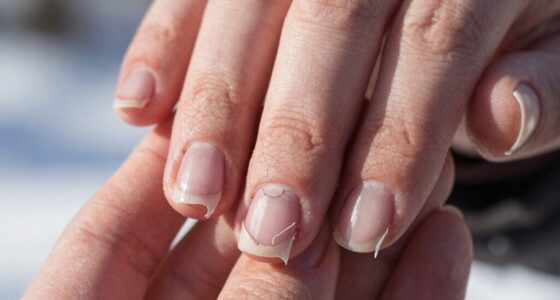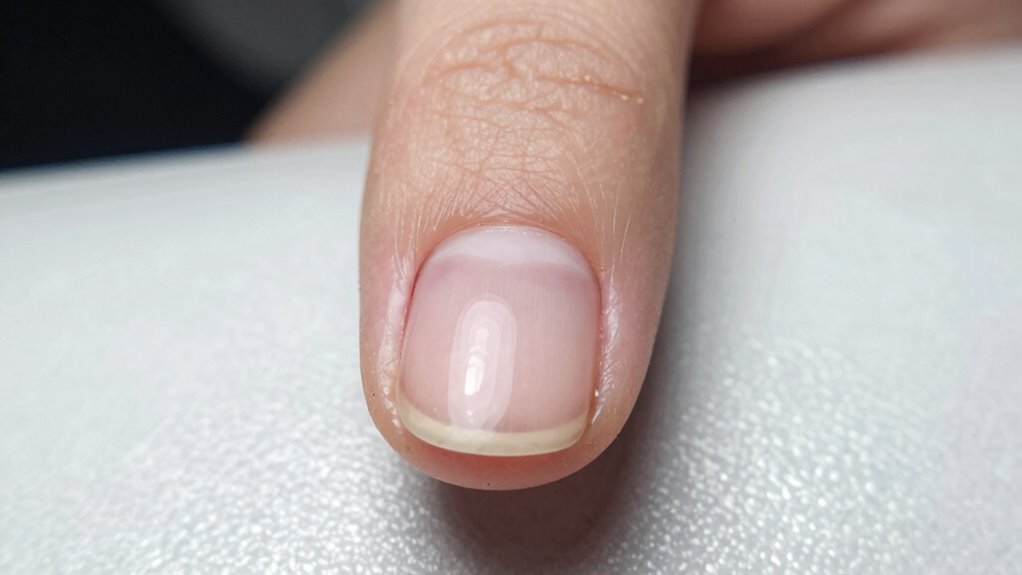

Nail lifting happens when your nail starts to peel away from the nail bed, often due to infections, injuries, or dryness. You’ll notice subtle signs like gaps or discoloration early on. To prevent this, use gentle products, keep your nails moisturized, and avoid harsh chemicals or trauma. Ignoring these signs can lead to pain or infections. Keep exploring to learn more about protecting your nails and addressing issues early.
Key Takeaways
- Nail lifting refers to the separation of the nail from the nail bed, often starting subtly and causing gaps or raised areas.
- Common causes include infections, injuries, dry or brittle nails, and poor nail hygiene.
- It can lead to pain, infection, and permanent nail damage if untreated.
- Preventive measures include gentle nail care, regular moisturization, and avoiding harsh chemicals or trauma.
- Seek medical advice if you experience persistent pain, swelling, or signs of infection to prevent complications.
Recognizing the Signs of Nail Lifting
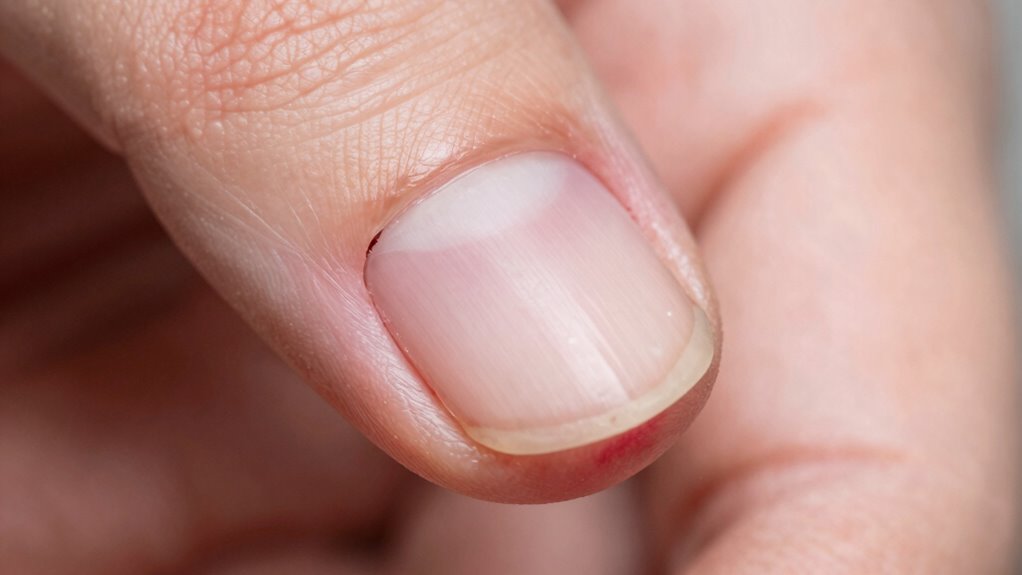
Nail lifting often begins subtly, making it important to know what signs to look for. You might notice your nail starting to separate from the nail bed, which can affect your nail health. Look for a small gap or a zone where the nail appears raised or loose. Discoloration or changes in texture can also signal that something’s off. These signs can be a cosmetic concern, especially if they make your nails look uneven or unsightly. Early detection helps you address issues before they worsen. Keep an eye out for any lifting along the edges or underneath the nail, as these are common indicators. Recognizing these early signs allows you to protect your nail health and maintain the appearance you want. Being aware of free floating nails can help you understand the importance of proper nail care and seek treatment promptly. Additionally, understanding the causes of nail lifting can guide you in making preventive adjustments to your nail care routine, such as avoiding trauma or harsh chemicals. Incorporating proper hygiene practices can further reduce the risk of infection and promote healthy nail growth.
Common Causes of Nail Lifting: Infections, Injuries, and More

Infections are a common cause of nail lifting, as they can weaken the nail bed and cause the nail to separate from it. Poor nail hygiene can lead to fungal or bacterial infections that push the nail upward. Injuries, such as stubbing your toe or repetitive trauma, also contribute to lifting. Additionally, dry nails may become brittle, making them prone to damage. Maintaining good moisturizing routines strengthens your nails, preventing cracks that invite infection. Proper nail care is essential for preventing these issues and supporting overall nail health. Here’s a quick comparison:
| Cause | Impact |
|---|---|
| Infection | Weakens nail bed, causes separation |
| Injury | Physical trauma lifts the nail |
| Poor nail hygiene | Increases infection risk |
| Dry nails | Becomes brittle, susceptible to lifting |
Stay vigilant with nail hygiene and moisturizing to reduce these risks.
What Are the Risks of Nail Lifting? Pain, Infection, and Damage
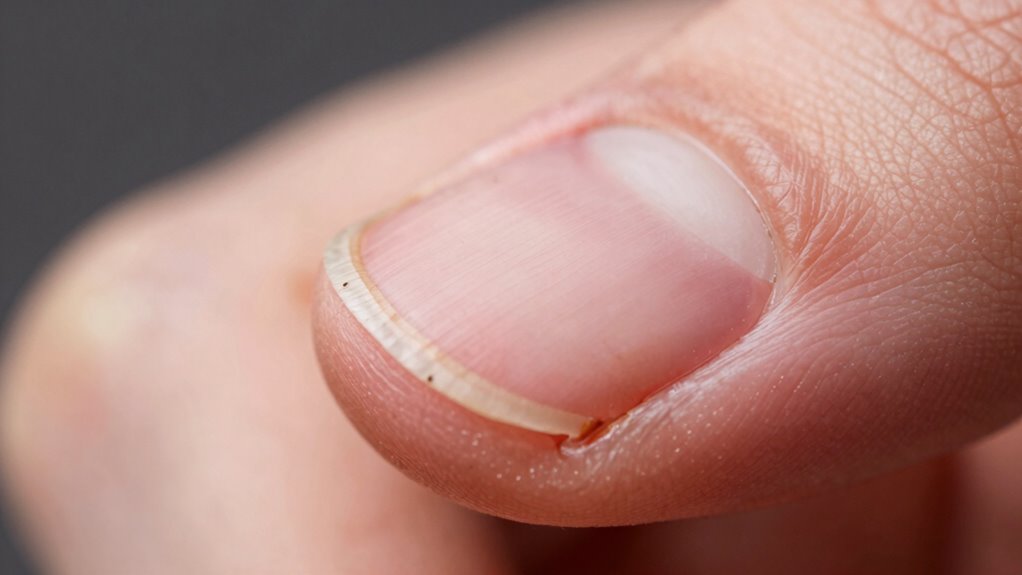
Have you ever wondered what risks come with nail lifting? One major concern is its impact on nail health. When the nail lifts, it creates an open gap that’s prone to infection, which can cause pain and further damage. You might notice discomfort or tenderness, especially if bacteria or fungi enter the space. Over time, nail lifting can weaken the nail structure, leading to damage or even permanent changes if left untreated. Cosmetic concerns also come into play, as lifted nails often look unsightly, affecting your confidence. Ignoring these risks can result in more serious issues, so it’s essential to address nail lifting early. Protecting your nail health now helps prevent pain, infection, and lasting damage down the line. Additionally, ensuring proper air quality around your nails and hands can support overall nail health and reduce the risk of complications. Maintaining good nail hygiene is critical to prevent bacteria buildup and promote healing. Practicing proper nail care techniques can help prevent nail lifting and maintain healthy nails over time. Being aware of external factors such as trauma or harsh chemicals can further help you avoid situations that cause nail lifting. Staying informed about nail health can empower you to take better care of your nails and avoid preventable issues.
How to Prevent Nail Lifting and Keep Nails Strong

To prevent nail lifting and keep your nails strong, you should adopt a consistent nail care routine that includes gentle cleaning, moisturizing, and avoiding aggressive manicures. Proper nail technology and care practices are essential for maintaining nail integrity over time. Prioritizing nail health not only boosts strength but also enhances nail aesthetics. Here are three key tips:
- Use gentle, non-drying cleansers and avoid harsh chemicals that weaken nails.
- Regularly apply a nourishing cuticle oil or moisturizer to prevent dryness and brittleness.
- Opt for professional manicures that focus on gentle techniques, avoiding excessive filing or harsh removal methods.
- Incorporate proper knife handling techniques to prevent unnecessary trauma that can contribute to nail lifting and damage.
- Additionally, understanding whole-home backup power can help you ensure your home remains secure and well-maintained during unexpected outages.
- Being aware of proper air purifier maintenance can also contribute to a healthier environment, reducing exposure to airborne irritants that may affect nail health.
- Maintaining good overall water quality can prevent exposure to minerals and contaminants that weaken nails, supporting long-term nail strength.
When Should You See a Doctor for Nail Lifting?

You should see a doctor for nail lifting if you notice persistent pain, swelling, or signs of infection around the affected area. Ignoring these symptoms can worsen your nail health and lead to more serious issues. It’s especially important if the nail lifting causes cosmetic concerns or discomfort. Being aware of toilet maintenance and repairs can help you prevent complications related to nail health. Additionally, understanding everyday safety tips can help you recognize early warning signs and take appropriate action promptly. Proper nail care practices can also support your recovery and prevent further damage during the healing process. Implementing proper study techniques and exam preparation can also support your overall health and well-being during stressful times.
Frequently Asked Questions
Can Nail Lifting Occur Without Noticeable Symptoms?
Yes, nail lifting can happen without obvious symptoms, so you might not notice it right away. That’s why symptom awareness and early detection are vital. Regularly check your nails for subtle signs like slight separation or changes in texture. By staying attentive, you can catch nail lifting early, preventing further damage or infection. Don’t ignore small changes—early action helps maintain healthy nails and reduces complications.
Is Nail Lifting More Common in Certain Age Groups?
You’re more likely to notice nail lifting in older adults because age-related changes weaken your nails and slow cell turnover. Elderly susceptibility increases with thinner, more brittle nails, making lifting more common in this age group. As you age, your nails become less resilient, so you should pay closer attention to signs of lifting. Prevent it by maintaining good nail hygiene, avoiding harsh chemicals, and moisturizing regularly to support your nail health.
Are There Specific Nail Products That Prevent Lifting?
Yes, using nail sealants and adhesive primers can help prevent lifting. Apply a high-quality sealant before your polish to create a strong barrier, and use an adhesive primer to improve adhesion between your natural nail and the product. Make sure to follow the instructions carefully and allow each layer to dry thoroughly. These products strengthen the bond, reducing the chances of lifting and extending the life of your manicure.
How Long Does It Take for a Lifted Nail to Heal?
Nail lifting typically takes about six to eight weeks to fully heal, depending on the severity. During this time, you should prioritize nail health by keeping the area clean and dry. Be vigilant for symptoms like redness, swelling, or pain, which indicate infection. By practicing proper care and symptom awareness, you help your nail recover quickly and prevent further damage, ensuring your nails stay healthy and strong.
Can Lifestyle Changes Reverse Early Nail Lifting?
Yes, lifestyle changes can help reverse early nail lifting. Focus on improving your nail health by avoiding harsh chemicals, keeping nails moisturized, and protecting them from trauma. Adopting healthier habits like eating a balanced diet rich in vitamins and avoiding nail-biting or picking can promote nail strength and prevent further lifting. Consistently practicing these lifestyle habits supports your nails’ natural healing process and overall nail health.
Conclusion
Think of your nails as tiny shields protecting your fingertips. When they start lifting, it’s like a crack in your armor—you become more vulnerable. By staying vigilant and caring for your nails, you prevent bigger problems down the road. Just like a small leak can sink a ship, ignoring early signs can lead to pain or infection. Take action now, and keep your nails strong and healthy, guarding your fingertips like a trusted soldier.