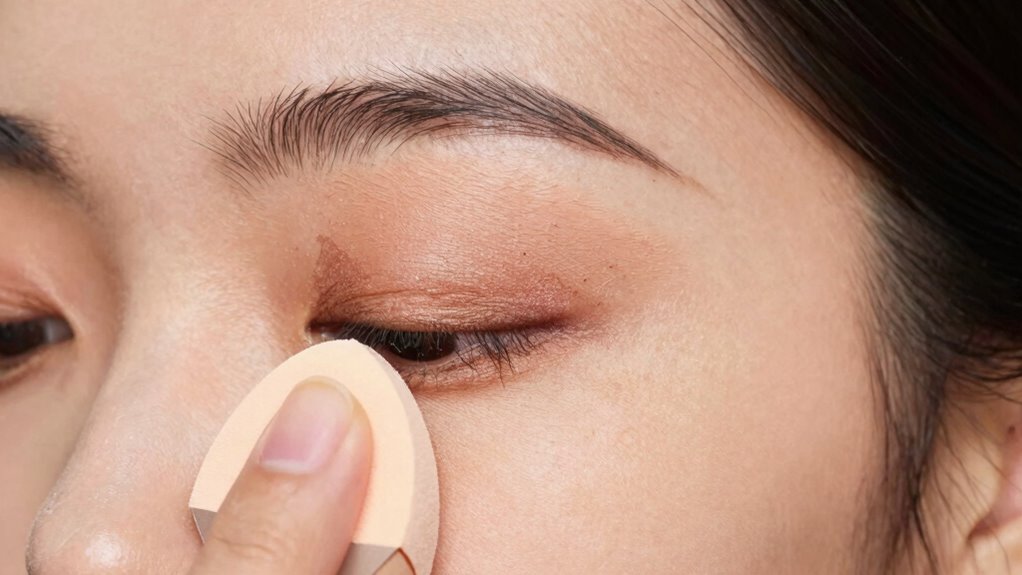

To fix patchy eyeshadow in 10 seconds, lightly spray a clean brush with setting spray and gently press it onto the uneven areas to smooth out patchiness and boost color. Alternatively, pat a small amount of concealer or foundation over the patchy spots, then lightly blend to even the surface. For faster, more flawless results, pay attention to blending techniques and tools—keeping in mind that discovering more tips can help perfect your stye.
Key Takeaways
- Gently press a damp cotton swab or clean fingertip onto the patchy areas to smooth out uneven spots.
- Lightly pat over the patches with a clean brush to blend and even out the eyeshadow.
- Apply a small amount of translucent setting powder to absorb excess oil and reduce patchiness.
- Use a clean, fluffy brush to softly blend the edges of the patchy areas for a seamless finish.
- Reapply a thin layer of eyeshadow or primer if needed, then gently blend to restore even coverage.
Quick Fixes for Uneven Eyeshadow Application

If your eyeshadow looks patchy and uneven, don’t worry—you can fix it quickly with some simple techniques. The first step is to evaluate your base. Often, patchiness occurs because the eyeshadow isn’t adhering properly or the surface isn’t prepared correctly. To start, gently remove any excess or uneven pigment with a clean brush or a cotton swab, then reapply a primer designed for eyeshadow. Primer application is essential because it creates a smooth, even canvas that helps the eyeshadow blend seamlessly and stay put longer. Make sure to use a thin layer and let it set for a few seconds until it feels tacky but not greasy. This step is especially important if you’re working with cream eyeshadow or highly pigmented shades, as a good primer can prevent the colors from sinking into creases or looking streaky. Additionally, choosing a primer with a matte finish can help absorb excess oil and further improve adhesion.
Once your primer is set, apply a cream eyeshadow as a base if you want a more uniform look. Cream eyeshadows are excellent for creating a smooth, even surface because they blend easily and can cover uneven patches of pigment or discoloration. Use your fingertip or a flat brush to pat the cream across your eyelid, focusing on any areas that appear patchy. This not only evens out the skin tone but also enhances the vibrancy of powder eyeshadows you add later. When working with cream eyeshadow, choose a shade close to your skin tone or the color you want to intensify, and blend it out gently to avoid harsh lines.
After applying the cream eyeshadow, go over your eyelid with your powder eyeshadow of choice. Use a clean, fluffy brush and start with a light layer, tapping the color onto the lid rather than sweeping it. If you notice uneven patches, layer the pigment gradually, blending as you go. Building up the color slowly helps maintain control and prevents patchiness. If any areas still look uneven, lightly pat the eyeshadow with your brush instead of dragging it, which reduces streaks and patchiness. Remember, blending is key—use gentle motions and keep your brushes clean to avoid muddying the colors.
Frequently Asked Questions
Can Primer Prevent Patchy Eyeshadow?
Yes, primer can prevent patchy eyeshadow by improving primer effectiveness and promoting even eyeshadow consistency. When you apply a good eyeshadow primer, it creates a smooth base, helping your eyeshadow adhere better and blend seamlessly. This reduces patchiness and enhances color payoff. Make sure to choose a primer suited for your skin type and apply it evenly, so your eyeshadow stays vibrant and flawless throughout the day.
What Tools Help Fix Uneven Eyeshadow Quickly?
To fix uneven eyeshadow quickly, grab a clean, dense blending brush to smooth out harsh lines and blend the edges seamlessly. Use gentle, circular motions to blend color and soften patchy areas, creating a flawless shift. Beforehand, brush cleaning keeps your tools free of old product buildup, ensuring smooth application. With these tools and blending techniques, your eyeshadow transforms from patchy to polished in seconds, giving you a professional finish effortlessly.
How Does Skin Type Affect Eyeshadow Application?
Your skin type influences eyeshadow application profoundly. If you have oily eyelids, controlling skin oil helps prevent patchiness and smudging, making your eyeshadow last longer and look smoother. For dry eyelids, proper hydration through eyelid hydration ensures your makeup applies evenly without creasing. Knowing your skin type allows you to choose the right primer and products, resulting in a flawless, long-lasting eyeshadow look that stays put and blends seamlessly.
Are There Specific Eyeshadow Formulas That Patch Less?
Did you know that 65% of makeup artists prefer cream eyeshadows for smoother application? If you want patch-free results, go for cream formulas—they blend seamlessly and minimize patchiness. Powder formulas, on the other hand, tend to be more prone to patchiness, especially if your skin is oily or dry. To avoid this, use a good primer and build up the color gradually. Creams give you a more even, flawless finish instantly.
Can Setting Sprays Improve Eyeshadow Longevity?
Yes, setting sprays can improve eyeshadow longevity. Their benefits include locking in your look and preventing creasing or fading throughout the day. After applying eyeshadow, lightly mist your face with a setting spray, focusing on your eyes. This extra layer helps the pigment stay vibrant and in place longer. Use a spray formulated for makeup to guarantee it enhances your eyeshadow’s durability without causing smudging or fallout.
Conclusion
With these quick tips, you can fix patchy eyeshadow in just seconds and achieve a flawless look. Remember, practice makes perfect—about 60% of makeup enthusiasts find that their technique improves with time. So don’t stress if it’s uneven at first. Just keep a small brush and setting spray handy, and you’ll be surprised how easily you can refresh your eyeshadow. Confidence and a little patience are your best tools for a perfect finish every time.