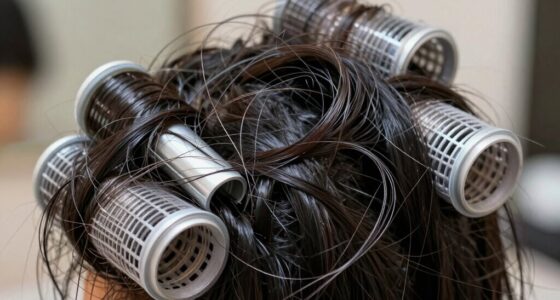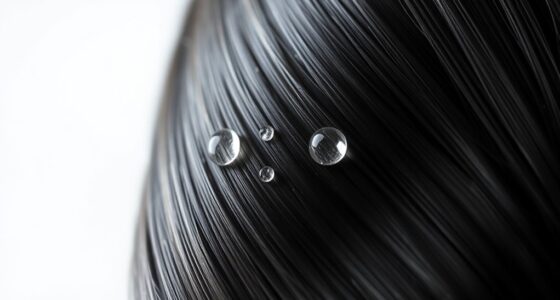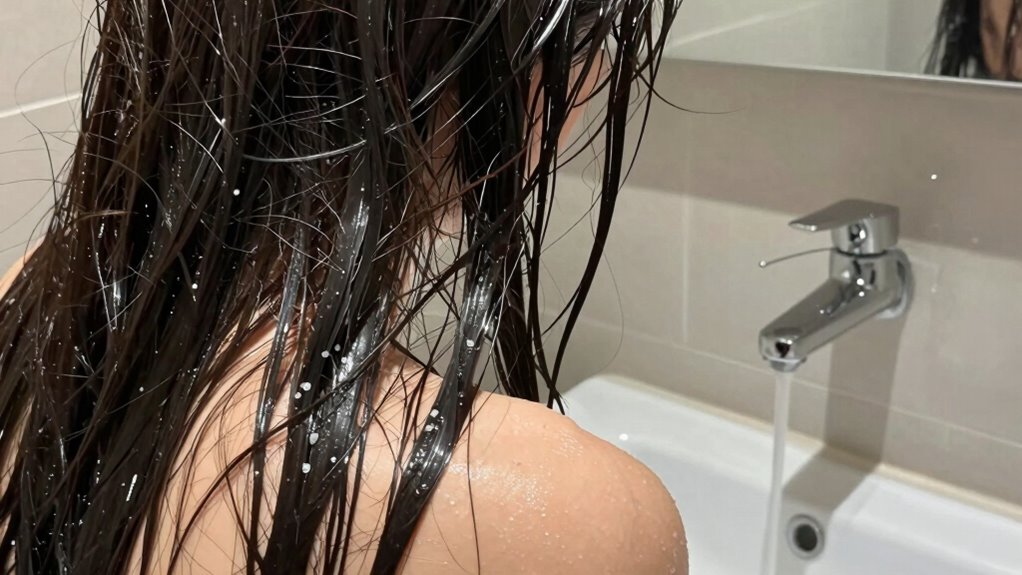

Hard water can ruin your good hair routine by leaving behind mineral deposits like calcium and magnesium, which build up over time. These deposits damage your hair’s cuticle, making it dull, rough, and prone to breakage. They also clog scalp follicles and interfere with your hair products, reducing their effectiveness. If you keep using hard water without solutions, it can lead to long-term damage and scalp issues. Keep going to discover how you can protect your hair from these effects.

Get beauty and skincare favorites delivered free with Prime
- Fast, free delivery on millions of items
- Prime Video, Amazon Music and more included
- Member-only deals all year
Key Takeaways
- Mineral buildup from hard water deposits on hair, leading to dullness and dryness.
- Hard water prevents shampoos and treatments from effectively penetrating hair strands.
- Mineral deposits clog scalp follicles, causing irritation and potential hair thinning.
- Hard water interacts with hair dyes, resulting in uneven color fading.
- Long-term exposure causes damage, making hair more prone to breakage and split ends.
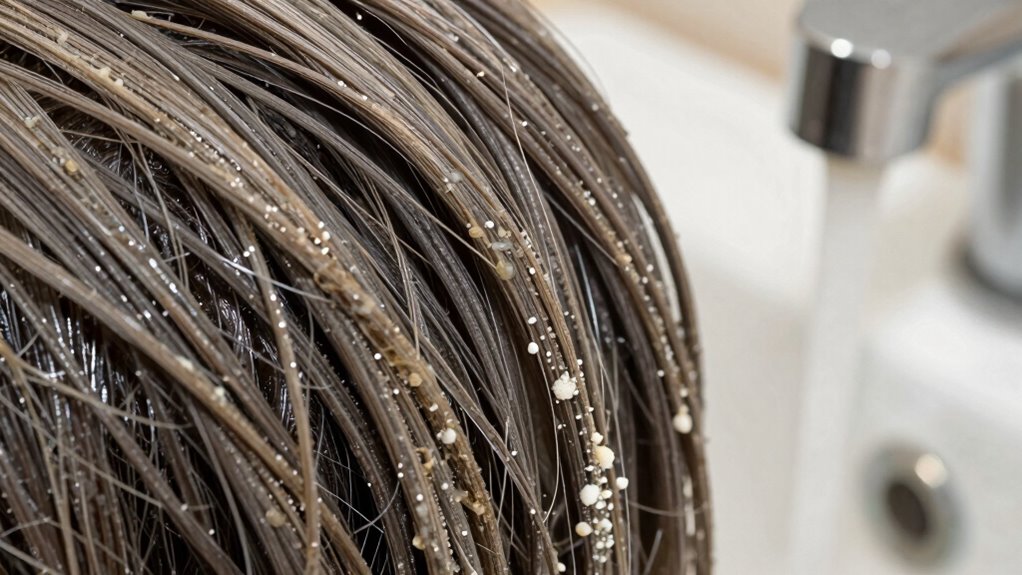
Have you ever wondered why your hair feels dull, dry, or difficult to manage after washing? The culprit is often hard water, which contains high levels of minerals like calcium and magnesium. These minerals don’t just wash away with water—they settle on your hair and scalp, creating a layer of mineral buildup that can be tough to remove. Over time, this buildup can lead to significant hair damage, making your hair look lifeless and feel rough to the touch. The minerals in hard water bond with the hair cuticle, causing it to lift and become more porous. When this happens, your hair loses its natural shine and becomes more susceptible to breakage and split ends. It’s a cycle that can seriously undermine your efforts to maintain healthy, vibrant hair.
The mineral buildup from hard water doesn’t just sit on the surface; it actively interferes with your hair care routine. Shampoos, conditioners, and treatments may not work as effectively because the minerals create a barrier that prevents products from penetrating the hair shaft. This means your hair doesn’t get the nourishment it needs, leading to dryness and brittleness. Plus, the minerals can interact with hair dyes and treatments, causing color fading and uneven results. If you notice your hair feels more brittle or your favorite color seems to fade faster, hard water could be the reason. It’s also worth noting that mineral deposits on the scalp can clog hair follicles, leading to scalp irritation and potential hair thinning over time. Additionally, water quality plays a crucial role in overall hair health and maintenance. Recognizing the effects of mineral buildup and understanding how it impacts your hair can help you take more effective steps to combat these issues. Using water that is high in minerals can also cause scalp issues, which further impacts hair growth and health. Regularly testing your water quality can help you determine the best approach to protect your hair.
Dealing with hard water requires more than just regular shampooing. It’s essential to understand that mineral buildup is a long-term issue that can cause cumulative damage if left unaddressed. Incorporating chelating shampoos or clarifying treatments regularly can help remove mineral deposits and restore your hair’s natural vitality. Installing a water softening system can be a more permanent solution, especially if you live in an area with particularly hard water. This not only reduces mineral content in your water but also protects your hair from ongoing damage. Ultimately, recognizing the impact of hard water on your hair can motivate you to adapt your routine and protect your hair from lasting harm. When you take steps to minimize mineral buildup, your hair stays healthier, shinier, and easier to manage—making your hair care routine more effective and enjoyable.
chelating shampoo for hard water
As an affiliate, we earn on qualifying purchases.
As an affiliate, we earn on qualifying purchases.
Frequently Asked Questions
Can Hard Water Cause Hair Color Fading?
Yes, hard water can cause hair color fading. The minerals in hard water lead to buildup on your hair, making it less receptive to color treatments. This buildup increases hair porosity, allowing color molecules to escape more easily. Over time, you’ll notice your hair’s vibrant hue dulls faster. To protect your color, consider using a clarifying shampoo regularly and installing a water softener to reduce mineral deposits.
Is Hard Water Linked to Scalp Irritation?
You might think hard water would be gentle, but it’s linked to scalp irritation. Ironically, it causes scalp dryness and can even trigger seborrheic dermatitis, making your scalp flaky and itchy. The minerals in hard water build up, clogging hair follicles and disrupting your scalp’s natural balance. So, instead of protecting your scalp, hard water often worsens irritation, leaving you frustrated with persistent dryness and discomfort.
How Does Hard Water Affect Hair Dye Longevity?
Hard water shortens your hair dye’s lifespan because mineral buildup from minerals like calcium and magnesium can cling to your hair, dulling the color. It also causes a pH imbalance, making your hair cuticles lift and letting color fade faster. Over time, these effects lead to less vibrant, longer-lasting dye, so you might need more frequent touch-ups if you don’t treat hard water’s impact on your hair.
Can Shower Filters Completely Eliminate Hard Water Effects?
Shower filters don’t completely eliminate hard water effects, but they considerably reduce water mineral content. For ideal results, you need regular filter maintenance to prevent buildup and guarantee effective filtration. While filters improve water quality, some minerals may still pass through, so you might notice less impact on your hair. To truly combat hard water’s effects, consider a high-quality filter and maintain it properly to keep your hair healthy and vibrant.
Are There Specific Hair Types More Affected by Hard Water?
If you have high-porosity hair, hard water affects you more, leading to mineral buildup that weighs down your strands. For example, Sarah noticed her curls became dull and brittle after switching to a new city with hard tap water. This is because mineral deposits penetrate hair cuticles, making porosity worse. People with fine or chemically treated hair also face more damage, as their hair absorbs minerals more easily, compromising your routine.
Conclusion
In summary, hard water can considerably disrupt your hair routine, leaving your hair dull, brittle, and harder to manage. It’s worth noting that over 85% of the world’s population lives in areas with hard water, highlighting how common this issue is. By understanding its effects and taking preventive steps, like using chelating shampoos or water softeners, you can protect your hair’s health and keep it looking its best. Don’t let hard water sabotage your hair goals—take action today.
Halloween Picks
halloween
As an affiliate, we earn on qualifying purchases.