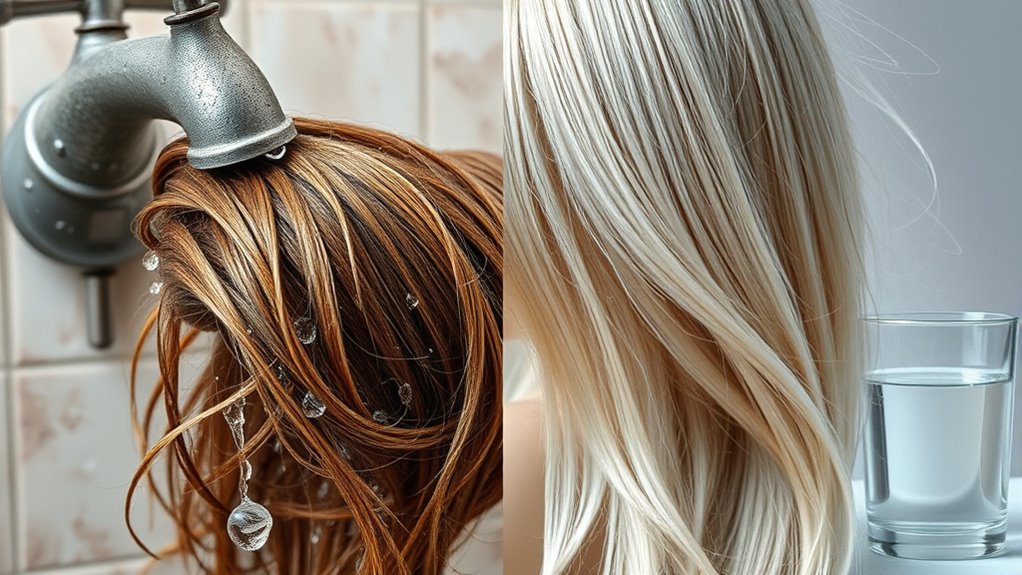

Hard water damages your hair by causing mineral buildup, which leads to dullness, dryness, and brittleness over time. It strips natural oils and weakens the hair shaft, making your hair prone to breakage and increasing scalp issues. In contrast, soft water is gentler, helping your hair stay moisturized, shiny, and healthy. To discover more tips on protecting your hair and maintaining ideal water quality, keep exploring how water type impacts your hair’s well-being.
Key Takeaways
- Hard water causes mineral buildup on hair, leading to dullness, dryness, and increased breakage.
- Soft water is gentler, preserves natural oils, and results in softer, shinier hair with less effort.
- Mineral deposits from hard water weaken hair shafts, making hair more brittle and prone to snapping.
- Using water softeners or clarifying shampoos can reduce mineral buildup and improve hair health.
- Overall, soft water supports stronger, healthier hair, while hard water accelerates damage and dullness.

When choosing between hard water and soft water, understanding their differences can help you make better decisions for your home and health. One of the key concerns with hard water is its high mineral content, mainly calcium and magnesium. These minerals don’t just sit passively; they can cause significant buildup on your hair and scalp over time. Mineral buildup from hard water can leave your hair feeling dull, rough, and more difficult to manage. It can also strip away natural oils, leaving your hair dry and prone to breakage. This buildup can be especially problematic if you wash your hair frequently, as the minerals cling to your strands and scalp, creating a barrier that prevents moisture from penetrating effectively.
In contrast, soft water contains fewer minerals, making it gentler on your hair. Because it lacks the mineral content that causes buildup, your hair tends to feel softer, smoother, and more manageable after washing. Soft water also helps preserve your hair’s natural oils, reducing the risk of dryness and damage. When you use soft water, you may notice that your shampoo lathers more easily, and your hair feels cleaner with less effort. This can lead to less frequent washing, which benefits your hair’s health overall. Plus, softer water minimizes the risk of mineral deposits that can lead to scalp irritation or dandruff, both of which can contribute to hair damage.
If you’ve experienced persistent hair damage, such as split ends or breakage, your water quality might be playing a role. Hard water’s mineral buildup can weaken the hair shaft, making it more brittle and prone to snapping. Over time, this damage accumulates, leading to increased hair fall and difficulty maintaining healthy, shiny hair. Switching to soft water or using a water softener can dramatically improve your hair’s condition. It reduces mineral deposits, allowing your hair to retain moisture better and stay healthier longer. Additionally, using clarifying shampoos designed to remove mineral buildup can further protect your hair from damage caused by hard water.
Understanding the impact of mineral buildup and hair damage from different water types helps you make informed choices about your hair care routine. Whether you decide to install a water softener or opt for specialized hair products, knowing the effects of hard versus soft water empowers you to protect your hair’s health. Ultimately, softer water supports stronger, shinier, and more resilient hair, while hard water can contribute to dullness, dryness, and breakage. Making small adjustments can lead to noticeable improvements in your hair’s appearance and overall health. Regularly testing your water quality with water testing kits can help you stay aware of mineral levels and take appropriate measures to safeguard your hair.
Frequently Asked Questions
Can Switching Water Types Improve Existing Hair Damage?
Switching water types can help improve existing hair damage if you opt for water treatment options like filters that reduce mineral content. Hard water can cause buildup, making hair brittle and dull, so switching to soft water allows your hair to recover and become more manageable. Consistent use of water treatment can support hair repair, restore shine, and prevent further damage, giving your hair a healthier, more vibrant look over time.
Is There a Way to Test My Water Hardness at Home?
Ever wondered if your water’s affecting your hair? You can easily find out with DIY testing kits available at home. These water testing kits are simple to use—just collect a sample, add a reagent, and observe the color change. In minutes, you’ll know your water’s hardness level. Don’t wait—testing your water at home is a quick step toward healthier hair and better styling!
Do Water Softeners Require Regular Maintenance?
Yes, water softeners do require regular maintenance. You should follow the recommended maintenance schedules provided by the manufacturer, which often include checking salt levels and cleaning the resin tank. Regular water filtration system upkeep guarantees your softener functions efficiently and prolongs its lifespan. By staying on top of maintenance, you’ll keep your water supply clean and prevent mineral buildup, protecting your plumbing and improving your water quality.
How Does Water Hardness Affect Scalp Health?
Imagine your scalp battling an endless storm—that’s what hard water can do. It causes scalp irritation, making your skin inflamed and sensitive. Over time, this irritation can lead to dandruff formation, turning your hair routine into a nightmare. The minerals in hard water cling to your scalp, clogging pores and aggravating conditions. To keep your scalp healthy and dandruff-free, switching to soft water can be a game-changer.
Are There Specific Shampoos for Hard or Soft Water?
Yes, there are specific shampoo formulations designed for hard or soft water. For hard water, look for shampoos with chelating agents that help remove mineral buildup, improving hair cleanliness and shine. For soft water, gentle, sulfate-free shampoos work well, preserving natural oils. Adjust your hair cleaning techniques accordingly—use cooler water for rinsing to prevent damage. Choosing the right shampoo based on your water type optimizes your hair health and manages mineral effects.
Conclusion
Remember, just like a river shaping the land, water shapes your hair’s health. Hard water, with its minerals, can leave your strands rough and dull, while soft water gently nourishes, making your hair feel silkier. Choose wisely, for your hair’s story depends on the water you cleanse with. Embrace the softer side, and let your hair flow freely, echoing the smooth, effortless grace of a gentle stream winding its way to the sea.