Detangling your hair before shampooing helps prevent breakage and damage caused by knots pulling during washing. It allows shampoo to reach your scalp evenly, ensuring a thorough clean while reducing scalp irritation from trapped dirt and oils. Proper detangling also protects your strands from harsh tugging and breaking, extending your hair’s health and lifespan. Starting with detangling is gentle care that promotes scalp health and more manageable hair—keep going to discover how this step benefits you even more.

Get beauty and skincare favorites delivered free with Prime
- Fast, free delivery on millions of items
- Prime Video, Amazon Music and more included
- Member-only deals all year
Key Takeaways
- Detangling before shampoo prevents hair breakage and damage caused by knots during washing.
- It allows shampoo to reach the scalp evenly, ensuring thorough cleansing.
- Pre-shampoo detangling reduces scalp irritation from trapped dirt and product buildup.
- Detangling minimizes pulling and tugging, protecting hair strands from damage during washing.
- It promotes healthier scalp circulation and natural oil balance for overall hair health.

Detangling your hair before shampooing might not be the first step that comes to mind, but it’s actually essential for maintaining healthy, manageable hair. When you start with tangled hair, you risk causing breakage and damaging your strands, especially if your hair has high porosity. Hair porosity refers to how well your hair absorbs and retains moisture, and it plays a pivotal role in how your hair responds to styling and cleansing. If your hair is highly porous, it’s more susceptible to damage from rough handling, making detangling before washing even more important. Not only does it reduce breakage, but it also helps preserve your hair’s natural moisture balance, which is indispensable for overall scalp health.
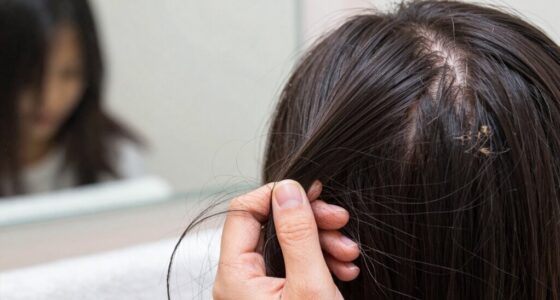
When you detangle beforehand, you’re also protecting your scalp health. Tangles and knots can trap dirt, oil, and product buildup close to the scalp, which can lead to irritation and clogged follicles if not addressed properly. Detangling gently with a wide-tooth comb or your fingers allows you to remove knots without pulling or tugging harshly on your hair, minimizing scalp irritation. This gentle process encourages better blood circulation to your scalp, promoting healthier hair growth over time. Additionally, when your scalp is healthy, it produces a more balanced amount of natural oils, preventing dryness or excess oil that can hinder hair health. Properly detangled hair also minimizes the risk of hair breakage during shampooing, making the cleansing process safer and more effective. Proper detangling also enhances the scalp’s ability to produce natural oils, which is vital for maintaining overall scalp health.
Starting with detangled hair makes shampooing more effective because it allows the product to reach your scalp evenly. When your hair is tangled, shampoo struggles to penetrate through the knots, leaving some areas unclean and trapping dirt and oil beneath the surface. By detangling first, you guarantee a thorough cleanse, which is particularly important if your scalp is prone to buildup or sensitivities. Proper cleansing supports scalp health by reducing the risk of dandruff, itchiness, and inflammation. Plus, detangled hair is easier to work with, ensuring you don’t have to tug or pull during shampooing, which can cause further damage or scalp discomfort. Taking this extra step also helps to prevent damage from harsh brushing, which can weaken strands over time. In addition, maintaining a gentle detangling routine can help prolong the overall lifespan of your hair and reduce the need for frequent trims.
Products Worth Considering

Oral-B iO Series 3 Rechargeable Electric Toothbrush for Adults, Black, with 2 Brush Heads and Travel Case

Oral-B iO Series 5 Rechargeable Electric Toothbrush with Travel Case and 3 Brush Heads, Black

Philips Sonicare 5950 Rechargeable Electric Toothbrush with 2 Brush Heads, Navy
As an affiliate, we earn on qualifying purchases.
Frequently Asked Questions
Can Detangling Damage My Scalp?
Detangling your hair carefully won’t damage your scalp if you use gentle techniques, but aggressive pulling can cause scalp irritation and even hair thinning over time. Always detangle with a wide-tooth comb or your fingers, especially before shampooing, to reduce stress on your scalp and hair. Avoid tugging or pulling, and be patient. Proper detangling helps prevent breakage and keeps your scalp healthy, promoting stronger, fuller hair.
What Tools Are Best for Detangling Before Shampoo?
You should use wide-tooth combs or detangling brushes designed for gentle detangling before shampooing. These tools help minimize breakage and discomfort. Incorporate detangling techniques like starting at the ends and working upward to reduce tension. Use detangling products such as leave-in conditioners or detangling sprays to make the process smoother. These tools and products work together, protecting your scalp and hair while effectively removing knots.
How Often Should I Detangle My Hair?
They say, “An ounce of prevention is worth a pound of cure,” and that’s true for detangling your hair. How often you should do it depends on your hair texture—curly, straight, or wavy—and your styling routine. For most, detangling 2-3 times a week suffices, but if your hair is prone to tangles or damage, you might need to do it more frequently. Listen to your hair’s needs.
Does Detangling Prevent Hair Breakage?
Yes, detangling can prevent hair breakage by reducing tension and stress on your strands. When you detangle gently, you preserve your hair’s elasticity, making it less prone to snap under pressure. It also helps with moisture retention by preventing knots that trap dryness or damage. Regular, careful detangling keeps your hair healthier, shinier, and more resilient, especially when done before shampooing to minimize breakage during washing.
Is Detangling Before Shampoo Suitable for All Hair Types?
Detangling before shampoo is suitable for most hair types, but the approach varies with hair texture. For curly or textured hair, gentle detangling helps prevent breakage and reduces tangling. Straight or fine hair may require less frequent detangling to avoid damage. Adjust your detangling frequency based on your hair’s needs, and always use a wide-tooth comb or gentle brush to protect your strands during the process.
Conclusion
So, next time you’re about to shampoo, remember that detangling first isn’t just a tip — it’s the secret weapon to prevent hair catastrophe! Skipping this step is like inviting chaos to your scalp, turning your hair into a tangled jungle of despair. By starting with detangling, you’re saving yourself from a hair rescue mission of epic proportions. Trust me, your future self will thank you for avoiding a hair disaster of biblical proportions!