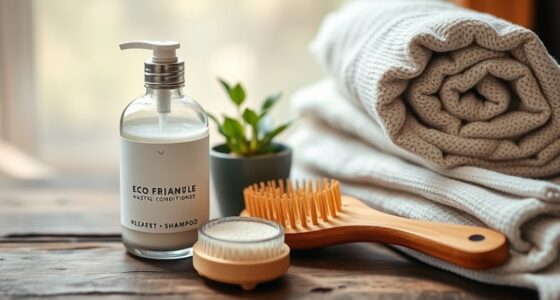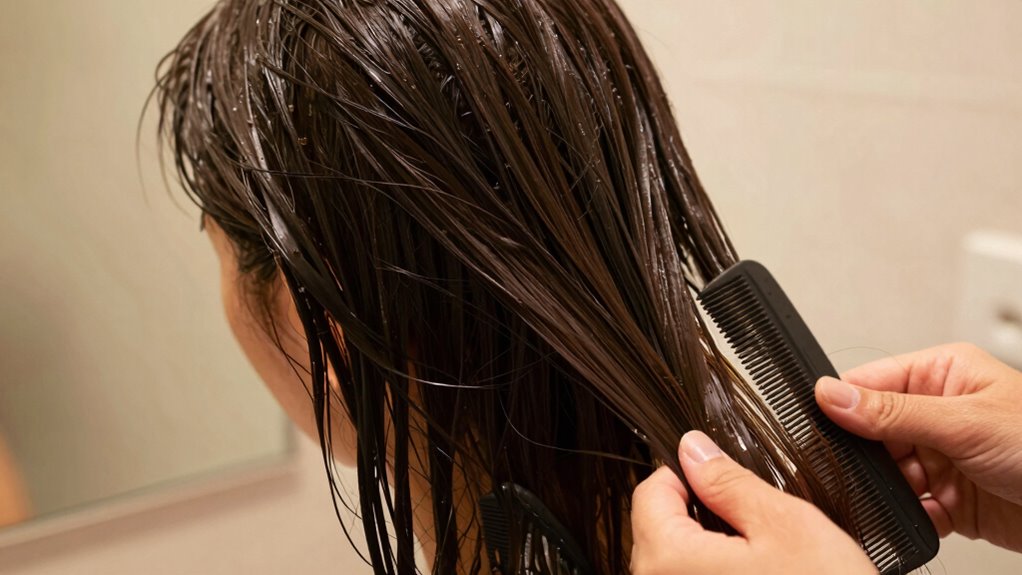

To detangle wet hair without snapping, start by applying a lightweight leave-in conditioner or detangling spray to add slip. Use a wide-tooth comb, beginning at the ends and slowly working upward, gently detangling each section. Avoid pulling or forcing knots apart, and work in manageable sections for better control. Proper tools and gentle techniques are key—if you want to discover more tips, continue exploring how to protect your hair’s health during detangling.
Key Takeaways
- Apply a lightweight leave-in conditioner or detangling spray to add slip before combing wet hair.
- Use a wide-tooth comb or detangling brush designed for wet hair, starting from the ends and working upward gently.
- Section your hair into 4-6 parts to detangle each manageable section individually, reducing pulling stress.
- Detangle slowly and patiently, avoiding forceful pulls; work gradually from the ends to the roots.
- Avoid heat styling and harsh brushes; regularly trim split ends to prevent increased tangling and breakage.
Why Wet Hair Breaks So Easily and How to Prevent It
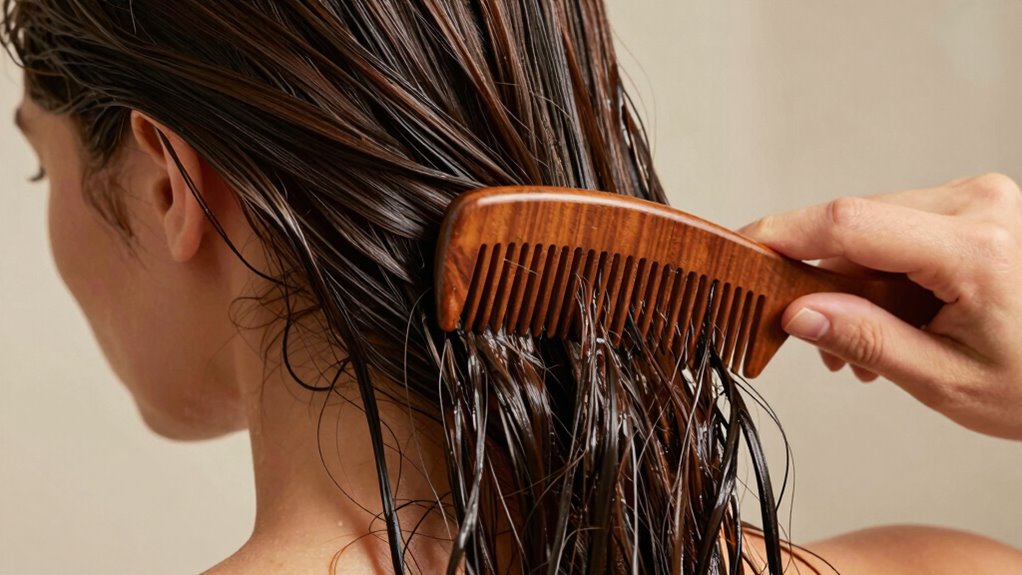
Wet hair is more prone to breakage because the water weakens the hair’s structural bonds, making it less resilient to pulling and brushing. Your hair porosity plays a vital role here; high porosity hair absorbs more water, which can lead to increased vulnerability, while low porosity hair resists moisture retention, causing dryness and brittleness. When your hair is wet, its cuticles are raised, reducing its strength and flexibility. Without proper care, this makes it easier to snap or break. To prevent damage, avoid vigorous pulling and harsh brushing while your hair is wet. Instead, opt for gentle detangling methods that support moisture retention, helping your hair stay healthier and more resilient even when damp. Utilizing modern hair care techniques can further enhance your hair’s resilience during detangling, especially when combined with understanding hair porosity and its effects. Additionally, using the right detangling tools designed for wet hair can make a significant difference in preventing breakage. Incorporating moisturizing sprays or conditioners can also help to soften the hair and reduce friction during detangling, minimizing damage. Being mindful of your hair type can help tailor your detangling routine even further, reducing the risk of breakage.
How to Prepare Your Wet Hair and Gather Tools for Gentle Detangling
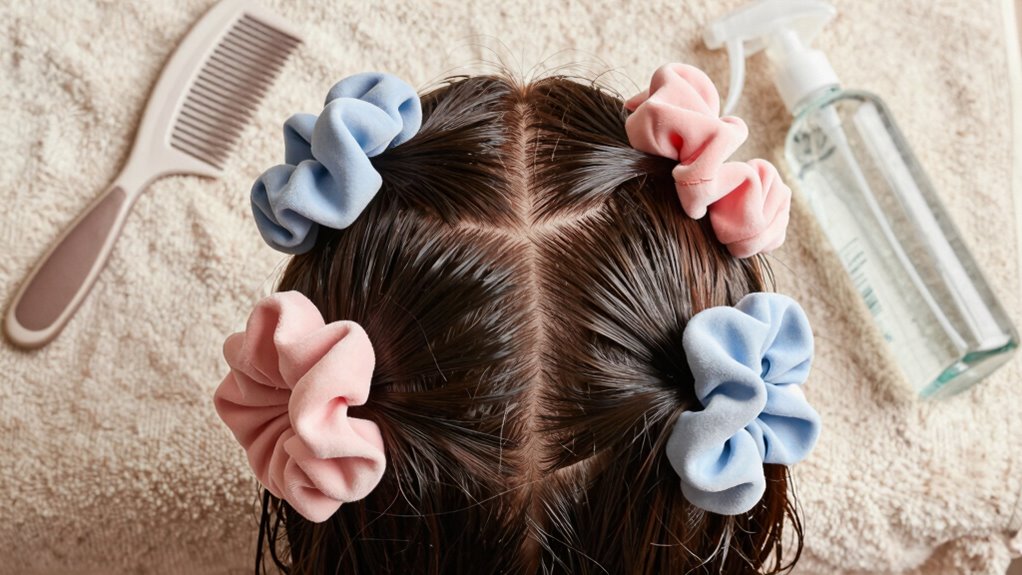
Before you start detangling, make sure your hair is properly moisturized to reduce breakage. Choose gentle tools like wide-tooth combs or detangling brushes to prevent damage. To make the process easier, section your hair into manageable parts before you begin. Incorporating Free Floating techniques can help you gently work through knots without causing stress to your hair fibers.
Moisturize Before Detangling
To make detangling gentler on your hair, start by moisturizing it thoroughly. Applying a lightweight hair oil or a detangling spray helps reduce friction and smooths out knots. Hair oil nourishes and lubricates each strand, making it easier to glide through tangles without causing breakage. Detangling sprays are specifically formulated to soften hair and provide slip, which minimizes pulling. Spray evenly from roots to ends, focusing on areas prone to knots. Let the product sit for a minute or two to penetrate the hair shaft. Moisturized hair is less prone to damage and snapping, especially when wet. This preparation creates a slippery surface that makes the detangling process smoother, gentler, and more effective. Additionally, understanding hair types can help you choose the most suitable products for your hair’s unique needs.
Select Gentle Detangling Tools
Choosing the right detangling tools is essential for minimizing breakage and making the process more comfortable. Gentle tools like wide-tooth combs or detangling brushes are best suited for wet hair, as they reduce pulling and snapping. When selecting tools, consider your hair type and avoid those with sharp or rough teeth that can cause damage. Incorporate gentle detangling techniques into your hair care routines, such as starting from the ends and working upward. This approach minimizes stress on the hair shaft and helps prevent breakage. Using the appropriate tools consistently ensures a smoother detangling process and healthier hair over time. Always opt for tools designed specifically for wet hair to protect your strands and maintain your hair’s integrity. Additionally, choosing UV filters in hair products can help protect your highlights from sun damage during outdoor activities, especially since security features in hair care products are becoming increasingly popular for safeguarding hair health. Incorporating proper hair protection strategies can further enhance your hair’s resilience against environmental stressors. Being mindful of market trends and emerging technologies in hair care can also contribute to more effective and gentle detangling routines.
Section Hair for Manageability
Properly sectioning your wet hair is a crucial step in ensuring gentle and effective detangling. It helps you manage your hair more easily and protects your scalp health. To prepare, follow these steps:
- Divide your hair into 4-6 sections, depending on thickness, using clips or hair ties.
- Focus on each section individually to prevent unnecessary pulling and breakage.
- Check your hair’s porosity—if it’s high, detangle gently to avoid damage.
- Keep your tools within reach to minimize unnecessary handling, reducing tension on your scalp and hair strands.
Easy Ways to Detangle Wet Hair Without Causing Damage
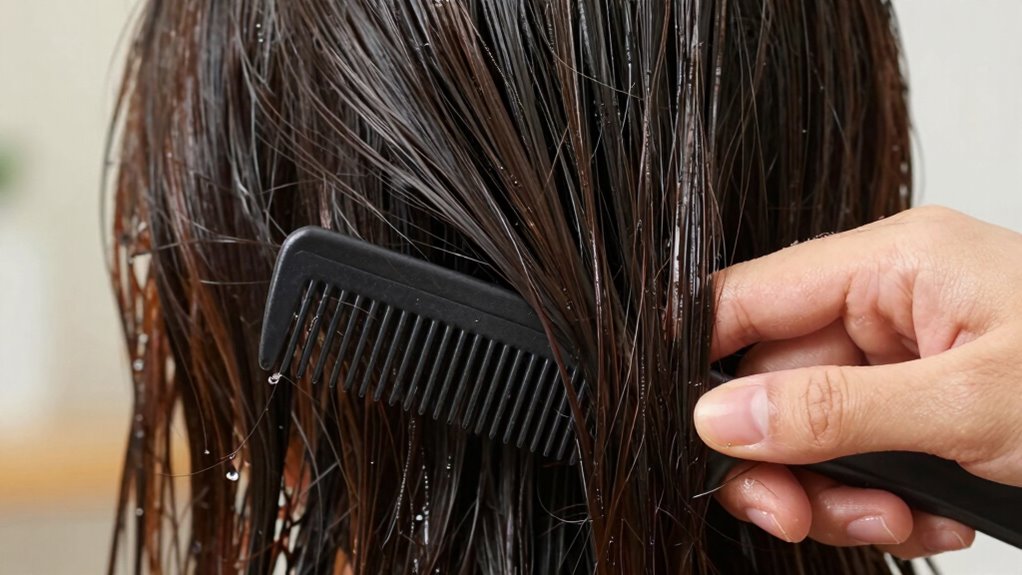
To detangle wet hair without damage, start with a wide-tooth comb to reduce pulling. Apply a leave-in conditioner to make your hair easier to work through, and always begin detangling from the bottom, working your way up. Be gentle throughout to prevent breakage and keep your hair healthy. For added protection, consider using professional hair care products that are designed to strengthen and nourish wet hair. Additionally, understanding hair health tips can help you maintain stronger, more resilient hair over time. Incorporating gentle detangling techniques can further minimize damage during your hair care routine. Using proper detangling tools can also make a significant difference in reducing stress on your strands. Remember that proper hair care practices are essential for maintaining optimal hair health and reducing damage during detangling.
Use Wide-Tooth Comb
Using a wide-tooth comb is one of the easiest ways to detangle wet hair without causing damage. It gently glides through strands, reducing breakage. Here are four tips to maximize its effectiveness:
- Start at the ends to loosen knots carefully.
- Gradually work your way up, detangling small sections at a time.
- Use a detangling brush or wide-tooth comb specifically designed for wet hair.
- Be gentle—avoid forcing the comb through stubborn tangles to prevent snapping.
Keep in mind, a quality wide-tooth comb distributes pressure evenly, minimizing damage. Switch to a detangling brush if you prefer a different grip, but always choose tools designed for wet hair. This approach keeps your strands healthy and smooth.
Apply Leave-In Conditioner
Applying a leave-in conditioner is an effective way to make detangling wet hair easier and gentler. The leave-in benefits include providing extra slip, which helps reduce tugging and breakage. It also offers a hydration boost, replenishing moisture lost during washing and preventing dryness that can cause knots. When you apply leave-in conditioner, focus on the mid-lengths and ends, where tangles are most common. Use your fingers or a wide-tooth comb to distribute it evenly, ensuring each strand gets coated. This creates a smooth surface, making detangling less painful and more controlled. Additionally, choosing the right detangling tools can further minimize damage and make the process smoother. By adding leave-in conditioner to your routine, you protect your hair from damage while making the process more comfortable and effective.
Detangle Gently, Start Lower
When detangling wet hair, start at the bottom and work your way up to prevent unnecessary breakage. Use gentle pressure and begin low, focusing on each knot carefully. Here are easy ways to do it:
- Hold the section gently and avoid pulling.
- Use a wide-tooth comb, starting at the ends and gradually moving up.
- Work slowly and patiently, applying gentle pressure to loosen tangles. Incorporating proper tools designed for wet hair can make the process even safer and more effective.
- Avoid rushing; detangling with care reduces damage and breakage.
- Starting low ensures you don’t tug on fragile roots or strands. Remember, patience and gentle pressure are key to detangling wet hair without causing harm. Taking your time allows your hair’s health and shine to be preserved over time.
The Best Tools and Products for Safe Wet Hair Detangling
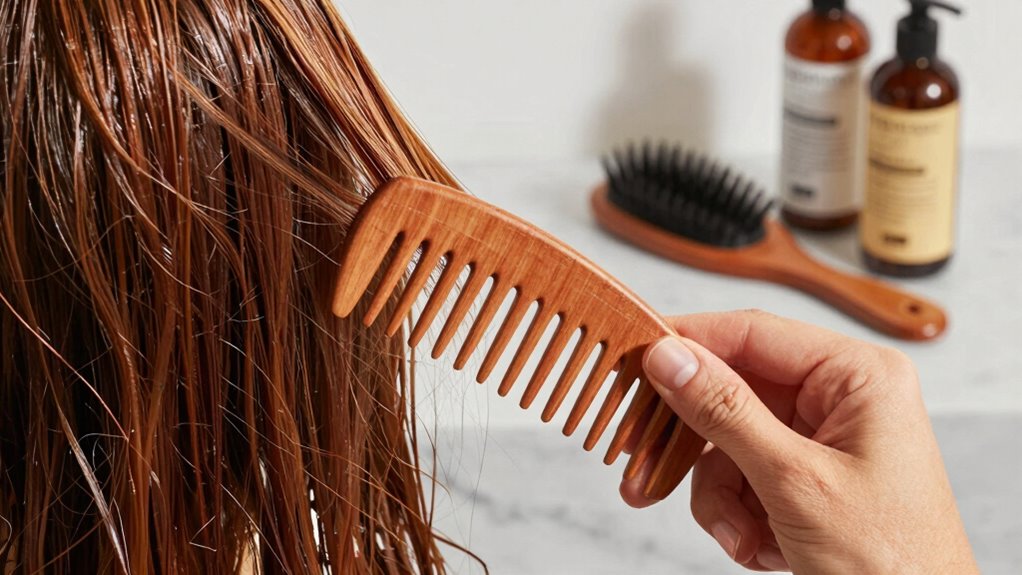
Detangling wet hair requires the right tools and products to prevent breakage and minimize damage. Using the wrong tools can reinforce common detangling myths, like pulling through knots aggressively or using harsh brushes. Instead, opt for wide-tooth combs or detangling brushes designed for wet hair; these reduce tension and breakage. Look for leave-in conditioners or detangling sprays that add slip, making combing easier and safer. Avoid fine-tooth combs or brushes with stiff bristles, as they can snag or snap strands. When choosing products, prioritize those formulated for wet hair and gentle hair styling. The right tools and products help you detangle efficiently while protecting your hair’s health, making the process smoother and less damaging.
Common Mistakes That Lead to Breakage When Detangling Wet Hair
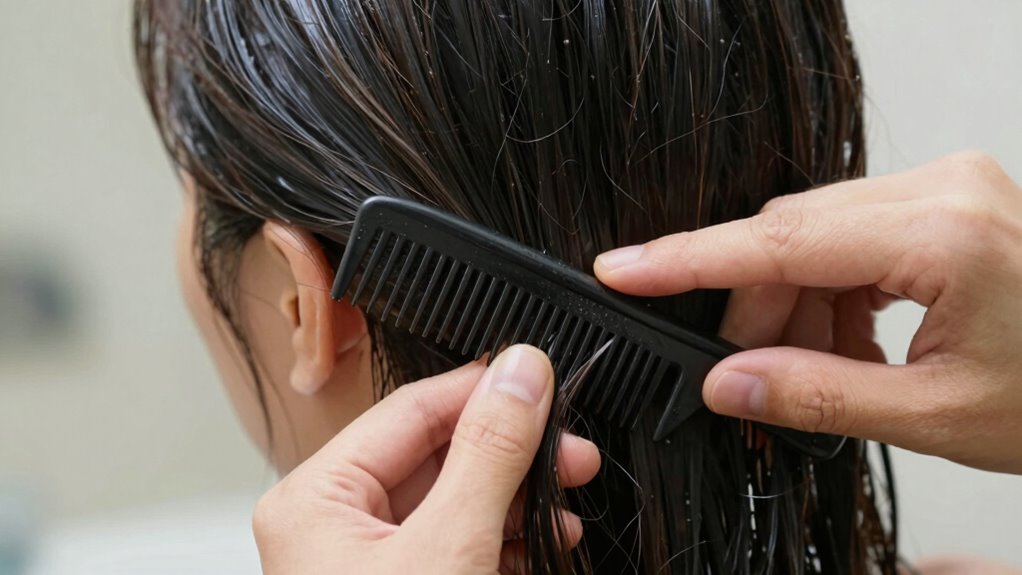
One of the most common mistakes that can cause breakage when detangling wet hair is using too much force or yanking through knots. This damages strands and weakens hair over time. Other mistakes include:
- Overuse heat tools, which dry out and weaken hair, making it more prone to breakage during detangling.
- Neglecting trims, allowing split ends to travel up the shaft and increase tangling.
- Using the wrong tools, like coarse brushes or combs, instead of wide-tooth combs designed for wet hair.
- Detangling too aggressively without applying conditioner or detangling sprays that help glide through knots smoothly.
- Not choosing waterpark hotels with amenities designed for hair care, which can contribute to healthier hair during your routine. Being aware of hair porosity can also help you select the right products and techniques for your hair type, reducing damage. Additionally, understanding your hair’s moisture balance can guide you in maintaining optimal hydration levels, helping prevent breakage during detangling.
Avoid these mistakes, and you’ll reduce breakage while maintaining healthier, stronger hair.
Tips to Keep Your Hair Knot-Free and Healthy After Detangling
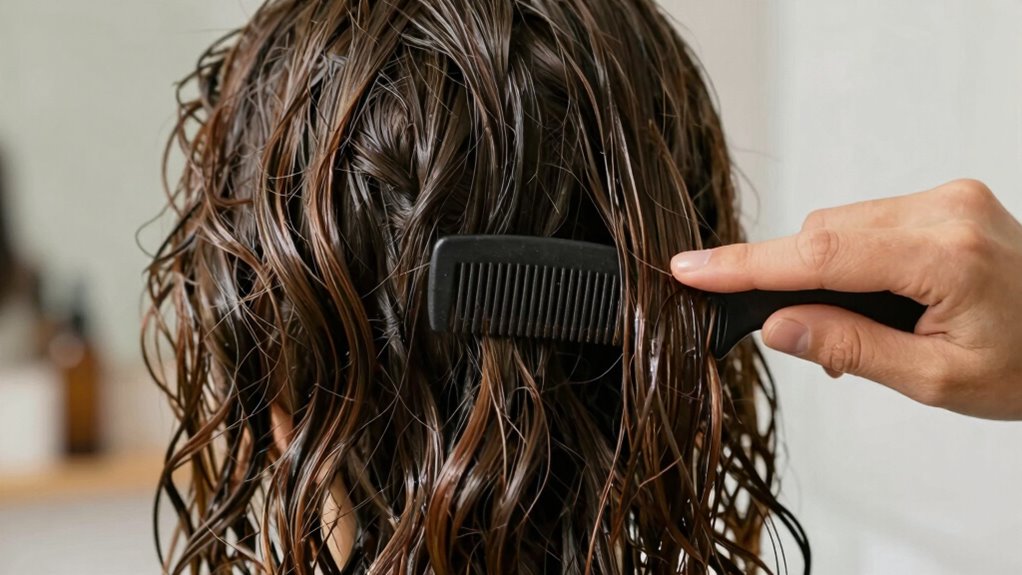
After successfully detangling your hair, taking steps to keep it smooth and healthy can prevent future knots and breakage. To maintain your hair’s health, adjust your detangling frequency based on your hair texture—more frequent for curly or coarse hair, less for straight or fine hair. Using a wide-tooth comb and nourishing leave-in conditioner helps minimize damage. Consider this visual guide:
| Hair Texture | Best Detangling Frequency | Recommended Products |
|---|---|---|
| Curly | Every 2-3 days | Moisturizing sprays, oils |
| Wavy | Weekly | Detangling creams, conditioners |
| Straight | Every 3-4 days | Light conditioners, detangling brushes |
| Coarse | Every 2 days | Deep conditioners, oils |
| Fine | Once a week | Gentle detangling products |
Adjust your routine to keep knots at bay and promote healthy hair. Incorporating proper detangling techniques can further reduce damage and improve your hair’s overall health.
Frequently Asked Questions
Can Detangling Wet Hair Cause Long-Term Damage?
Detangling wet hair can cause long-term damage if you’re rough or use the wrong tools, as it weakens hair strength and can lead to breakage over time. To protect your scalp health, always detangle gently with a wide-tooth comb or your fingers, starting from the ends and working up. This careful approach minimizes damage, preserves hair strength, and keeps your scalp healthy in the long run.
How Often Should I Detangle My Wet Hair?
You should detangle your wet hair once or twice a week to prevent damage. Use gentle hairbrush techniques and detangling tools, like a wide-tooth comb or a wet brush, to minimize snapping. Always start detangling from the ends, working your way up slowly. Avoid over-brushing, and be patient—this helps protect your hair’s health and reduces breakage over time.
Is It Better to Detangle Wet or Dry Hair?
Think of your hair as delicate silk threads needing gentle handling. It’s better to detangle when your hair is damp, not soaking wet, with a good hair conditioner to soften strands. Use a detangling brush to glide through knots smoothly, minimizing breakage. Avoid detangling dry hair, which can cause tugging and snapping. Keeping hair moist and conditioned makes the process easier, helping your hair stay healthy and damage-free.
What Natural Remedies Help Reduce Hair Breakage During Detangling?
To reduce hair breakage during detangling, try using natural remedies like DIY masks and herbal oils. Apply a nourishing DIY mask made from ingredients like honey, coconut oil, or avocado to strengthen your hair. Incorporate herbal oils such as argan, castor, or rosemary before detangling to add slip and moisture. These remedies help reduce friction, prevent snapping, and keep your hair healthy and resilient during the process.
Are There Specific Hairstyles That Minimize Tangling When Hair Is Wet?
Sure, leaving your hair loose when wet is the best way to tangle it, right? Wrong! Instead, opt for braid hairstyles or protective styles like twists or buns. These minimize tangling and breakage, making your detangling routine easier. Plus, they keep your hair neat and protected. So, embrace those braids and styles—they’re your best friends for maintaining healthy, tangle-free hair when it’s wet!
Conclusion
Remember, your hair is a delicate garden that thrives with patience and gentle care. Treat it like a precious silk thread—tugging or rushing only risks snapping its strength. With the right tools, mindful techniques, and tender hands, you can keep your tresses flowing like a silken river—free of knots and damage. Cherish your hair’s resilience, and it’ll reward you with radiant, healthy locks that shine like sunlight through crystal-clear water.