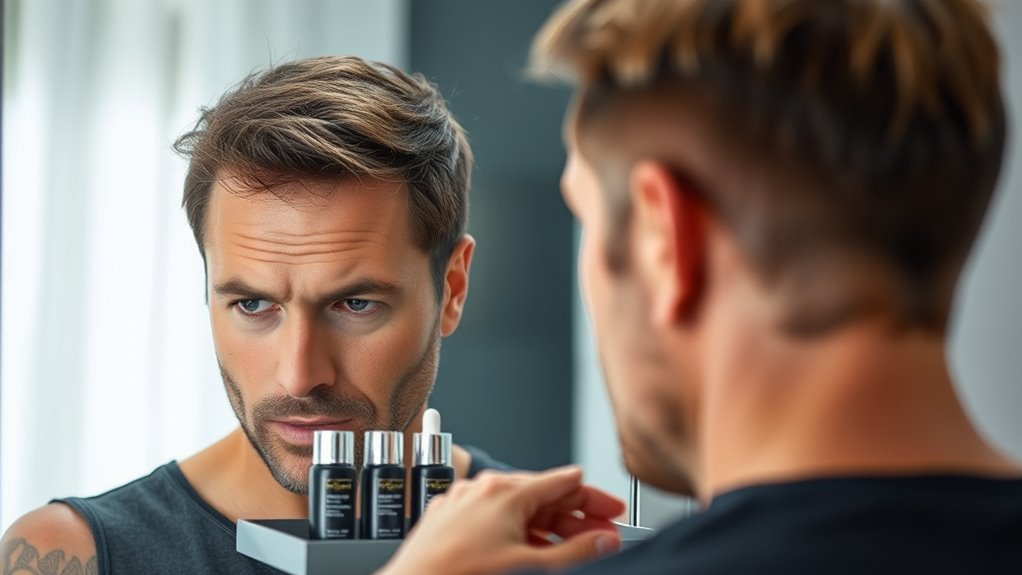

To manage hair loss, first identify its causes like genetics, hormonal changes, stress, or scalp issues. Focus on maintaining a healthy scalp with gentle shampoos, scalp treatments, and regular massages to boost blood flow. Make certain your diet includes vitamins like biotin and iron, and consider options like topical treatments or laser therapy for stimulation. Consistent care and professional advice can make a noticeable difference—continue exploring ways to strengthen your hair and restore confidence.
Key Takeaways
- Maintain scalp health with gentle shampoos, scalp treatments, and regular massages to promote hair growth.
- Address underlying causes like hormonal imbalances, stress, or medical conditions through professional consultation.
- Support hair strength with proper nutrition, including vitamins like biotin, vitamin D, and iron.
- Use proven treatments such as minoxidil or consider advanced options like laser therapy or hair transplants if necessary.
- Adopt a healthy lifestyle with stress management, adequate sleep, and avoiding harsh chemicals to prevent further hair loss.
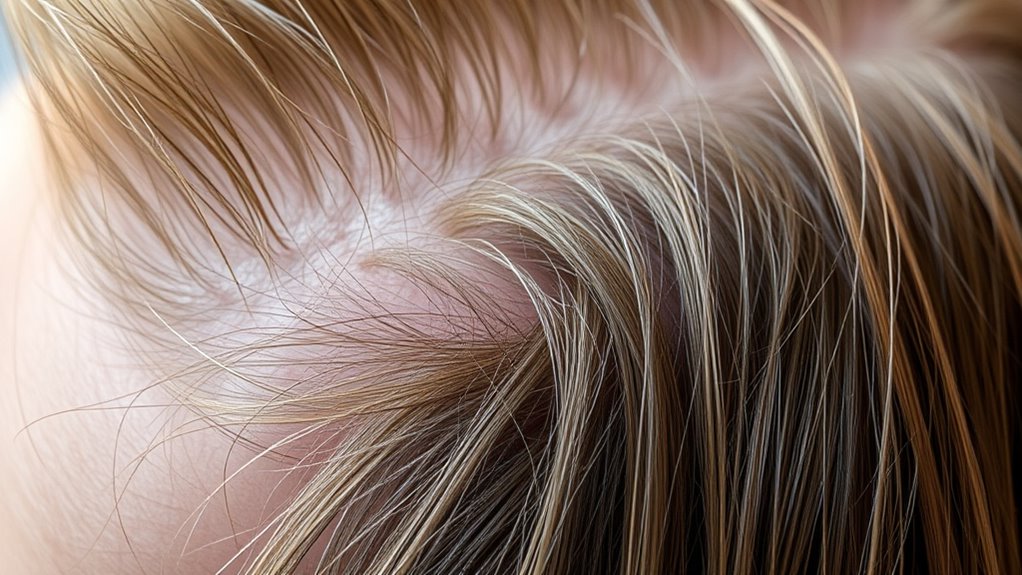
Hair loss can be a distressing experience, but understanding your options is the first step toward managing it effectively. If you notice hair thinning, it’s natural to feel concerned, but knowing what causes it and how to address it can help you regain confidence. One of the key factors in hair thinning is scalp health. When your scalp isn’t healthy, it can hinder hair growth and lead to increased shedding. Poor scalp health might result from factors like dandruff, scalp infections, or dryness, all of which can weaken hair follicles and accelerate hair loss. Maintaining a clean, balanced scalp environment is essential, so incorporating gentle shampoos and scalp treatments can promote better scalp health and potentially reduce hair thinning. Using appropriate hair care products formulated for scalp health can enhance your efforts in preventing hair loss.
Understanding the root causes of your hair loss is vital. Genetics play a significant role, especially if hair thinning runs in your family. Hormonal changes, such as those experienced during pregnancy, menopause, or due to thyroid issues, also contribute to hair loss. Stress and lifestyle choices, including poor diet and lack of sleep, can weaken your hair’s structure and affect scalp health. Additionally, certain medications and medical conditions may accelerate hair loss, so consulting with a healthcare professional helps identify underlying issues and tailor effective solutions.
When it comes to solutions, a proactive approach is best. First, prioritize scalp health by avoiding harsh chemicals and using products designed to nourish your scalp. Regular scalp massages can stimulate blood flow to hair follicles, encouraging healthy growth. Nutritional support is equally important; a diet rich in vitamins like biotin, vitamin D, and iron can strengthen hair and improve scalp health. If natural remedies aren’t enough, topical treatments like minoxidil are widely used to slow hair thinning and promote regrowth. For more significant hair loss, procedures like hair transplants or laser therapy might be options to consider, but these should be discussed thoroughly with a specialist.
Ultimately, managing hair loss involves a combination of proper scalp care, lifestyle modifications, and possibly medical interventions. Staying consistent with your routine and seeking professional advice when needed can make a noticeable difference. Remember, hair thinning is common, and many effective solutions exist to help you address it. By understanding your scalp health and taking targeted actions, you’re more likely to maintain healthier, fuller hair and feel more confident in your appearance.
Frequently Asked Questions
Are Hair Loss Treatments Suitable for All Age Groups?
Hair loss treatments aren’t suitable for all age groups because age factors influence their effectiveness and safety. Younger individuals might respond differently, and some treatments may not be recommended for children or seniors. Before starting any treatment, you should consult a healthcare professional to assess treatment suitability based on your age and specific condition. This personalized approach guarantees you select the safest and most effective option for your age group.
How Can Diet Influence Hair Loss Prevention?
Imagine your hair as a thriving garden; what you feed it matters. Your diet can influence hair health by preventing nutritional deficiencies that weaken strands. Eating nutrient-rich foods and taking dietary supplements when needed support hair growth and strength. A balanced diet supplies essential vitamins and minerals, helping you maintain a lush, vibrant look. So, nourishing your body is a key step in preventing hair loss naturally.
What Are Natural Remedies Effective for Hair Regrowth?
You can try natural remedies like herbal extracts and essential oils for hair regrowth. Herbal extracts such as saw palmetto and ginseng help stimulate hair follicles, while essential oils like rosemary, peppermint, and lavender improve scalp circulation and promote healthy growth. Massage these oils into your scalp regularly, and incorporate herbal extracts into your diet or hair care routine. Consistency is key to seeing noticeable results over time.
How Long Does It Take to See Results From Hair Loss Treatments?
You’ll typically see results from hair loss treatments within 3 to 6 months, depending on your hair growth timeline and treatment effectiveness. Consistency is key, so stick with your regimen and be patient. Some people notice initial improvements in scalp health sooner, but full hair regrowth can take longer. Keep in mind that individual responses vary, and it might take up to a year for ideal results.
Can Stress Management Help Reduce Hair Shedding?
Yes, stress management can help reduce hair shedding because reducing stress improves your mental health, which in turn supports healthier hair growth. When you practice stress reduction techniques like meditation, exercise, or deep breathing, you decrease cortisol levels that may contribute to hair loss. Prioritizing mental health not only promotes overall well-being but also creates a better environment for your hair to stay strong and healthy.
Conclusion
Remember, hair loss often happens quietly, almost like a coincidence, reminding you that change is part of life. Sometimes, the solutions you seek are right in front of you—whether it’s adjusting your habits or exploring new treatments. Embrace the process, knowing that even small steps can lead to big results. In the end, managing hair loss isn’t just about appearance; it’s about accepting life’s natural flow and finding confidence in your journey.