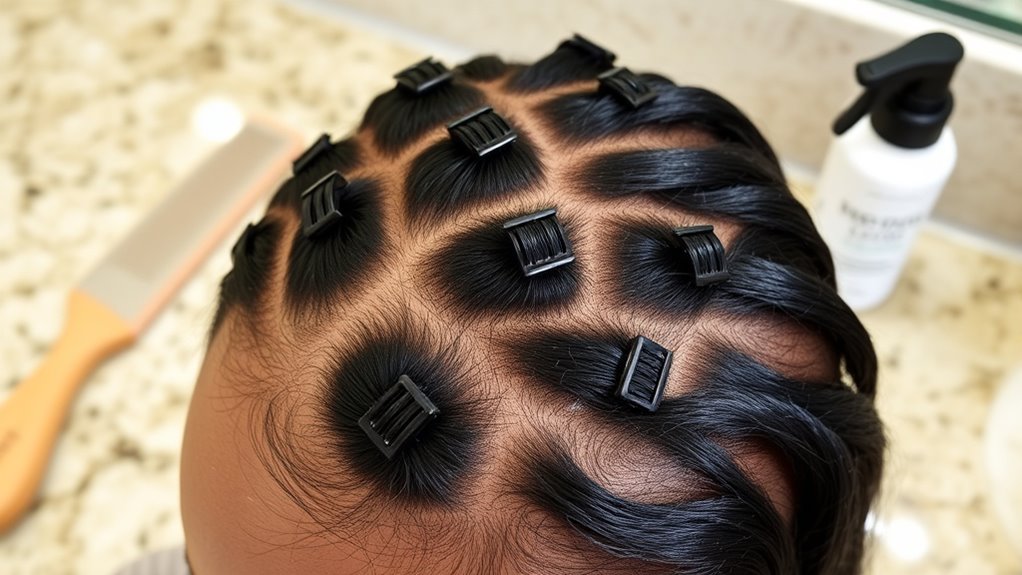

To prepare your hair for protective styles, start by cleansing with a sulfate-free shampoo to remove buildup without stripping natural oils. Follow with a nourishing conditioner and detangle thoroughly from ends to roots to minimize breakage. Incorporate scalp care by massaging natural oils and ensuring your scalp is clean and irritation-free. Make sure your hair is completely dry and moisturized before styling. To discover more tips for healthy, long-lasting styles, keep exploring this helpful guide.

Get beauty and skincare favorites delivered free with Prime
- Fast, free delivery on millions of items
- Prime Video, Amazon Music and more included
- Member-only deals all year
Key Takeaways
- Use a sulfate-free shampoo and nourishing conditioner to clean and soften hair before styling.
- Detangle thoroughly from ends to roots to prevent breakage and ease styling.
- Incorporate scalp massages with natural oils to promote scalp health and stimulate growth.
- Ensure hair is completely dry and moisturized with leave-in conditioners or oils.
- Part hair into manageable sections and check for scalp irritation or buildup before styling.
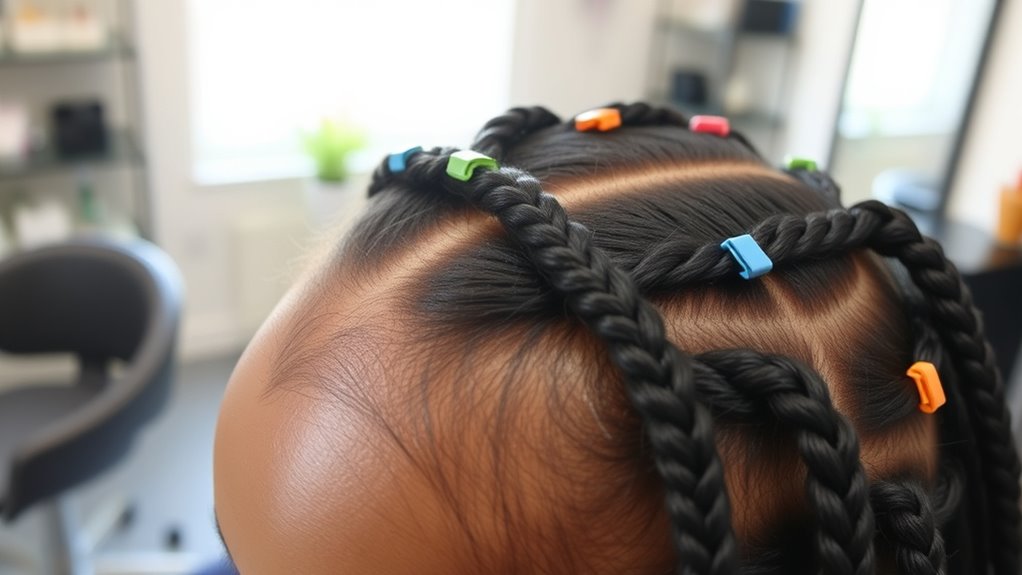
Preparing your hair properly is essential to guarantee your protective style looks great and remains healthy. When you take the time to prepare your hair, you’re not just making styling easier—you’re also supporting the overall health of your scalp and strands. One of the key aspects of this preparation is focusing on braid maintenance, which involves ensuring your hair is clean, moisturized, and free of buildup before you start braiding or twisting. If your hair isn’t clean or well-conditioned, it can lead to scalp irritation, breakage, or even mildew under the style. To maintain braid health, gently wash your hair using a sulfate-free shampoo that won’t strip away natural oils. Follow up with a nourishing conditioner to keep your hair soft and manageable. Before styling, make sure to detangle thoroughly, starting from the ends and working your way up. This step prevents unnecessary tension and breakage once your hair is in the protective style.
Scalp health plays a crucial role in successful protective styling. A healthy scalp provides a strong foundation for your style and reduces the risk of issues like dryness, dandruff, or itchiness. To promote scalp health, incorporate regular scalp massages into your routine; using natural oils like jojoba or tea tree oil can help stimulate blood flow and keep your scalp moisturized. Avoid over-washing your hair, as this can strip away natural oils and cause dryness. Instead, focus on cleansing your scalp gently and applying a lightweight oil or moisturizer to maintain hydration. When preparing for your style, part your hair in sections and check for any signs of irritation or buildup. If you notice flaky patches or dryness, treat those areas with a clarifying rinse or a soothing oil treatment before proceeding. This helps prevent discomfort and scalp issues once your style is in place.
Additionally, ensure your hair is completely dry before styling. Wet or damp hair is more susceptible to breakage and can lead to mold or mildew if left in braids or twists for too long. Use a towel or a gentle blow-dryer on a cool setting to thoroughly dry your hair. When you’re ready to style, apply a light leave-in conditioner or moisturizer to keep your hair flexible and easy to manage. Properly preparing your hair by focusing on braid maintenance and scalp health doesn’t just make styling easier—it also sets the stage for healthier hair growth and a more comfortable experience. Incorporating scalp care into your routine can further enhance the health of your hair and make protective styles last longer. Taking these steps ensures your protective style remains beautiful, secure, and, most importantly, gentle on your scalp and strands.
sulfate-free shampoo for protective styles
As an affiliate, we earn on qualifying purchases.
As an affiliate, we earn on qualifying purchases.
Frequently Asked Questions
How Often Should I Wash My Hair Before Protective Styling?
You should wash your hair about once a week before protective styling, but it depends on your hair porosity and scalp health. If you have high porosity hair or a oily scalp, washing more frequently helps prevent buildup. On the other hand, low porosity hair may need less frequent washing to avoid dryness. Keep your scalp clean and healthy, ensuring it’s well-prepared for your protective style.
Can I Use Heat Tools Before Protective Styles?
You can use heat tools before protective styles, but you should be cautious to prevent heat damage. Make sure your hair is thoroughly conditioned to boost moisture retention, and apply a heat protectant to minimize damage. Avoid excessive heat and high temperatures, as they weaken strands and hinder moisture retention. Giving your hair time to recover after heat styling helps maintain healthy, protected hair, making your style last longer and look better.
What Products Are Best for Preparing Natural Hair?
Imagine your hair as a garden needing the right nourishment. You should choose products that hydrate and strengthen, like water-based leave-ins, oils, and creams. Focus on moisturizing techniques that lock in moisture, such as sealing with oils after applying a moisturizer. Product selection matters—look for nourishing ingredients like shea butter, coconut oil, and aloe vera to keep your hair healthy and ready for protective styles.
How Do I Prevent Breakage During Protective Styling?
To prevent breakage during protective styling, focus on maintaining your hair’s elasticity and moisture retention. Gently detangle your hair beforehand, using a wide-tooth comb, and avoid tight styles that strain your strands. Use moisturizing products to keep your hair hydrated, which helps prevent dryness and brittleness. Regularly moisturize your scalp and ends, and give your hair breaks between styles to reduce stress and breakage, ensuring healthier, stronger hair.
Is Deep Conditioning Necessary Before Protective Styles?
Think of your hair as a garden needing nourishment before planting. Deep conditioning is essential because it addresses your hair’s porosity, sealing in moisture and strengthening strands. If your hair is high porosity, incorporate protein treatments to repair and fortify. This step guarantees your hair stays healthy, minimizes breakage, and prepares it for protective styles, making sure your strands thrive throughout the style’s duration.
Conclusion
So, now that you’re armed with all these tips, go ahead and prepare your hair like a pro—because nothing says “I’ve got my life together” quite like a perfectly prepped protective style. Remember, skipping these steps might just turn your gorgeous hair into a tangled mess or a science experiment. But hey, who needs healthy hair when you can risk it all for that “effortless” look? Prioritize your strands—your future self will thank you!
Halloween Picks
halloween
As an affiliate, we earn on qualifying purchases.