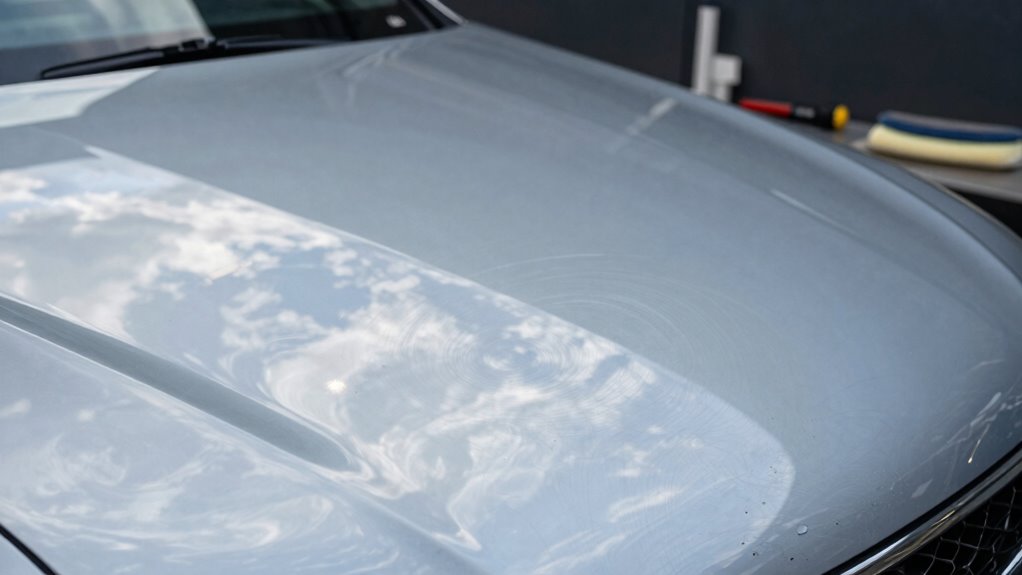

Buffing your vehicle too often can backfire because repeatedly removing a thin layer of paint weakens the clear coat, making your car more prone to scratches, chips, and oxidation. Excessive buffing can create micro-scratches, dull the surface, and reduce paint thickness, ultimately harming the vehicle’s protective barrier. Residue buildup from frequent buffing can also dull the finish and require more aggressive efforts to fix. Keep in mind, proper maintenance tips can help you avoid these issues—continue to learn how to protect your car’s finish.
Key Takeaways
- Overbuffing weakens the clear coat, increasing the risk of scratches, chips, and oxidation.
- Excessive buffing can create micro-scratches and dull the vehicle’s surface over time.
- Repeated buffing strips away paint layers, reducing protection against environmental damage.
- Residue buildup from multiple buffing sessions can dull the paint’s finish and hinder cleaning.
- Frequent buffing without proper assessment can lead to surface damage, requiring costly repairs.
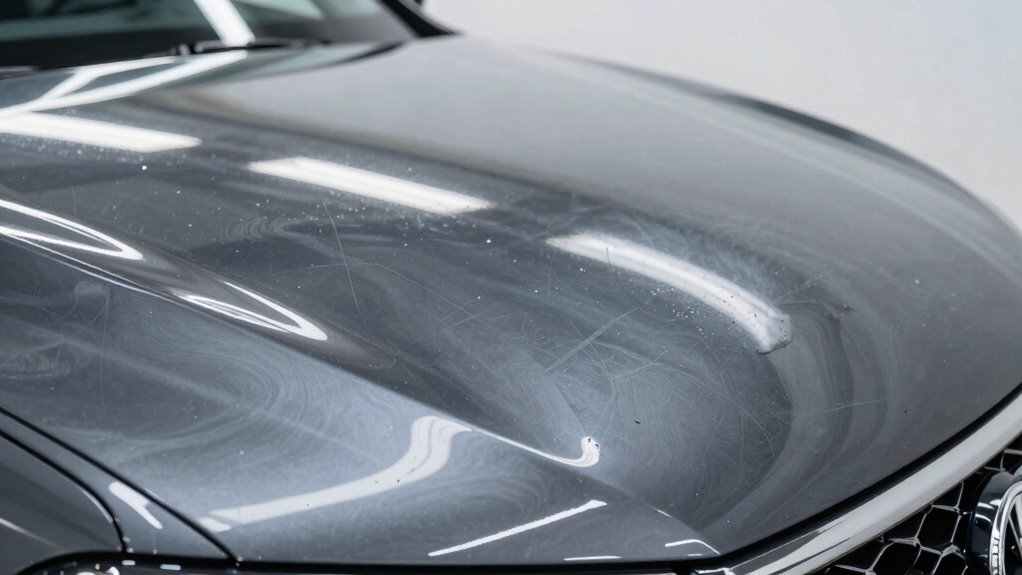
Have you ever wondered why your car’s paint might start to look worse despite regular buffing? It’s a common question among car enthusiasts who want that perfect, glossy finish. The truth is, buffing is a valuable tool for maintaining your car’s appearance, but overdoing it can cause more harm than good. When you buff too often, you run the risk of creating surface damage. Repeatedly removing a thin layer of paint weakens the clear coat, making it more vulnerable to scratches, chips, and oxidation. Instead of restoring your car’s shine, excessive buffing can leave the surface dull, uneven, or even scratched deeply enough to require repainting.
Another often overlooked issue with frequent buffing is product buildup. Each time you buff, you use compounds, polishes, or abrasives that can leave residues behind if not thoroughly cleaned. Over time, these residues build up on the surface, creating a haze or film that dulls the paint’s natural luster. This buildup can be tricky to remove completely, especially if you’re not using the right products or techniques. When layers of product accumulate, buffing becomes less effective, and you might find yourself buffing more aggressively to get rid of the haze, which exacerbates surface damage even further. Additionally, understanding paint thickness can help you gauge how often buffing is safe for your specific vehicle. Regularly assessing the surface condition can prevent unnecessary damage and extend the lifespan of your vehicle’s finish.
It’s tempting to think that more buffing equals better results, but in reality, it’s a delicate balance. Each buffing session strips away a tiny layer of paint, and doing this too often leads to thinning paint layers that can’t protect your car from the elements. Plus, the risk of creating micro-scratches increases, which can turn the surface dull and uneven over time. If you keep repeating the process without proper care, you might end up with a surface that requires costly repairs or repainting much sooner than expected. To maintain the integrity of your vehicle’s finish, it’s important to understand the role of surface maintenance and avoid unnecessary procedures. Applying proper buffing techniques and using the right tools can significantly reduce the chances of damage and prolong the life of your car’s paint. Additionally, practicing proper buffing techniques and knowing when to step back can preserve your car’s finish longer.
To avoid these pitfalls, you should only buff when necessary and use the right products in moderation. Regular washing and waxing can help maintain your car’s shine without the need for frequent buffing. When you do decide to buff, make sure to use gentle techniques, clean your tools thoroughly, and follow up with a good quality polish or wax to protect the surface. Remember, preserving your car’s paint isn’t about frequent aggressive buffing but about smart, careful maintenance to keep your vehicle looking its best for years to come.

menzerna Polishing Set 8oz – HCC1000, MCC2500 & 3800 | 3-Step System for Scratch Removal, Swirl Elimination & Mirror-Like Finish
- Complete 3-Step System: Includes HCC1000, MCC2500, and 3800
- Heavy Cut Compound 1000: Removes scratches and imperfections
- Medium Cut Compound 2500: Eliminates holograms and marks
As an affiliate, we earn on qualifying purchases.
As an affiliate, we earn on qualifying purchases.
Frequently Asked Questions
Can Buffing Damage the Car’s Paint Permanently?
Yes, buffing can damage your car’s paint permanently if you’re not careful. When you buff too often, you reduce the paint thickness, making it more vulnerable. Additionally, if you buff too aggressively, you risk deepening scratches, increasing their depth. Over time, this can lead to paint thinning and even exposing the underlying layers, which might require costly repairs. Always use proper techniques and tools to avoid irreversible damage.
How Do I Know When My Car Needs Buffing?
You know your car needs buffing when water spots or minor scratches start to dull its shine after a car wash. If you notice the paint feels rough or looks less glossy, it’s time for a gentle buff to restore protection and smoothness. Regular buffing, combined with proper paint protection, helps maintain that fresh look. Just avoid overdoing it, as too much buffing can damage your car’s paint over time.
Are There Risks With Using Harsh Buffing Compounds?
Yes, using harsh buffing compounds can pose risks. They often contain strong chemical abrasives that can damage your car’s clear coat if not used carefully. Proper surface preparation is essential before buffing to avoid uneven results or scratches. If you’re aggressive with these compounds, you risk removing too much paint or causing swirl marks. Always choose appropriate products and follow instructions to protect your vehicle’s finish.
What Tools Are Safest for Amateur Buffing?
Using the right tools is like choosing a gentle breeze for delicate flowers—you want safety and control. For amateur buffing, opt for a soft foam or microfiber applicator, which are gentle yet effective. When applying paint protection, these tools guarantee even, smooth buffer techniques without risking damage. Avoid harsh pads or overly aggressive compounds, which can backfire and harm your paint. Stick with gentle tools for the best results.
How Often Should Professional Car Polishing Be Done?
You should schedule professional car polishing, including color correction and paint restoration, every 6 to 12 months. This frequency helps maintain your car’s finish without risking damage from over-buffing. Regular polishing preserves the paint’s clarity and gloss, but overdoing it can lead to paint thinning or scratches. Trust a professional to assess your car’s condition and recommend the most suitable interval to keep your vehicle looking its best.
Conclusion
Buffing your car too often can do more harm than good, stripping away clear coats and causing lasting damage. Imagine revealing the bare paint beneath, like peeling back layers of a delicate onion. Studies show that over-buffing can reduce your car’s resale value by up to 20%. So, next time you reach for the buffing pad, remember—less is more. A gentle touch preserves your paint’s shine and keeps your investment looking fresh for years.