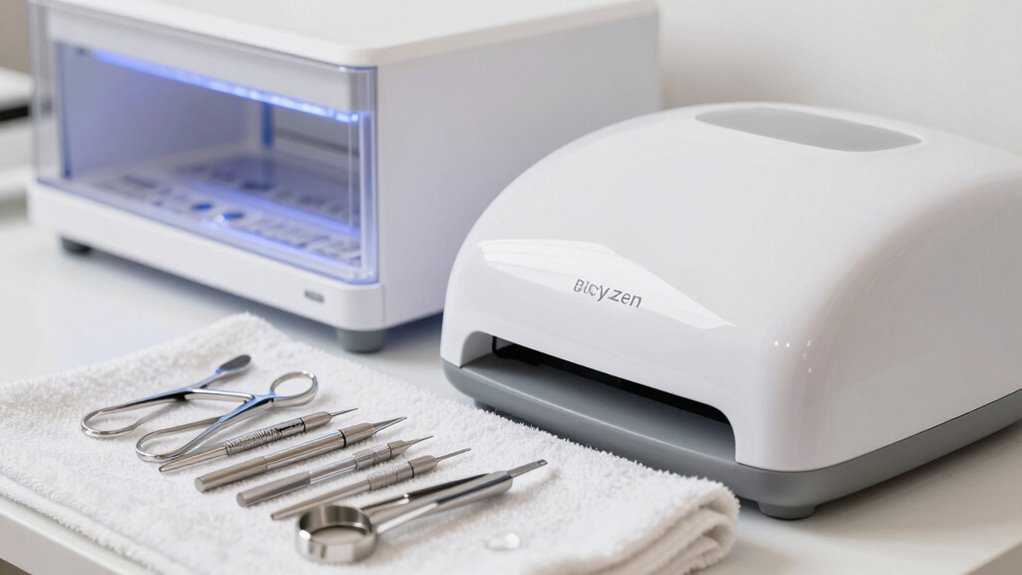
Nail sterilizers don’t replace cleaning because they only target germs on surfaces that are already free of dirt and organic matter. You need to thoroughly clean tools first to remove debris and organic material that can shield bacteria and viruses. Without this step, sterilizers, including UV light devices, can’t work effectively. Following proper cleaning and sterilization steps is essential for safety and hygiene. Keep going to discover how to guarantee your tools are fully sanitized.
Key Takeaways
- Nail sterilizers, especially UV sterilizers, require pre-cleaning to remove organic matter that blocks sterilization effectiveness.
- Cleaning with disinfectants ensures surfaces are free of dirt and germs before sterilization.
- UV sterilizers only kill microbes on cleaned, debris-free surfaces; they do not replace manual cleaning.
- Proper sanitation involves a sequential process: cleaning first, then sterilization for maximum hygiene.
- Relying solely on sterilizers without prior cleaning increases the risk of infection and cross-contamination.
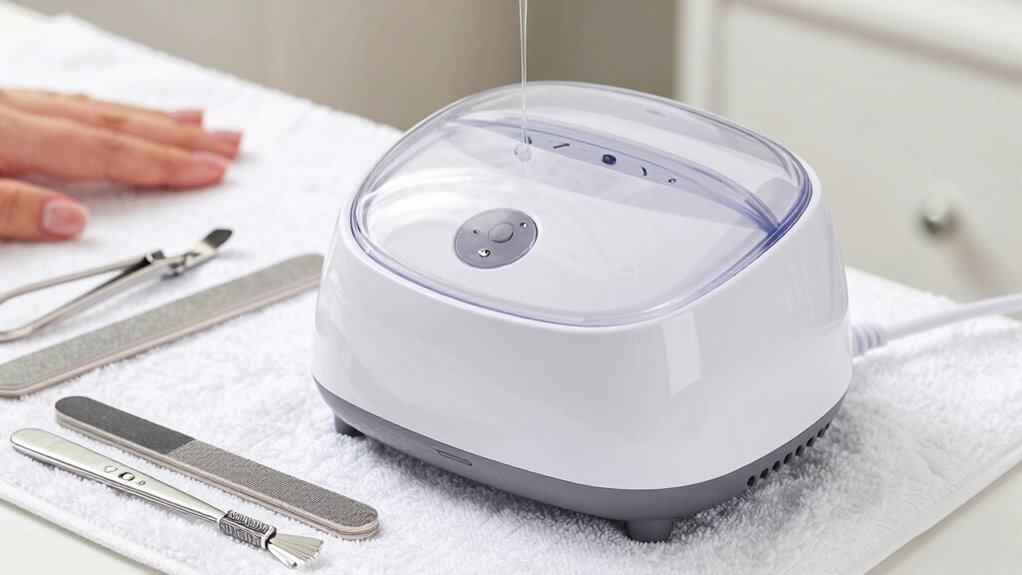
Have you ever wondered how professionals keep their tools safe and hygienic? It’s not just about having a good nail sterilizer; it’s about understanding the proper order of cleaning and sterilizing. Before you even think about using a nail sterilizer, you need to start with thorough cleaning. Surface disinfectants are your first line of defense—wipe down your tools with a quality disinfectant to remove visible dirt, debris, and some germs. This initial step is essential because sterilizers, including UV light devices, are designed to eliminate microorganisms that remain after cleaning, not to replace it. Skipping cleaning can leave organic matter that shields bacteria and viruses from sterilization processes, rendering your efforts ineffective.
Once you’ve cleaned your tools, then the sterilization process comes into play. Nail sterilizers, especially those equipped with UV light, are excellent for killing bacteria, fungi, and viruses that survive cleaning. UV light sterilizers work by emitting ultraviolet radiation that penetrates microorganisms’ cell walls, disrupting their DNA and rendering them inactive. However, UV sterilizers are only effective if the tools are free of organic material and dirt. That’s why cleaning has to come first—UV light can’t penetrate grime or debris, so it won’t do its job properly if your tools aren’t pre-cleaned. Proper tool sanitation is vital for effective sterilization, ensuring all microorganisms are targeted.
Additionally, understanding the limitations of UV sterilizers highlights the importance of combining different hygiene practices for comprehensive tool safety. It’s tempting to rely solely on a UV light sterilizer or a high-tech device, but that’s a mistake. These devices are excellent for maintaining hygiene, but they’re not substitutes for proper cleaning with surface disinfectants. Surface disinfectants remove surface-level germs and organic matter, creating a cleaner environment for sterilization. Incorporating proper cleaning techniques can significantly improve sterilization outcomes and overall hygiene. In fact, many professionals recommend following a step-by-step cleaning process to maximize effectiveness. When you combine both—first cleaning with surface disinfectants, then sterilizing with UV light—you *considerably* reduce the risk of cross-contamination and infection.
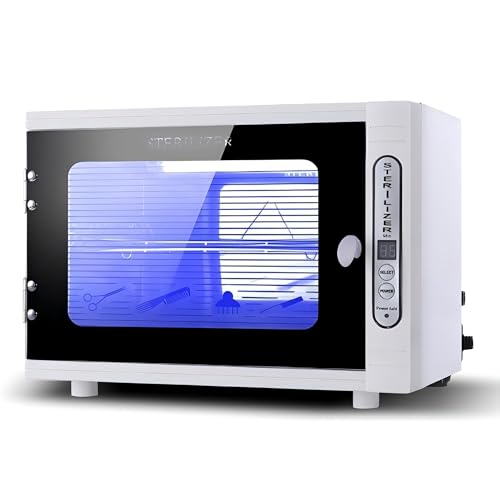
Smiledt Nail Tool Sterilizers UV 12L Lighting Autoclave Machine for Labs, Salons & Home
- UV Wavelength: Uses 253nm UV light for sterilization
- Safe for Delicate Tools: No heat, burns, or odors
- Versatile Use: Suitable for labs, salons, dental, home
As an affiliate, we earn on qualifying purchases.
As an affiliate, we earn on qualifying purchases.
Frequently Asked Questions
How Often Should I Sterilize My Nail Tools?
You should sterilize your nail tools after every client or use, especially with chemical sterilization, to prevent infections. Regular tool inspection helps identify damage or wear that could harbor bacteria. Make certain to clean tools thoroughly before sterilizing, and don’t skip the sterilization process itself. Consistent sterilization guarantees safety and hygiene, keeping both you and your clients protected from potential health risks.
Can Sterilizers Kill All Types of Bacteria?
Sterilizers are highly effective against most bacteria, but bacterial resistance can sometimes reduce their efficacy. While they greatly lower the risk of infection, no sterilizer kills every bacteria type completely. To guarantee safety, you should clean tools thoroughly before sterilizing, as dirt can shield bacteria from sterilizer action. Regularly check your sterilizer’s performance and follow manufacturer instructions to maximize sterilizer efficacy and keep your tools as safe as possible.
Are Nail Sterilizers Safe for Home Use?
Yes, nail sterilizers are generally safe for home use when used correctly. They use UV light to kill bacteria and viruses, providing a chemical-free way to disinfect tools. However, you should follow the manufacturer’s instructions carefully, avoid direct UV exposure to your skin or eyes, and guarantee proper cleaning beforehand. Combining nail sterilizers with regular cleaning and chemical disinfectants enhances safety and effectiveness, making them a reliable part of your home manicure routine.
What’s the Difference Between Cleaning and Sterilizing?
Think of cleaning as sweeping the deck before battle; it removes surface debris and chemical residue that dull your tools. Sterilizing, like fortifying defenses, kills bacteria and germs that cleaning can’t reach. Cleaning makes certain your tools are free of visible dirt, while sterilizing guarantees they’re safe from hidden microbes. You need both steps—clean first, then sterilize—to keep your nails and clients safe and healthy.
Do All Salons Follow Proper Sterilization Protocols?
Not all salons follow proper sterilization protocols, which can compromise client safety. Salon licensing often requires adherence to strict sterilization standards, but some may cut corners to save time. You should always ask your salon about their sterilization procedures and guarantee they properly clean and sterilize tools. Proper protocols protect you from infections and ensure a safe, hygienic experience, so don’t hesitate to prioritize your safety and choose reputable salons.
Conclusion
Remember, cleaning is your first line of defense—clean thoroughly, disinfect properly, and sterilize effectively. Don’t skip the essential steps before using a nail sterilizer. Clean to remove dirt, disinfect to kill germs, and sterilize to eliminate spores. By following this sequence, you guarantee the highest level of safety for yourself and your clients. Clean first, disinfect second, sterilize last—because proper hygiene isn’t just a step, it’s a standard you must uphold.