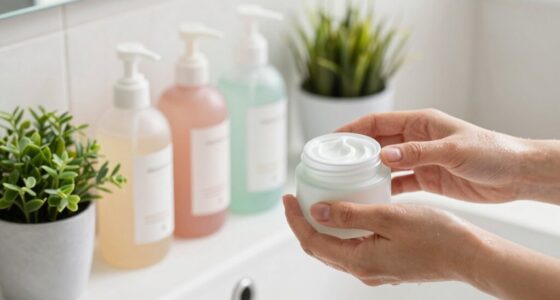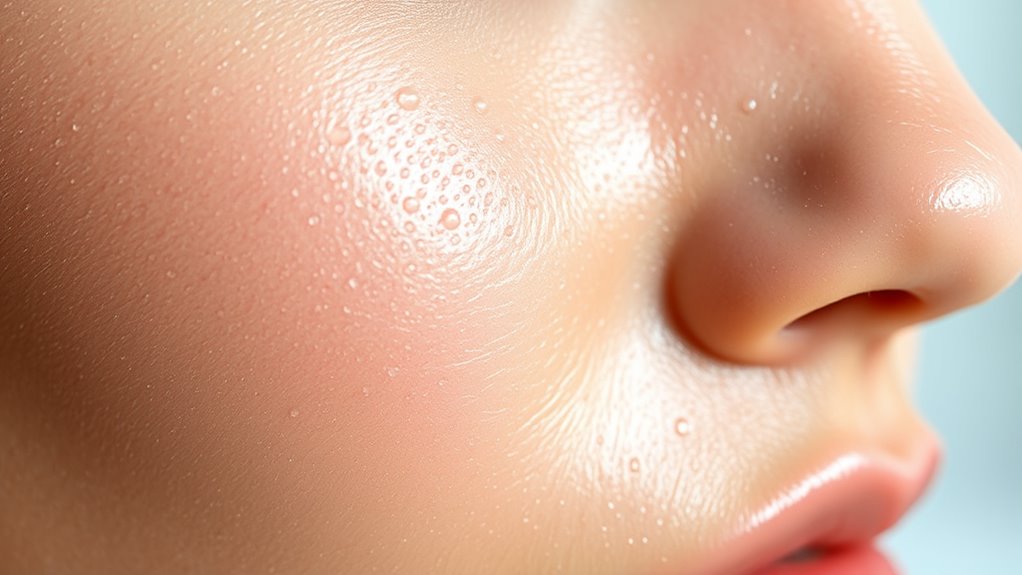

To lock in moisture effectively through skin slugging, start with a clean face and apply your regular serums or treatments, allowing them to absorb fully. Then, generously layer a thick, occlusive moisturizer containing ingredients like petrolatum or mineral oil, creating a protective barrier that seals in hydration overnight. This technique is especially great for dry or sensitive skin, helping to prevent moisture loss and boost skin health. Keep going, and you’ll discover how to optimize your skincare routine even further.
Key Takeaways
- Use a thick, occlusive moisturizer like petrolatum or mineral oil to create a protective barrier on the skin.
- Apply after cleansing and layering your serums or treatments to lock in active ingredients.
- Ensure the moisturizer is generously and evenly spread for complete coverage.
- Ideal for dry, flaky, or sensitive skin to prevent moisture loss overnight.
- Tailor the routine to your skin type, opting for lighter occlusives if prone to breakouts or oiliness.

Skin slugging has become a popular skincare trend, promising to boost hydration and create a protective barrier. If you’re looking to enhance your nighttime skincare routines, this method can be an effective way to lock in moisture and improve skin health. The key lies in choosing the right moisturizer ingredients, which play a vital role in how well your skin retains hydration overnight. Ingredients like petrolatum, mineral oil, or dimethicone form a barrier that prevents moisture loss, making them ideal for slugging. These occlusive agents sit on the skin’s surface, sealing in the active ingredients from your serums and creams, so they work more effectively. When incorporating slugging into your nighttime routines, it’s essential to understand how these ingredients complement your existing products and skin type.
To start, cleanse your face thoroughly to remove dirt, oil, and residual makeup. Follow up with a toner if you use one, then apply your targeted treatments, such as serums or spot treatments. Once your skin absorbs these products, you can layer your moisturizer. For slugging, choose a thick, emollient moisturizer rich in occlusive ingredients. Applying a generous amount ensures your skin is well-coated, forming a barrier that traps moisture. This step is especially beneficial if your skin tends to be dry, flaky, or sensitive because it prevents dehydration and soothes irritation. Keep in mind that your nighttime routines should be tailored to your skin’s needs—if you have oily skin, opt for a lightweight, non-comedogenic moisturizer to avoid clogging pores.
Frequently Asked Questions
Can Skin Slugging Cause Breakouts or Acne?
Skin slugging can cause breakouts or acne if you have oily or acne-prone skin, as it may lead to pore clogging. The occlusive layer traps dirt, oil, and bacteria, increasing the risk of fungal breakouts and inflammation. To avoid this, make certain your skin is thoroughly cleansed before slugging and use non-comedogenic products. If you notice irritation or breakouts, stop immediately and consult a dermatologist.
How Often Should I Perform Skin Slugging?
You should slug your skin 2-3 times a week, depending on your skin type and seasonal changes. If you notice breakouts or irritation, reduce frequency or explore product alternatives like lighter oils or ointments. During winter, consider more frequent slugging to combat dryness, while in summer, cut back to prevent clogging. Listen to your skin’s needs and adjust your routine accordingly for ideal moisture locking without overdoing it.
Is Skin Slugging Suitable for All Skin Types?
You might wonder if skin slugging suits all skin types. While it’s a popular hydration technique, it’s not ideal for everyone. Those with oily or acne-prone skin could find it clogging pores, weakening their skin barrier. For sensitive skin, it might cause irritation. Always assess your skin’s unique needs and consult a dermatologist if unsure. Proper hydration techniques should strengthen your skin barrier, not compromise it.
What Are the Best Products to Use for Slugging?
For slugging, choose a thick, petroleum-based moisturizer like petroleum jelly or occlusive balms that lock in moisture effectively. When selecting products, consider ingredient considerations such as avoiding fragrances or alcohol if you have sensitive skin. Look for options that create a barrier without clogging pores, and make certain your moisturizer suits your skin type. This approach helps maintain hydration and enhances your skin’s overall health.
Can Skin Slugging Be Combined With Other Skincare Routines?
Think of your skincare routine as a carefully choreographed dance. Skin slugging can be combined with other routines if you pay attention to moisturizer compatibility and layering techniques. Apply lighter products first, then finish with the occlusive layer. Yes, it’s possible, but be cautious—overloading your skin might cause breakouts or irritation. Keep your routine balanced, and you’ll enjoy the benefits without disrupting your skin’s harmony.
Conclusion
Now that you know skin slugging locks in moisture like a protective seal, you might think it’s a simple fix. But it’s also a delicate balance—overdoing it can clog pores just as easily as leaving your skin exposed. Think of it as a cozy blanket that keeps your skin warm and protected, yet too heavy can smother. Use it wisely, and you’ll enjoy soft, hydrated skin without the drawbacks.