
If you have sensitive skin, recent hair removal treatments, or hormonal changes, it’s best to guarantee slow down before starting at-home laser hair removal. Avoid treatments if you’re pregnant or breastfeeding, and wait 4-6 weeks after waxing, plucking, or electrolysis. Protect your skin from sun exposure and tanning to lower risks of burns or pigmentation. Understanding these precautions helps assure safe, effective results—more important tips await as you continue.
Key Takeaways
- Individuals with sensitive skin or skin prone to reactions should consult a dermatologist before starting at-home laser treatments.
- Those who have recently waxed, plucked, or undergone electrolysis should wait 4-6 weeks to ensure effective laser response.
- People with significant sun exposure or tanning should avoid laser sessions to prevent skin burns or pigmentation issues.
- Pregnant or breastfeeding individuals are advised to delay laser hair removal due to hormonal fluctuations and safety considerations.
- Anyone with hormonal imbalances or conditions affecting hair growth should seek medical advice before proceeding.
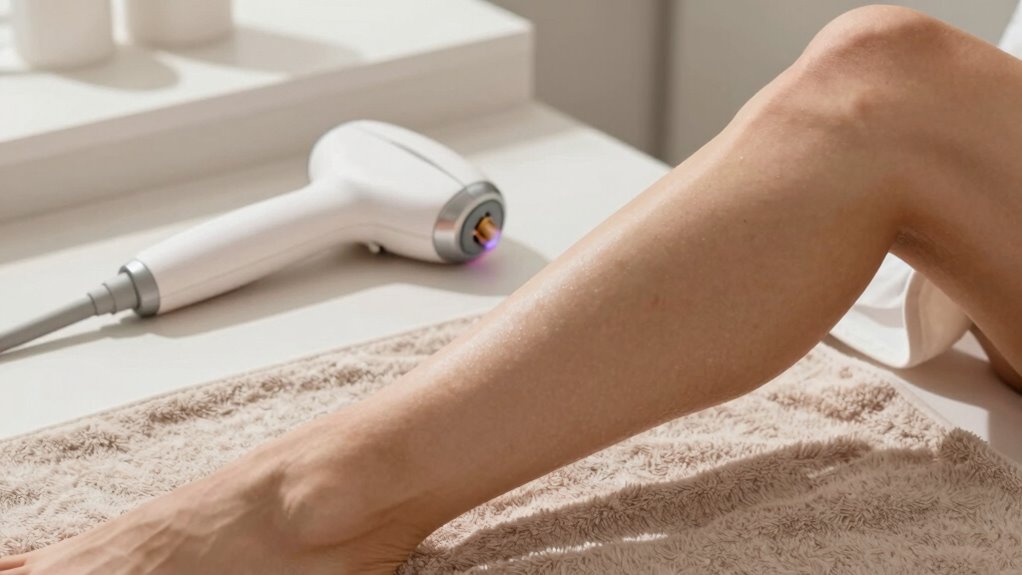
Ever wondered if you can safely perform laser hair removal at home? While the convenience is tempting, it’s vital to understand your skin’s unique needs before jumping in. One of the first things to evaluate is your skin sensitivity. If your skin tends to react badly to sun exposure, harsh skincare products, or has a history of irritation, laser hair removal might not be suitable for you right away. Sensitive skin can become inflamed or develop pigment changes after laser treatments, especially if not properly prepared. It’s wise to consult with a dermatologist or perform a patch test on a small area first. This way, you’ll see how your skin responds and prevent unwanted side effects.
Assess your skin sensitivity and consult a dermatologist before trying at-home laser hair removal.
Another essential factor is understanding your hair growth cycles. Hair grows in different phases—anagen (growth), catagen (transition), and telogen (resting). Laser hair removal is most effective during the anagen phase when the hair is actively growing and contains the highest amount of pigment. If you’re just starting, your hair may be in various stages, making treatments less effective. To maximize results, you need to time your sessions carefully, often waiting several weeks between treatments to target hair in the growth phase. Rushing into treatment without understanding these cycles can lead to subpar results and unnecessary discomfort. Being aware of your hair growth cycles is also important for scheduling treatments effectively.
It’s also important to slow down if you’ve recently undergone other hair removal methods like waxing, plucking, or electrolysis. These methods temporarily remove hair from the follicle or disrupt the hair cycle, making laser treatments less effective immediately afterward. You should wait at least four to six weeks after such procedures before starting laser at home. Additionally, if you’ve been exposed to significant sun exposure or tanning, your skin’s sensitivity increases, and laser treatments can cause burns or pigmentation issues. Always avoid sunbathing or tanning beds for at least two weeks before and after sessions. Being aware of your skin’s sensitivity levels is crucial for safe treatment. Moreover, understanding how skin reactions vary among individuals can help you better prepare and respond to any adverse effects.
Furthermore, recognizing that hormonal fluctuations can influence hair growth patterns is important, especially for women experiencing hormonal changes due to menopause, birth control, or other factors. If you’re pregnant or breastfeeding, it’s generally advised to delay laser hair removal until after your pregnancy. The hormonal changes during this period can affect hair growth patterns and skin sensitivity, making treatments less predictable and potentially riskier. In these cases, consulting with your healthcare provider is the safest route. It’s also worth noting that hormonal fluctuations can sometimes lead to unexpected hair growth, which may influence your treatment plan in the future.
In essence, before you begin laser hair removal at home, take the time to evaluate your skin sensitivity, understand your hair growth cycles, and think about your overall health and recent skin treatments. Doing so guarantees you approach the process safely and increase your chances of achieving smooth, hair-free skin without complications.
at-home laser hair removal device
As an affiliate, we earn on qualifying purchases.
As an affiliate, we earn on qualifying purchases.
Frequently Asked Questions
Can I Use Laser Hair Removal on Tattooed Skin?
You shouldn’t use laser hair removal on tattooed skin because it can cause tattoo fading and skin irritation. The laser targets pigment, which can damage the tattoo ink and lead to uneven fading or scarring. If you’re considering laser treatments, avoid tattooed areas to safeguard your skin’s health and appearance. Always consult a professional beforehand to guarantee safe and effective hair removal, especially around tattoos.
Is Laser Hair Removal Safe During Pregnancy?
Laser hair removal during pregnancy isn’t recommended because pregnancy safety concerns outweigh the benefits. Hormonal changes can cause unpredictable hair growth, and the effects of laser on a developing baby aren’t fully understood. Even though it might seem harmless, avoid laser treatments until after pregnancy. Your health and your baby’s safety come first. Always consult your doctor to guarantee you’re making the safest choice during this special time.
How Often Should I Perform At-Home Treatments?
You should perform at-home laser hair removal treatments every 4 to 6 weeks, depending on your treatment frequency and hair growth cycle. Always monitor your skin sensitivity; if you notice redness or irritation, extend the interval between sessions. Avoid over-treating, as this can cause skin damage. Follow your device’s instructions carefully, and consult a professional if you’re unsure about your skin’s response or if you have skin sensitivities.
What Skin Types Are Unsuitable for Laser Hair Removal?
You should avoid laser hair removal if you have very dark skin, as skin sensitivity can increase the risk of burns or pigmentation changes. Also, laser treatments work best with lighter hair colors like blonde, red, or grey, since darker hair absorbs laser energy more effectively. If your skin is sensitive or you have a tan, it’s best to consult a professional before starting at-home laser treatments to prevent adverse reactions.
Can Laser Hair Removal Cause Long-Term Skin Damage?
Laser hair removal can cause long-term skin damage if you’re not careful. Think of your skin like a delicate garden—overexposure can lead to permanent scars or pigment changes. If you have sensitive skin or underlying conditions, treatment risks increase, and damage might last longer. Always follow safety guidelines, consult a professional, and consider your skin sensitivity to prevent potential long-term harm.
laser hair removal patch test kit
As an affiliate, we earn on qualifying purchases.
As an affiliate, we earn on qualifying purchases.
Conclusion
Before diving into at-home laser hair removal, consider this: some experts believe that slowing down your hair growth cycle can actually make the treatment more effective. If you’re patient and wait for the right timing, you might see better results and avoid skin irritation. So, don’t rush into it—give your hair time to grow back just enough. This small step could make a big difference in achieving smooth, hair-free skin safely and efficiently.
IPL hair removal for sensitive skin
As an affiliate, we earn on qualifying purchases.
As an affiliate, we earn on qualifying purchases.
home laser hair removal for dark skin
As an affiliate, we earn on qualifying purchases.
As an affiliate, we earn on qualifying purchases.