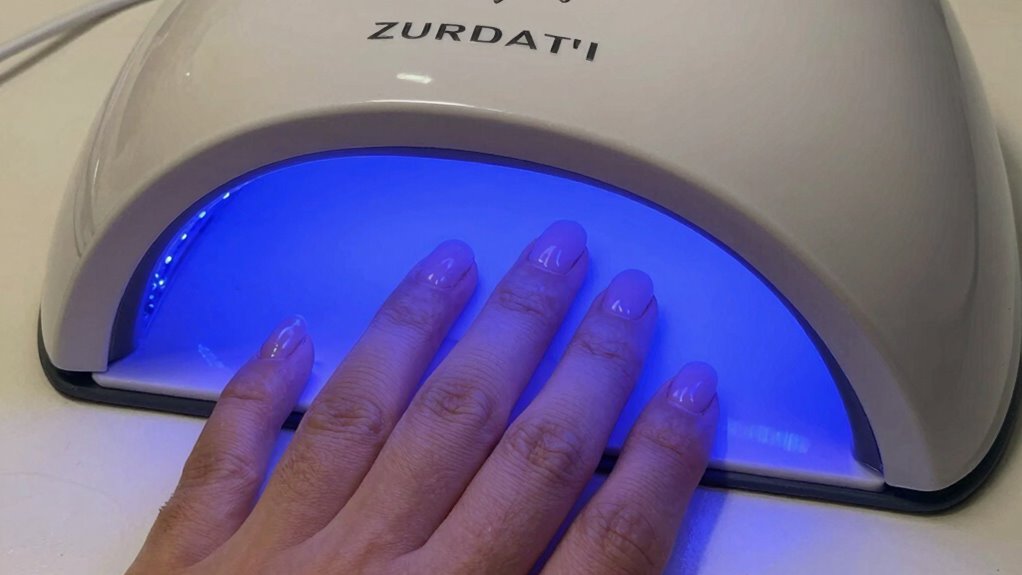

If your hands sit improperly during curing, your UV LED nail lamp can under-cure the product, leaving nails sticky and prone to chipping. Clenched fingers, overlapping, or blocking light with your hand can prevent even exposure to the LED light. To avoid this, keep fingers spread comfortably and make certain all nails are fully exposed. Proper positioning and curing time make a big difference. Want to discover how to perfect your technique? Keep going to find out more.

Get beauty and skincare favorites delivered free — and shop member deals
- Fast, free delivery on millions of items
- Access to Prime Big Deal Days deals on October 6–7
- Prime Video, Amazon Music and more included
Key Takeaways
- Improper hand positioning can block light exposure, leading to under-curing of nails.
- Clenched or overlapping fingers prevent even light distribution during curing.
- Sitting too close or too far from the LED lamp reduces effective curing time.
- Not spreading fingers comfortably inside the lamp causes uneven light coverage.
- Extended curing duration without adjusting hand placement can still result in under-cured nails.
If you’ve ever experienced nails not fully cured after using a UV LED nail lamp, you’re not alone. Many people assume that once they’ve finished their manicure, their nails are set and ready to go. But sometimes, despite using an LED lamp, the polish remains sticky or tacky. This usually happens when hands sit improperly during curing, leading to under-curing of the product. When your hands stay in the lamp for too long or in the wrong position, the light may not reach all areas evenly, leaving sections of polish insufficiently hardened. This can compromise nail polish durability, making your manicure prone to chipping or peeling sooner than expected. It’s a frustrating experience, especially when you’ve invested time and money into your nails.
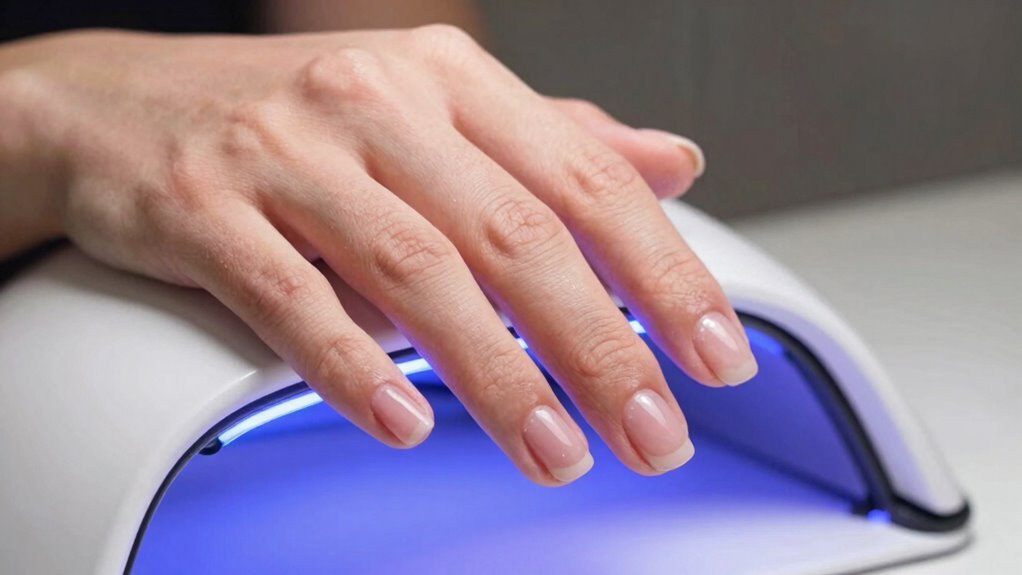
Proper positioning during curing is key. When you place your hands inside the lamp, make sure all fingers are spread out comfortably, giving each nail full exposure to the LED light. If your hands are clenched or overlapping, some nails or parts of nails may not receive adequate light exposure, resulting in under-curing. This under-cure not only affects the longevity of your manicure but can also impact the safety of the LED lamp. While LED lamps are generally safe when used correctly, improper use—like leaving your hands in the device longer than necessary or blocking the light with your fingers—can create uneven curing and reduce overall LED lamp safety. Ensuring your hands are in the correct position helps you maximize the lamp’s efficiency and safety. Additionally, understanding the proper curing process can help prevent common issues like under-curing and ensure your manicure lasts longer. Being aware of LED lamp safety tips can also help you avoid potential hazards associated with improper use. Recognizing the importance of correct hand positioning can significantly improve curing results and overall safety. Furthermore, adjusting your hand placement or the duration of curing can prevent under-cure issues, making your manicure more durable and safe. Using the right technique can also prevent product under-cure which can be caused by mishandling or incorrect timing.
UV LED nail lamp hand positioning
As an affiliate, we earn on qualifying purchases.
As an affiliate, we earn on qualifying purchases.
Frequently Asked Questions
How Can I Tell if My Nails Are Properly Cured?
You can tell if your nails are properly cured by checking their nail thickness and curing consistency. Properly cured nails feel firm, smooth, and not tacky. If they’re too thin or feel soft, they might be under-cured. Also, look for even color and shine, indicating consistent curing. Perform a quick test by gently pressing the surface—if it resists, your nails are likely well-cured; if not, give them more time under the lamp.
Are UV LED Lamps Safe for Prolonged Use?
UV LED lamps are generally safe for prolonged use if you follow safety guidelines. You should limit your UV exposure to protect your skin health, like wearing fingerless gloves or applying broad-spectrum sunscreen on your hands. Avoid looking directly at the light and take breaks between sessions. While they emit less UV than traditional lamps, consistent use can still impact your skin, so moderation is key.
Can Under-Curing Cause Nail Damage or Infection?
Like Pandora’s box, under-curing can release nail damage or infection. If your nail polish isn’t fully cured, it compromises nail longevity and can cause skin sensitivity or irritation. Incomplete curing leaves residues that weaken nails and heighten infection risk. To avoid this, make sure your UV LED lamp is used correctly, and keep your hands properly positioned. This helps maintain healthy, long-lasting nails and keeps your skin safe.
How Often Should I Replace My UV LED Nail Lamp?
You should replace your UV LED nail lamp every 12-18 months to guarantee peak performance. Regular lamp maintenance, like cleaning the LED beads and checking for damage, helps prolong its lifespan. A well-maintained lamp provides better curing, which boosts nail polish longevity and prevents under-curing issues. If you notice reduced curing efficiency or uneven results, it’s time to think about a replacement to maintain healthy, long-lasting nails.
Does Hand Positioning Affect Curing Time Significantly?
Hand positioning definitely impacts curing efficiency. When you keep your hands correctly aligned under the UV LED lamp, the light reaches all areas evenly, ensuring proper curing. If your hands are crooked or sit at odd angles, some nails may under-cure, leaving residue or weak spots. Visualize your hand like a straight line; the more aligned it is with the lamp, the better the curing process, leading to longer-lasting results.
Conclusion
To guarantee your nails are perfectly cured, always keep your hands flat and centered under the LED lamp, avoiding any awkward angles. For example, Sarah once left her hands tilted, and her gel nails remained tacky, leading to chipping within days. By simply adjusting her hand positioning, she achieved a smooth, durable finish. Remember, proper placement makes all the difference—so sit correctly and give your nails the best chance to cure fully.
Halloween Picks
halloween
As an affiliate, we earn on qualifying purchases.