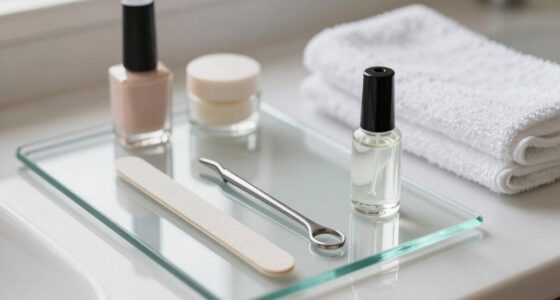
Autoclaves for nail tools do a better job at sterilizing than manual cleaning or chemical disinfectants. They use high-pressure saturated steam to thoroughly destroy bacteria, fungi, and viruses, guaranteeing your tools are completely safe and hygienic. This method penetrates deep into the tools, preventing cross-contamination and meeting health regulations. Proper use and maintenance ensure consistent results, making your practice safer and more professional. Want to discover how to maximize their benefits? Keep exploring to learn more.

Get beauty and skincare favorites delivered free with Prime
- Fast, free delivery on millions of items
- Prime Video, Amazon Music and more included
- Member-only deals all year
Key Takeaways
- Autoclaves use high-pressure steam to thoroughly eliminate bacteria, fungi, and viruses, ensuring superior sterilization.
- They penetrate deeply into tools, providing more reliable sanitation than manual cleaning or chemical disinfectants.
- Autoclaves maintain consistent sterilization quality over time, reducing the risk of cross-contamination.
- Proper autoclave use ensures compliance with health regulations, enhancing client safety and confidence.
- Regular maintenance of autoclaves prevents malfunctions, ensuring optimal performance and long-term efficiency.
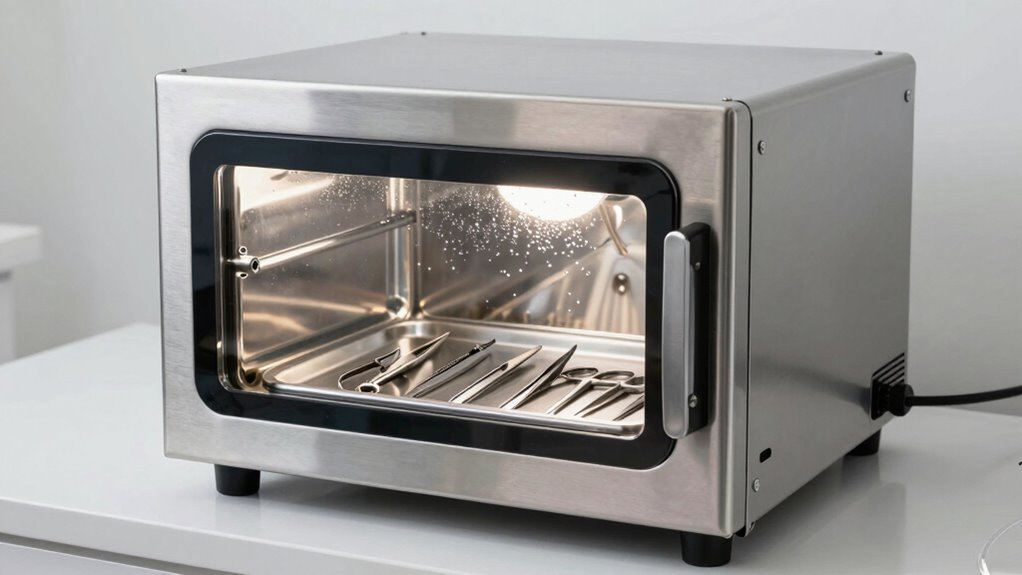
Autoclaves are vital for guaranteeing your nail tools are thoroughly sanitized and safe for client use. These devices are designed to sterilize tools effectively, preventing the spread of bacteria, fungi, and viruses that can cause infections. When it comes to sterilization methods, autoclaves use high-pressure saturated steam to eliminate microorganisms, making them more dependable than simple cleaning or disinfecting. This method penetrates deeply into tools, guaranteeing a level of sterilization that wipes or chemical disinfectants can’t always achieve. By investing in an autoclave, you’re choosing a proven, efficient way to uphold the highest standards of safety and hygiene in your practice.
Autoclaves ensure thorough sterilization, preventing infections and maintaining the highest safety standards in your practice.
In addition to sterilization methods, equipment maintenance plays a vital role in keeping your autoclave functioning at its best. Regular maintenance ensures the device operates at peak performance and prolongs its lifespan. You need to routinely check seals, gaskets, and filters for wear and tear, replacing parts as needed. Clear calibration and testing schedules also help confirm that your autoclave achieves the correct temperature and pressure levels during each cycle. Neglecting equipment maintenance can lead to malfunctions, incomplete sterilization, and potential health risks for your clients. Proper upkeep not only guarantees safety but also helps you avoid costly repairs or replacements down the line. Consistent maintenance is essential for optimal results and long-term reliability.
Using an autoclave consistently demonstrates your commitment to client safety and professionalism. It’s important to follow manufacturer instructions carefully, including loading your tools correctly to allow steam to circulate freely. Proper packaging and handling of tools before sterilization also contribute to effective results. Remember, relying solely on surface cleaning isn’t enough; autoclaves provide that extra layer of assurance that your tools are free from harmful microorganisms. In this way, autoclaves do what they do best—delivering thorough sterilization that manual methods simply can’t match. Additionally, understanding the autoclave cycle process helps ensure proper sterilization outcomes every time.
Ultimately, autoclaves streamline your workflow while raising your standards. They don’t just sterilize; they guarantee your tools are safe, which boosts client confidence and helps you maintain compliance with health regulations. Their role in sterilization methods is unmatched, offering a level of security that’s hard to achieve otherwise. Just make sure you keep up with equipment maintenance to keep your autoclave running smoothly. When you do, you’ll find that your salon or clinic becomes a safer, more professional environment, giving your clients peace of mind knowing their health is your top priority. Proper autoclave maintenance is key to ensuring consistent sterilization performance over time.
professional nail tool autoclave
As an affiliate, we earn on qualifying purchases.
As an affiliate, we earn on qualifying purchases.
Frequently Asked Questions
How Often Should Autoclaves Be Calibrated?
You should calibrate your autoclave at least once a year to guarantee peak performance. Regular calibration frequency is essential for maintaining accuracy verification, so you can trust sterilization results. However, if you notice any irregularities or if the autoclave experiences a significant jolt or malfunction, calibrate it immediately. Staying consistent with calibration helps prevent sterilization failures and guarantees your tools are properly sanitized every time.
Are Autoclaves Environmentally Friendly?
Autoclaves are generally not considered highly eco-friendly due to their energy consumption and use of sterilization agents. However, you can adopt eco-friendly practices by choosing models with energy-efficient features and minimizing water use. Proper maintenance also guarantees they operate efficiently, reducing environmental impact. While they’re essential for sterilization, integrating sustainable practices helps lessen their footprint, making your nail salon more environmentally conscious.
What Maintenance Does an Autoclave Require?
You need to regularly clean and inspect your autoclave to guarantee it meets sterilization standards and maintains autoclave safety. Follow the manufacturer’s guidelines for descaling, replacing gaskets, and checking for leaks. Regularly validate sterilization cycles with biological indicators. Proper maintenance prevents contamination, prolongs the device’s lifespan, and guarantees effective sterilization, ensuring your nail tools are safe for clients and compliant with health regulations.
Can Autoclaves Sterilize All Nail Tools?
Yes, autoclaves can sterilize most nail tools, but you need to check their sterilization efficacy and tool compatibility first. Autoclaves use high-pressure steam to kill bacteria, fungi, and viruses effectively. However, some delicate tools or those with electronic parts may not be suitable for autoclaving. Always verify that your tools are compatible and that the autoclave reaches the correct temperature and pressure for thorough sterilization.
What Is the Lifespan of a Typical Autoclave?
A typical autoclave lasts around 10 to 15 years, depending on usage and maintenance. You’ll find that its durability is vital for consistent sterilization accuracy over time. Regularly inspecting and servicing your autoclave guarantees it continues to perform well and extends its lifespan. Proper care helps you maintain effective sterilization, preventing contamination and protecting client health, making your investment in the autoclave worthwhile for many years.
Conclusion
So, now you see how autoclaves elevate your nail practice—eliminating risks, ensuring safety, and delivering pristine tools. But here’s the twist: the real game-changer isn’t just what they do now, but what they could do next. Are you ready to embrace the future of sanitation? Because once you open their full potential, you might never look back. The question is—are you prepared to take that leap? The next step could redefine your entire approach.
Halloween Picks
halloween
As an affiliate, we earn on qualifying purchases.