
TL;DR

Get beauty and skincare favorites delivered free with Prime
- Fast, free delivery on millions of items
- Prime Video, Amazon Music and more included
- Member-only deals all year
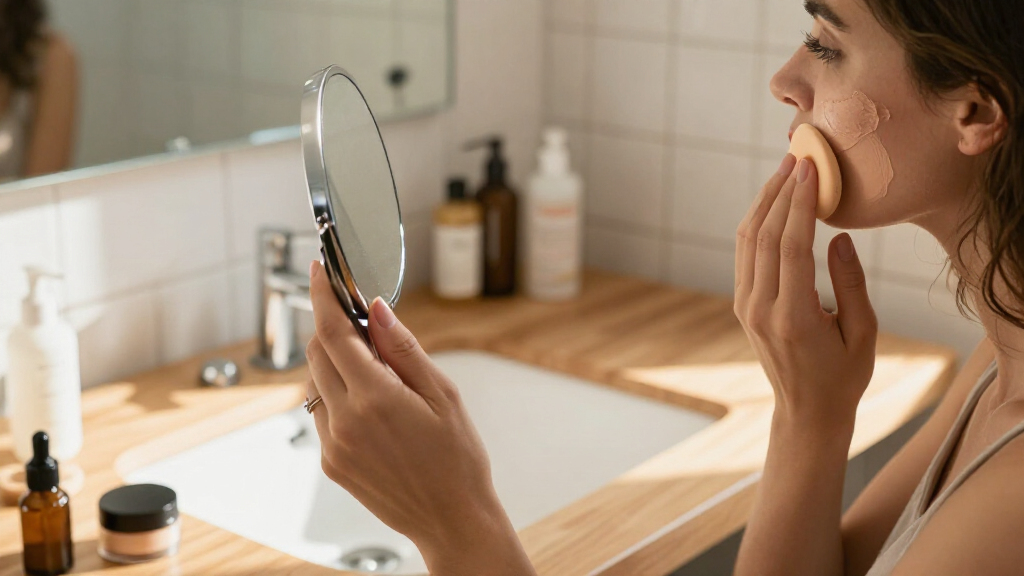
A Glamour UK guide outlines a sponge-based foundation routine drawn from advice by makeup artists Christian Briceno, Tim Quinn and Kasey Spickard. It recommends a clean, slightly damp sponge, light tapping motions and building coverage gradually; the artists describe the method as useful for a blended, natural-looking finish, not a guarantee of longer wear.
Glamour UK has published a foundation-application guide based on advice from professional makeup artists, recommending a clean, slightly damp sponge and light tapping to blend product in thin layers. The report explains a four-step routine intended to help readers control coverage and soften the look of foundation, while noting that a sponge generally creates a more natural finish than a full-coverage one.
The guide attributes its technique to celebrity makeup artists Christian Briceno, Tim Quinn and Kasey Spickard. It begins with a few drops of foundation placed on the back of the hand, which Quinn says gives the user more control over how much product is applied. The guide then recommends picking up the product with a foundation brush and dotting it onto the centre of the face, where Quinn says many people need more coverage, before working outward.
For blending, the report advises using a clean sponge that has been dampened and squeezed out. Quinn suggests removing excess water with a clean towel. With the rounded end, tap or bounce product into the skin rather than rubbing; Spickard says this motion blends foundation while retaining more coverage. The sponge’s pointed end can reach around the nose and beneath the eyes, while leftover product can be blended along the jawline and hairline.
The final step is to repeat the tapping motion only where more coverage is needed. Briceno says different areas of the face do not require the same amount of makeup. The guide suggests using concealer on spots needing fuller coverage and finishing with setting powder and setting spray. It also cautions readers to start with a clean sponge, citing hygiene and the risk of bacteria buildup.
A More Controlled Foundation Routine
The advice focuses on how much product is applied and where, rather than recommending a single foundation or promising a particular result. Working in thin layers gives users the option to add coverage gradually and leave areas with less product, which may help avoid an overly uniform application. The artists describe the sponge as a blending tool for a softer, more natural-looking finish.
The report also clarifies a practical distinction: a damp sponge is presented as the preferred option for blending, while Quinn says a dry sponge may be useful when more concentrated coverage is wanted. These are professional recommendations, not comparative test results; the source does not establish that sponge application works better for every skin type or lasts longer for every user.
Products Worth Considering

Philips Sonicare 5950 Rechargeable Electric Toothbrush with 2 Brush Heads, Navy

Oral-B iO Series 3 Rechargeable Electric Toothbrush for Adults, Black, with 2 Brush Heads and Travel Case

Oral-B iO Series 5 Rechargeable Electric Toothbrush with Travel Case and 3 Brush Heads, Black
As an affiliate, we earn on qualifying purchases.
The Technique Behind the Guide
The article distinguishes a structured makeup sponge from the thin applicators sometimes included in makeup compacts. It discusses beauty sponges and powder puffs as tools, but its step-by-step foundation method centres on a damp makeup sponge used after foundation has been dispensed onto the hand. It also recommends liquid foundation as a pairing for the method and advises against stick formulas, though it does not provide testing data to compare formulas.
Quinn characterizes a sponge as a tool that can blend and soften foundation. Briceno says it lets artists work with thin layers, soften shifts between areas of higher and lower coverage, and lift excess product without disturbing the rest of the makeup. Those descriptions explain the artists’ reasoning; they are attributed professional views, not independently verified claims about wear or results.
““They let me work with very thin layers, soften transitions between areas with more and less coverage, and gently lift excess product without disturbing the rest of the makeup.””
— Christian Briceno, celebrity makeup artist
Results Depend on the User
The source does not report controlled comparisons of sponge, brush and finger application, or quantify differences in wear time, coverage or finish. Its statements about a natural-looking result and longevity are artist guidance and opinion, not measured outcomes. The guide also does not establish that the technique is suitable for every foundation formula, skin type or individual preference.
The supplied material gives no publication date, and it does not include a response from product makers or independent testing. Readers should treat the method as a professional technique to try, rather than a guarantee that foundation will last longer or avoid cracking.
Trying the Method at Home
The next step for readers is to test the routine with their own foundation and adjust the amount of product to their preferences. Start with a clean sponge, dampen it, squeeze out excess water, and apply a small amount of foundation from the back of the hand. Tap it onto the centre of the face, blend outward and add coverage only where desired. Follow the product’s instructions when using setting products.
The guide does not announce a follow-up test or new product release. Its practical recommendation is to assess the finish as you apply: use the pointed sponge tip for smaller areas and avoid adding the same amount of foundation across the whole face.
Key Questions
Should a makeup sponge be wet or dry for foundation?
The artists quoted by Glamour UK recommend a slightly damp sponge. Wet it, squeeze out excess water and, as Quinn advises, press it in a clean towel. The guide says a dry sponge may suit more concentrated coverage but is not its preferred choice for a soft blended finish.
How do you apply foundation with a sponge?
Dispense a small amount of foundation onto the back of your hand, pick it up with a brush and dot it onto the centre of the face. Use the rounded end of a clean, damp sponge to tap or bounce the product into the skin, blending outward and adding more only where needed.
Why put foundation on the back of your hand first?
Quinn says this makes it easier to control the amount of foundation used. It also gives you a surface from which to pick up small amounts gradually, instead of applying product directly to the face.
Can a sponge give full coverage?
The guide describes sponge application as tending toward a more natural finish rather than full coverage. Its artists recommend building coverage in layers and using concealer on areas that need more coverage. Results can vary by product and technique.
Source: glamourmagazine.co.uk