During seasonal changes like spring and fall, it’s normal to shed more hair as your body adjusts to environmental shifts, light, and hormone fluctuations. Usually, shedding of 50-100 hairs daily is typical, but if you notice sudden patchy hair loss, thinning, or hair falling in clumps, it’s time to seek professional advice. Tracking your shedding pattern and caring for your scalp can help manage it, and understanding when to worry can better protect your hair health.
Key Takeaways
- Seasonal shedding is normal during spring and fall due to environmental and hormonal changes.
- Shedding of 50-100 hairs daily is typical; excessive loss beyond this warrants concern.
- Persistent thinning, bald patches, or hair falling in clumps indicate a need for professional evaluation.
- Signs like scalp redness, itching, or inflammation suggest underlying scalp or health issues.
- Track your shedding pattern and consult a dermatologist if you notice sudden increases or abnormal hair loss.
Why Does Hair Shed More During Seasonal Changes?
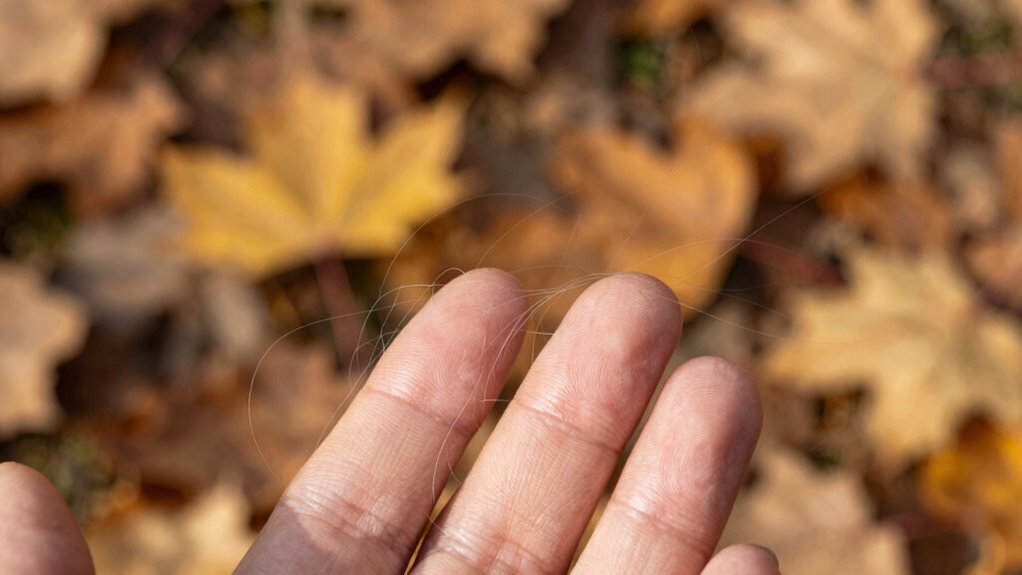
As seasons change, your hair often seems to shed more than usual. This seasonal hair loss happens because your hair cycle naturally adjusts to environmental shifts. During certain times of the year, particularly spring and fall, your body responds to changes in daylight and temperature, triggering a temporary increase in hair shedding. This is a normal part of the hair cycle, which includes growth, rest, and shedding phases. When seasonal hair loss occurs, more hairs enter the shedding phase simultaneously, making it appear as if you’re losing more hair. Additionally, light exposure patterns and environmental factors can influence how hair shedding appears, emphasizing the importance of understanding the natural cycle. Some studies suggest that seasonal variation in hair shedding is influenced by hormonal changes and melatonin levels. These hormonal fluctuations are part of the body’s internal regulation process, which adapts to seasonal cues. This process is also affected by environmental cues, which help synchronize hair growth with seasonal changes. Rest assured, this increase is usually temporary and your hair will return to its usual cycle once the season stabilizes. Understanding this process helps you stay calm during these predictable changes.
How Can I Tell If My Hair Shedding Is Normal or Excessive?
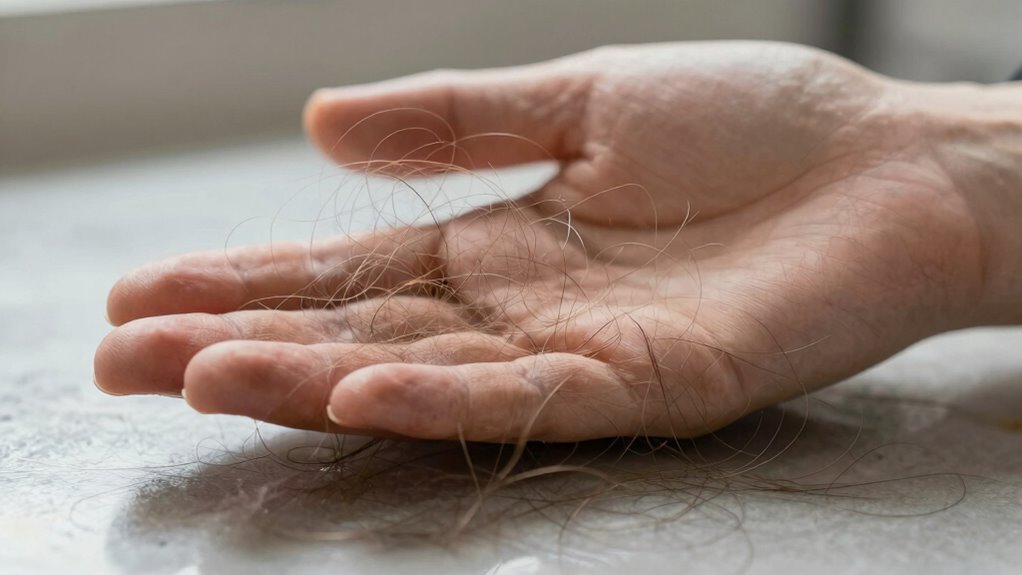
Not all hair shedding signals a problem; it’s normal for your hair to fall out daily as part of its natural cycle. Typically, losing about 50 to 100 hairs a day is considered healthy, especially if your hair density remains stable. To determine if your shedding is normal or excessive, observe how your hair looks overall. If you notice thinning or a significant decrease in hair density, it could indicate a problem. Also, consider your shedding cycles—if hair falls out consistently without regrowth or if shedding suddenly increases, it’s worth paying attention. Remember, normal shedding varies from person to person, but excessive hair loss usually causes visible changes in your scalp or hair volume. Additionally, using appropriate hair care products can help maintain healthy hair and minimize unnecessary shedding. Maintaining proper nutritional balance can also support hair health and potentially reduce shedding. Be mindful of hair breakage, which can sometimes be mistaken for shedding but results from hair damage rather than natural hair loss. Incorporating scalp health practices can further promote a healthy environment for hair growth. Furthermore, understanding the hair growth cycle can help you better recognize what is normal versus abnormal shedding.
Signs You Should See a Dermatologist About Hair Shedding?

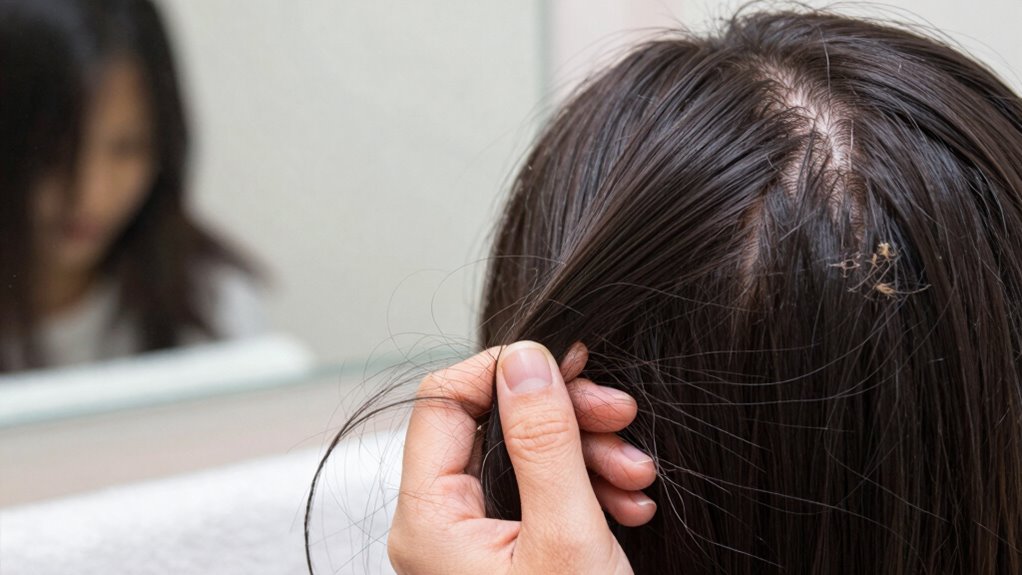
If your hair shedding suddenly increases or persists despite normal care, it’s time to see a dermatologist. Don’t fall for hair loss myths that suggest all shedding is harmless; persistent or patchy hair loss can signal underlying issues. Watch for signs like significant thinning, bald patches, or hair falling out in clumps. Changes in scalp health, such as redness, itching, or inflammation, are also red flags. A dermatologist can evaluate whether your hair loss is due to medical conditions, scalp infections, or hormonal imbalances. Recognizing these signs early guarantees proper diagnosis and treatment. If your hair shedding feels abnormal or is accompanied by scalp problems, don’t delay seeking professional advice to protect your hair health.
How to Track Your Hair Shedding Patterns?
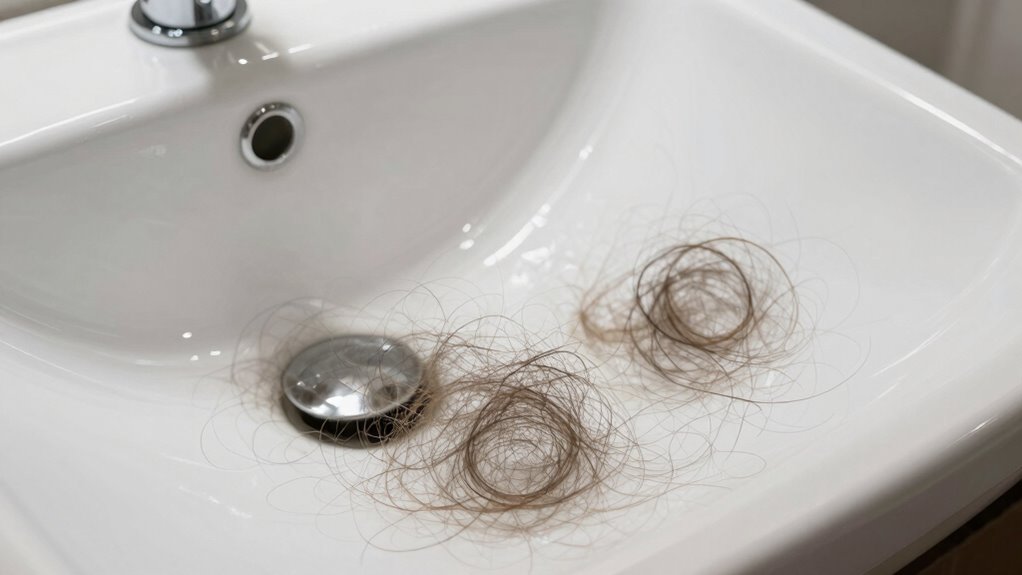
Tracking your hair shedding patterns can help you identify changes that may warrant a visit to a dermatologist. Paying attention to your shedding frequency and how it aligns with your hair’s growth cycle is essential. To do this effectively:
- Keep a daily or weekly hair count, noting the number of hairs shed during brushing or washing.
- Observe if shedding increases during specific times or seasons.
- Record the texture and thickness of your hair to detect thinning.
- Note any new bald spots or patches that develop over time.
- Be aware that excessive hair shedding can sometimes be linked to underlying health issues. Recognizing hair loss patterns helps distinguish normal shedding from potential problems.
- Regularly monitoring these signs can help you understand your personal hair health, allowing for timely interventions if needed. Additionally, understanding how your hair growth cycle varies with seasons or lifestyle changes can provide deeper insights into your shedding patterns. For example, some studies suggest that external factors like seasonal shedding may temporarily influence hair loss.
Understanding these patterns helps you recognize normal shedding versus excessive loss. Usually, shedding corresponds with the hair’s growth cycle, but abnormal changes may signal underlying issues. Consistent tracking provides valuable insights to decide when professional help is needed.
Common Causes of Seasonal Hair Shedding?
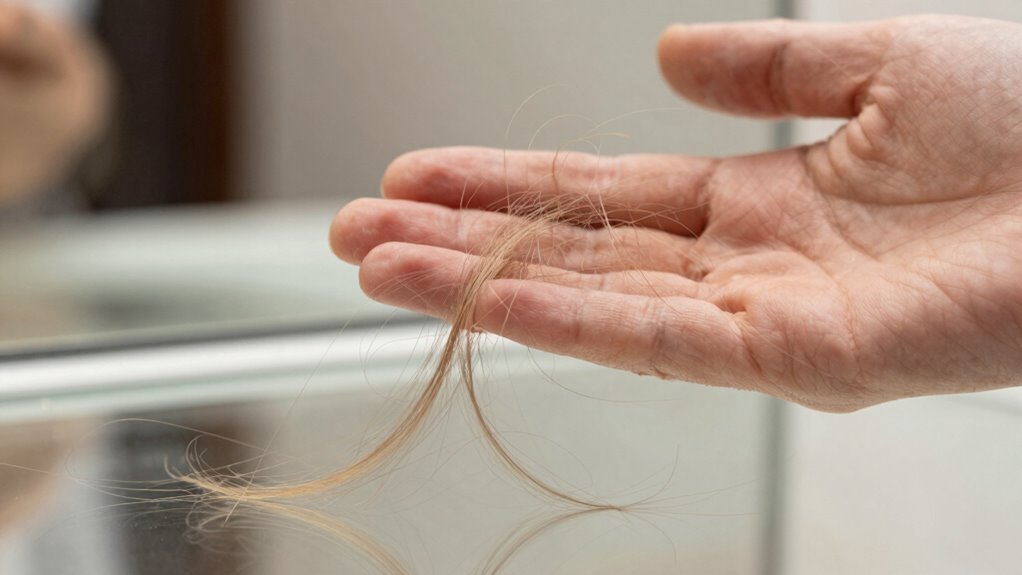
Seasonal hair shedding is a common phenomenon that typically occurs due to changes in environmental factors and your body’s natural cycles. Many people believe hair loss myths, but seasonal hair cycle shifts are a genuine cause. During certain times of the year, your hair naturally sheds more as part of its growth and rest phases. External factors like temperature changes, reduced sunlight, and humidity levels can trigger these fluctuations. Your body responds by adjusting hair growth patterns, leading to increased shedding. Understanding this helps you differentiate between normal seasonal shedding and potential issues requiring attention, so you can manage it without unnecessary worry. Monitoring your hair health and maintaining a balanced diet can also support your hair during these changes. Additionally, circadian rhythms influence overall hair growth cycles and may play a role in seasonal shedding patterns. Recognizing these natural cycles can help you adopt appropriate care strategies to support your hair’s health throughout the year. Being aware of hormonal fluctuations that coincide with seasonal changes can further clarify why shedding varies at different times of the year.
Tips to Manage Hair Shedding During Seasons?
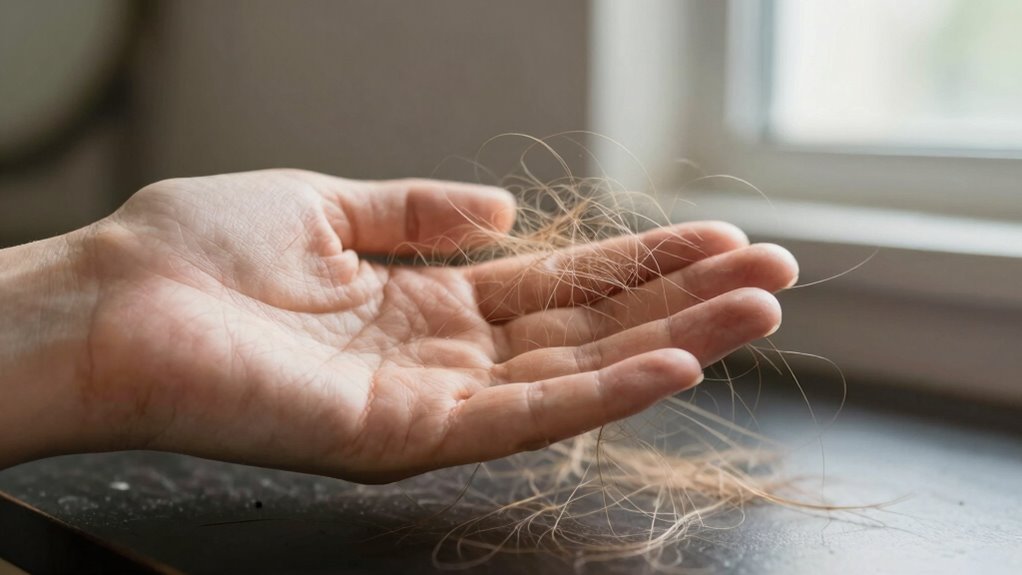
To effectively manage hair shedding during seasonal changes, adopting a gentle hair care routine is essential. First, avoid hair extension myths that suggest harsh treatments will strengthen your hair; instead, focus on nourishing your scalp. Second, incorporate scalp exfoliation into your routine to remove buildup and promote healthy follicles. Third, use mild shampoos and avoid overwashing, which can weaken strands. Fourth, protect your hair from environmental stressors like wind and cold. Glycolic acid’s exfoliating properties can help remove dead skin cells from the scalp, promoting healthier hair growth. Additionally, scalp health maintenance is crucial for reducing shedding and supporting overall hair vitality. Maintaining proper hair hydration is also important, as dryness can contribute to increased shedding. Proper hair care practices can significantly impact the reduction of shedding. By following these tips, you help reduce unnecessary shedding. Remember, seasonal shedding is natural, but caring for your scalp and hair can minimize discomfort. Staying consistent with gentle care ensures your hair remains healthy and resilient throughout the changing seasons.
Treatments and Hair Care Tips to Reduce Shedding?
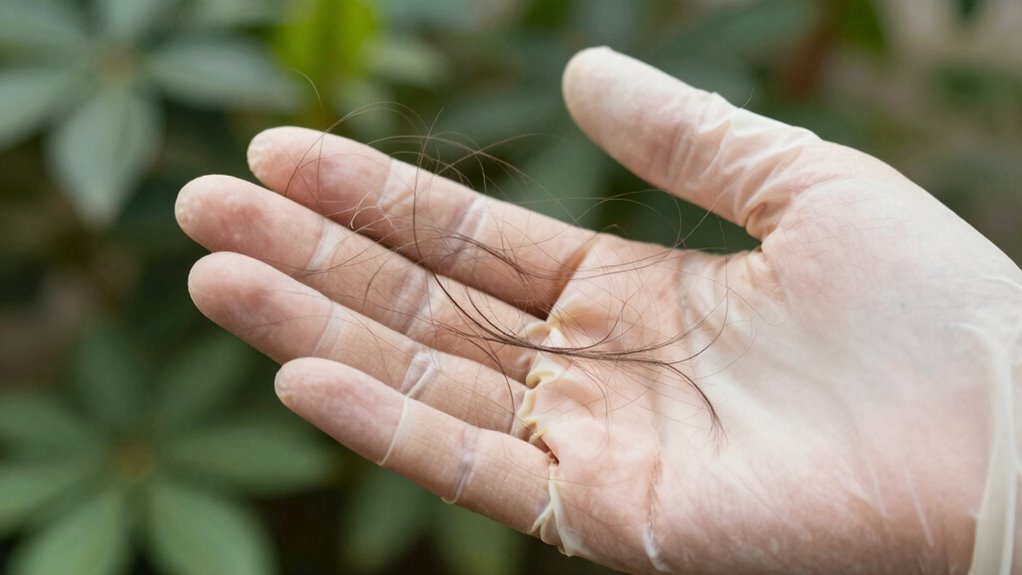
To reduce shedding, focus on handling your hair gently and avoiding harsh treatments. Incorporate a nourishing hair care routine with quality shampoos and conditioners that support hair strength. These simple steps can make a noticeable difference in minimizing hair loss during shedding season.
Gentle Hair Handling
Ever wondered how gentle hair handling can reduce shedding? Being careful with your hair minimizes stress on strands and follicles. Here are key tips:
- Use a wide-tooth comb or gentle brush to avoid pulling or breaking hair during brushing.
- Brush slowly and from the ends upward to prevent unnecessary tension.
- Incorporate regular scalp massages to stimulate blood flow and promote healthier hair growth.
- Avoid harsh towel drying; instead, gently pat your hair dry to prevent damage.
Nourishing Hair Regimen
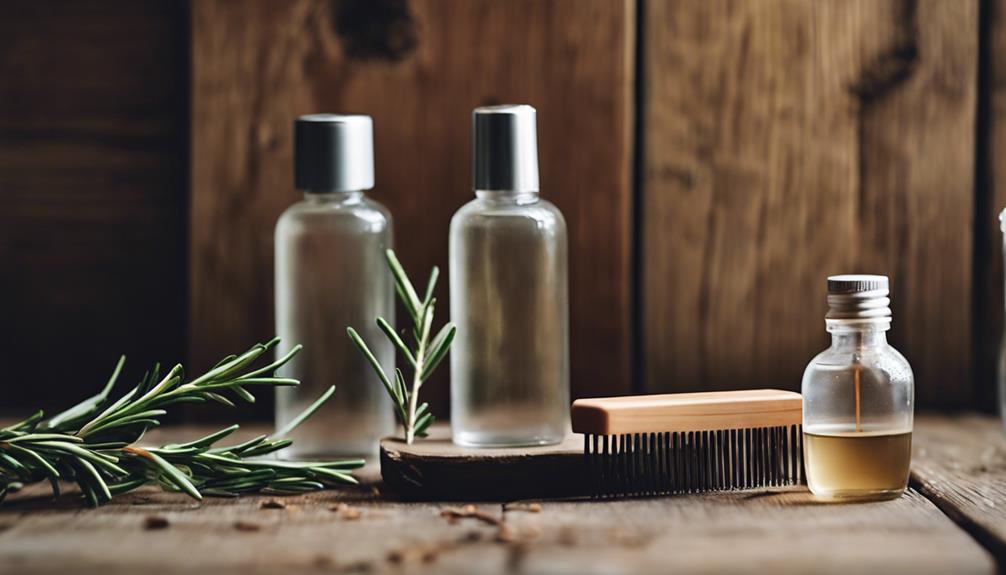
Implementing a nourishing hair regimen is essential for reducing shedding and promoting stronger, healthier hair. Focus on maintaining scalp hydration by using moisturizing shampoos and conditioners, preventing dryness that can lead to breakage. Incorporate hair vitamins rich in biotin and other nutrients to support growth from within. Regularly applying nourishing masks can strengthen strands and improve elasticity. Use gentle, sulfate-free products to avoid stripping natural oils. Consider adding scalp massages to stimulate blood flow, enhancing nutrient delivery. Here’s a quick guide:
| Treatment | Benefits | Tips |
|---|---|---|
| Scalp hydration | Prevents dryness, reduces shedding | Use hydrating serums weekly |
| Hair vitamins | Supports growth and strength | Take daily supplements |
| Hair masks | Nourishes and repairs damage | Apply once a week |
Stay consistent for noticeable results.
What Your Dermatologist Can Do If Hair Shedding Gets Worse?
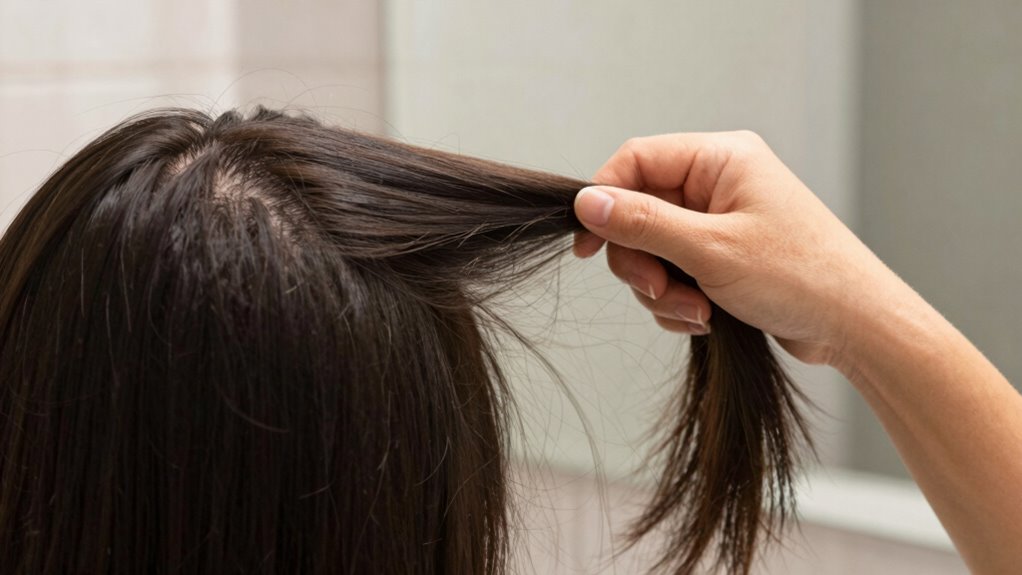
When hair shedding becomes noticeably worse, visiting a dermatologist is your best step forward. They can evaluate your scalp health and determine the cause of increased shedding. Depending on the diagnosis, your dermatologist might recommend:
- Medical treatments like minoxidil or finasteride to promote hair density.
- Blood tests to check for deficiencies or hormonal imbalances.
- Prescription medications that target underlying conditions.
- Advanced procedures such as Platelet-Rich Plasma (PRP) therapy to stimulate hair growth.
Preparing for Future Seasons of Hair Shedding?
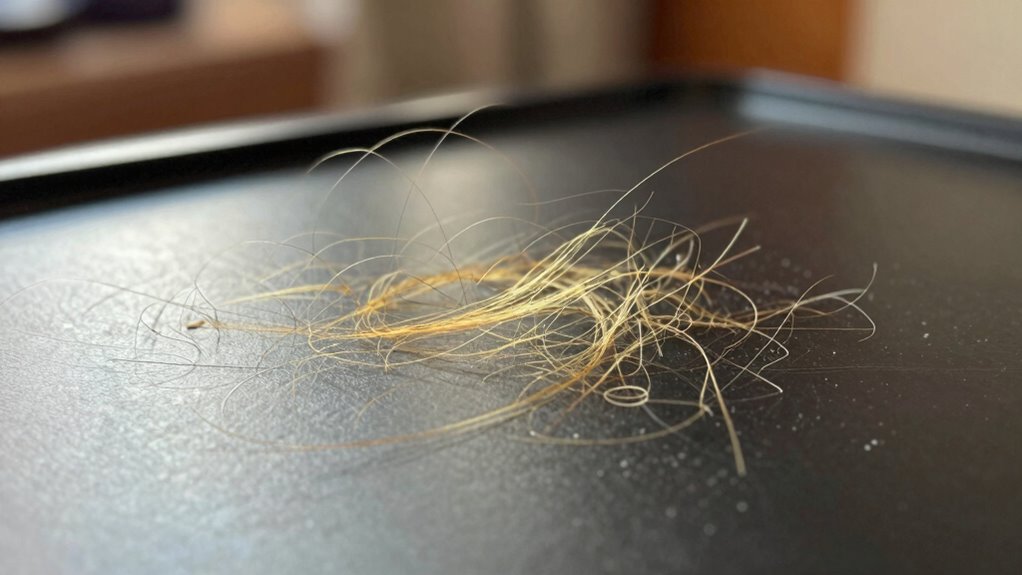
As you address current hair shedding issues with your dermatologist, it’s also wise to think ahead and prepare for future seasons when shedding may increase again. Understanding seasonal hair changes can help you anticipate these shifts and adjust your hair care routine accordingly. Keep in mind that some hair shedding myths, like the idea that shedding only happens in fall, can lead to unnecessary worry. Instead, focus on maintaining a healthy scalp and balanced diet year-round. Consider tracking your shedding patterns to identify any consistent increases or triggers. Staying proactive can help you differentiate normal seasonal changes from signs of underlying issues. By preparing in advance, you can minimize frustration and manage your hair health more effectively during future shedding seasons.
Frequently Asked Questions
Can Diet Influence Seasonal Hair Shedding?
Yes, your diet can influence seasonal hair shedding. A poor diet impacts your hair’s health by causing nutritional deficiencies, which may trigger increased shedding. When you lack essential nutrients like iron, zinc, or vitamins, your hair becomes weaker and more prone to falling out. To minimize shedding, focus on a balanced diet rich in these nutrients. Proper nutrition supports hair strength and reduces the likelihood of seasonal shedding becoming more noticeable.
Are There Specific Hair Products That Help Reduce Shedding?
Think of your scalp as a garden that needs nurturing. Use natural remedies like essential oils or gentle shampoos designed to reduce shedding, and regularly massage your scalp to boost circulation. This stimulates hair follicles, helping to minimize shedding. Look for products with biotin, keratin, or caffeine, which support hair strength. Consistent care, including scalp massages, can make a noticeable difference in reducing hair loss over time.
How Does Stress Impact Seasonal Hair Loss?
Stress impacts seasonal hair loss by triggering your body’s response to mental health strain, which can disrupt your hair’s growth cycle. When you’re stressed, your body releases hormones that weaken hair follicles, leading to increased shedding. Managing stress through relaxation techniques, regular exercise, and proper sleep helps support healthy hair. Prioritizing mental health is essential, as it directly influences your hair’s resilience during seasonal changes.
Is Hair Shedding Different for Men and Women?
Yes, hair shedding differs for men and women due to genetic predisposition and hair color variations. Men often experience more noticeable thinning and baldness, while women typically see diffuse shedding across the scalp. Your genetic makeup influences how much hair you lose, and hair color can also play a role in perceived shedding. Recognizing these differences helps you understand what’s normal and when to seek advice from a specialist.
What Role Do Hormonal Changes Play in Seasonal Shedding?
Hormonal fluctuations act like a conductor, orchestrating your hair’s health, especially during seasonal changes. They can trigger increased shedding as your body adapts, often influenced by thyroid imbalance or natural hormonal shifts. During certain times of the year, these fluctuations become more pronounced, leading to more noticeable hair shedding. If you notice persistent shedding, it’s wise to check for underlying issues like thyroid imbalance, which can disrupt your hair cycle.
Conclusion
Understanding your hair shedding patterns helps you stay ahead of the season’s impact. By recognizing normal shedding and knowing when to seek help, you can keep your hair healthier year-round. Don’t let seasonal changes catch you off guard—are you ready to take control of your hair’s future? With the right tips and professional support, you can manage shedding and maintain confidence, no matter what season it is. Your hair deserves your attention—are you listening?