
Proteins play a crucial role in your hair care by providing strength, elasticity, and shine. When hair is damaged from heat, chemicals, or environmental stressors, it loses its natural proteins, making it weak and dull. Replenishing lost proteins through treatments helps repair, protect, and improve your hair’s overall health. By understanding how proteins work, you can better care for your hair’s resilience and beauty—keep going to discover more on this essential ingredient.
Key Takeaways
- Proteins, especially keratin, strengthen hair fibers and improve elasticity, reducing breakage and damage.
- They replenish lost nutrients from chemical and heat styling, restoring hair’s natural resilience and shine.
- Protein treatments fill gaps in the hair cuticle, smoothing the surface and decreasing frizz.
- Regular protein use enhances manageability and protects against future stressors.
- Balancing proteins with moisturizers prevents buildup and maintains healthy, flexible hair.
Have you ever wondered how proteins improve your hair’s health? Proteins are essential building blocks for your hair, providing strength, elasticity, and shine. When your hair is damaged due to heat styling, chemical treatments, or environmental stressors, it loses some of its natural proteins, leading to breakage and dullness. That’s where protein treatments come into play. These specialized products help replenish lost proteins, reinforcing the hair’s structure from within. By restoring the protein balance, they make your hair more resilient to future damage and improve its overall appearance.
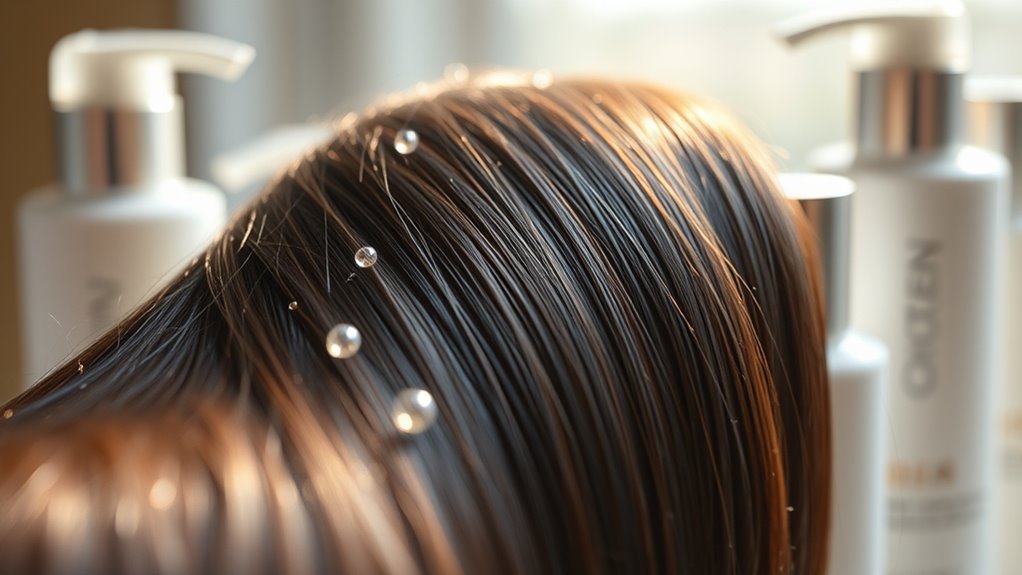
Proteins strengthen and repair damaged hair, restoring its shine and resilience from within.
One of the most common protein-based solutions is keratin repair treatments. Keratin, a fibrous protein naturally present in hair, acts like a protective shield, keeping your strands smooth and manageable. Over time, exposure to styling tools or chemical processes can break down keratin, resulting in frizz, split ends, and weakened strands. Keratin repair treatments work by infusing your hair with keratin and other proteins, filling in gaps and cracks in the cuticle. This process smooths the hair surface, reduces frizz, and enhances shine. The result is hair that feels stronger and looks healthier after just a single session.
When you choose a protein treatment, you’re giving your hair a boost of amino acids and keratin that help rebuild its inner structure. These treatments can be used as a deep conditioning step or as a more intensive salon service. Regular use of protein treatments can prevent future damage by strengthening hair fibers, making them less prone to snapping or splitting. They’re especially beneficial if you frequently use heat styling tools or have chemically treated hair, which often loses its natural protein content over time.
Keratin repair treatments are particularly popular because they deliver quick, noticeable results. They smooth out rough, damaged cuticles and create a protective layer that locks in moisture. This not only improves the appearance of your hair but also makes it easier to manage daily styling. Keep in mind that overdoing protein treatments can lead to stiffness or buildup, so it’s best to follow a professional’s advice and balance them with moisturizing products. Incorporating protective measures into your hair care routine can help maintain the integrity of your hair’s natural proteins and prevent damage. Ultimately, integrating protein treatments into your hair care routine helps maintain healthy, resilient hair that looks and feels vibrant, no matter what challenges your hair faces daily.
Frequently Asked Questions
Can Proteins Cause Allergic Reactions in Some Individuals?
Yes, proteins can cause allergic reactions in some individuals due to protein allergies. If you’re sensitive or allergic to certain proteins, you might experience symptoms like scalp irritation, itching, or redness after using protein-based hair products. Always check ingredient labels and do a patch test before trying new products. If you notice any allergic reactions, stop using the product immediately and consult a healthcare professional for guidance.
How Often Should I Apply Protein Treatments to My Hair?
You should apply protein treatments every 4 to 6 weeks, depending on your hair condition. If your hair feels weak, brittle, or shows signs of damage, increase application frequency to every 3-4 weeks. For healthy, resilient hair, once a month is usually sufficient. Always assess how your hair responds and adjust the application frequency accordingly to avoid over-proteinization, which can lead to stiffness or breakage.
Are Plant-Based Proteins as Effective as Keratin or Animal Proteins?
Plant-based proteins can be just as effective as keratin or animal proteins for hair strengthening because they contain essential amino acids that nourish and reinforce your hair strands. These plant-based nutrients penetrate deeply, helping to repair damage and boost elasticity. While keratin treatments provide immediate smoothing, incorporating plant proteins regularly can improve overall hair health naturally. So, if you’re seeking gentle, effective strengthening, plant-based proteins are a great choice.
Do Proteins Work Better for Damaged or Healthy Hair?
They say, “You can’t judge a book by its cover,” but when it comes to hair, damaged strands benefit more from proteins. Your hair’s porosity affects how well protein absorption occurs, making treatments more effective for repairs. Healthy hair, with lower porosity, may see less dramatic results. So, if your hair’s damaged, proteins can help rebuild strength, while healthy hair might just need maintenance.
Can Excessive Protein Use Lead to Hair Brittleness?
Yes, excessive protein use can lead to protein overload, making your hair brittle. When you apply too much protein, your hair’s natural moisture balance gets disrupted, causing it to become stiff and prone to breakage. To prevent brittle hair, use protein treatments in moderation and balance them with moisturizing products. Pay attention to your hair’s response, and adjust your routine to avoid overdoing it.
Conclusion
Think of proteins in your hair like bricks in a sturdy wall—you build strength and resilience with each one. When you give your hair the proteins it craves, you’re reinforcing its foundation, making it less likely to break or become damaged. So, treat your hair like a valuable structure; nourish it with proteins, and watch it stand tall and radiant. After all, healthy hair isn’t just a dream—it’s a fortress you can create with the right care.