If you want a natural, low-maintenance look, balayage is your best choice since it’s hand-painted for a subtle, sun-kissed effect and needs less frequent upkeep. If you prefer bold, high-contrast streaks and don’t mind regular salon visits, highlights can give you that dramatic brightness. Think about your desired style and how much time you’re willing to invest; understanding these options helps you pick the perfect technique, and more details are just ahead.
Key Takeaways
- Choose balayage for a natural, sun-kissed look with softer roots and less upkeep; opt for highlights for bold, high-contrast streaks.
- Balayage offers a low-maintenance style with fewer salon visits, while highlights require regular touch-ups every 6-8 weeks.
- Balayage enhances natural hair color with seamless blending; highlights create uniform, contrasting streaks for a dramatic effect.
- Consider balayage if you want a subtle, effortless look; choose highlights for more vibrant, attention-grabbing results.
- Your decision depends on desired naturalness versus boldness, maintenance commitment, and personalized placement preferences.
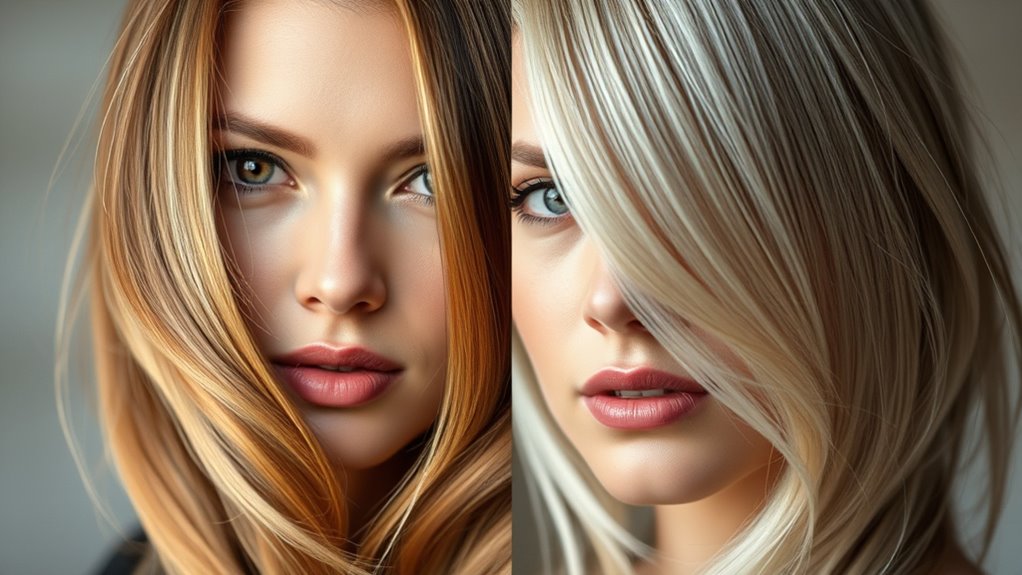
When choosing between balayage and highlights, understanding their differences can help you achieve your perfect hair color. Both techniques offer stunning results, but they differ markedly in how they blend color and how much upkeep they require. Balayage involves hand-painting color onto your hair, creating a natural, sun-kissed look with seamless color blending. Because of this, the transitions between your roots and ends are softer, making the color appear more natural and less uniform. Highlights, on the other hand, are typically applied using foils to create distinct, lighter streaks throughout your hair. They tend to produce a more uniform and contrasted effect, which can make your hair look brighter but less natural.
Balayage offers natural, sun-kissed color blending with softer transitions, while highlights create bold, contrasted streaks.
Your choice largely depends on how you want your color to blend and how much effort you’re willing to invest in maintaining it. Balayage’s soft, gradual color transition is less noticeable as your hair grows out, meaning you won’t need frequent touch-ups. This makes it ideal if you prefer a low-maintenance routine or want to extend the time between salon visits. The color blending achieved with balayage gives your hair a multi-dimensional, natural appearance, mimicking the way the sun naturally lightens your hair. Because the color is painted on in a freehand style, it’s easier to customize the placement and intensity, allowing for a more personalized look.
In contrast, highlights require a more consistent maintenance routine. Since they involve lifting and lightening specific sections of hair, your roots will start to show sooner, necessitating touch-ups approximately every 6-8 weeks to keep the brightness intact. This routine can be more time-consuming and costly, but it’s perfect if you want a more dramatic or uniform change. Highlights can also be strategically placed to add contrast, dimension, or brightness where you desire it most.
Ultimately, your decision should be based on your lifestyle and your desired aesthetic. If you want a natural, effortless look with minimal upkeep, balayage is your best bet. If you’re after a bold, high-contrast style and don’t mind regular salon visits, highlights might suit you better. Consider how much time and money you’re willing to dedicate to hair maintenance and how dramatic your desired transformation is. Both techniques can enhance your appearance beautifully, but understanding their core differences—especially in color blending and maintenance routine—will help you make the right choice for your hair goals. Additionally, protective styling like crochet styles can help maintain your color treatment longer by reducing damage during daily styling routines.
Frequently Asked Questions
How Long Does Each Technique Typically Last Before Needing a Touch-Up?
Balayage typically lasts around 8 to 12 weeks before you need a root touch-up, thanks to its natural fade. Highlights usually require more frequent visits, about every 6 to 8 weeks, because color fading is more noticeable. You’ll want to schedule touch-ups to maintain your look and keep roots blended seamlessly. With proper care, both techniques can look great longer, but balayage generally offers a more low-maintenance option.
Can Balayage or Highlights Damage My Hair More?
You might think one technique is gentler, but both balayage and highlights can cause hair damage if not done carefully. Highlights involve more chemical impact due to full or partial bleaching, increasing the risk of damage. Balayage is often gentler because it’s hand-painted and requires less processing. However, regardless of the method, using quality products and professional application helps minimize hair damage and preserve your hair’s health.
Which Technique Requires Less Maintenance Overall?
Balayage generally requires less maintenance overall because it has a longer touch-up longevity, usually around 3-4 months. You’ll enjoy fewer visits to the salon, as the color grows out more naturally. Highlights, on the other hand, need more frequent touch-ups, often every 6-8 weeks, due to noticeable root regrowth. If low maintenance appeals to you, balayage might be the better choice.
Are There Specific Hair Textures Best Suited for Balayage or Highlights?
Did you know that 60% of women with high hair porosity find balayage easier to maintain? Your hair texture, like curl pattern and porosity, influences which technique works best. If you have tight curls, highlights might be more suitable, as they sit closer to the scalp and blend naturally. For straight or wavy hair, balayage offers a softer, sun-kissed look with less upkeep, making it ideal for various hair textures.
How Do I Choose the Right Color for My Skin Tone?
To choose the right color for your skin tone, consider your skin undertones and aim for color harmony. If you have warm undertones, opt for warm shades like caramel or golden blonde. For cool undertones, go for ash or platinum tones. Neutral undertones can usually pull off both. Always test a small section first to see how the color complements your skin before committing to a full color change.
Conclusion
Think of choosing between balayage and highlights as selecting a path through a garden. Balayage is like wandering along a winding trail, embracing subtle, natural changes that grow beautifully over time. Highlights are like stepping stones, adding bright spots and contrast with precision. Whichever path you take, remember it’s your journey. Trust your instincts, and let your hair be the canvas for your unique story—because the right choice will always lead you to your most radiant self.