Understanding your hair’s porosity helps you choose the right products and keep your hair healthy. To test it, take a few clean, dry strands and drop them into a glass of water. If they sink quickly, your hair has high porosity; if they float or stay afloat, it’s low porosity. Medium porosity strands sink slowly or hover in the middle. Keep testing to see how your hair responds over time and improve your hair care routine.
Key Takeaways
- Hair porosity indicates how well your hair absorbs and retains moisture, influenced by the condition of the cuticle.
- There are three main types: low, medium, and high porosity, each affecting how hair interacts with products.
- To test porosity, place clean, dry strands in water; sinking quickly indicates high porosity, floating suggests low porosity.
- Knowing your hair porosity helps tailor products and treatments for better moisture retention and overall hair health.
- Factors like chemical treatments and environment can change porosity, so regular testing is recommended for optimal hair care.
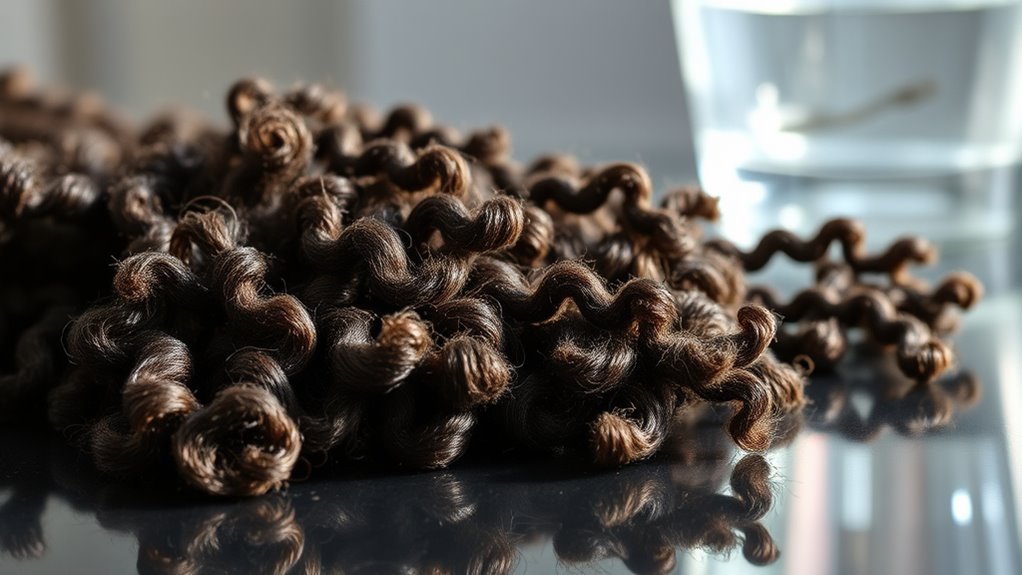
Have you ever wondered why some hair easily drinks in moisture while others seem to repel it? The answer lies in your hair’s porosity, a key factor that influences how your hair absorbs and retains moisture. Understanding the different porosity types can help you tailor your hair care routine, ensuring your hair stays healthy, hydrated, and vibrant. Porosity refers to the hair’s ability to absorb and hold moisture, which is directly affected by the condition of your hair cuticle. When your cuticle is tightly closed, your hair has low porosity, making it harder for moisture to penetrate. Conversely, if the cuticle is overly open or damaged, your hair has high porosity, leading to excessive moisture absorption and potential dryness or frizz. Medium porosity sits somewhere in between, with a balanced cuticle that allows for good moisture retention without losing hydration too quickly.
Knowing your porosity type is essential because it determines how your hair interacts with different products and treatments. For example, low porosity hair often repels water and product buildup, so it requires lightweight, water-based products that can penetrate the tightly packed cuticles. High porosity hair, on the other hand, absorbs moisture rapidly but tends to lose it just as quickly, meaning you need products that help seal the cuticle, like oils and creams, to lock in hydration and prevent excessive dryness. Medium porosity hair usually absorbs and retains moisture well, making it the easiest to manage and style with a variety of products. Additionally, understanding hair porosity can help you better predict how your hair will respond to environmental changes and chemical treatments, enabling you to adapt your routine proactively.
To figure out your porosity type, you can perform a simple hair absorption test: take a few strands of clean, dry hair and drop them into a glass of water. If the strands sink quickly, your hair likely has high porosity. If they float at the top or take a long time to sink, your hair might have low porosity. When the strands slowly sink or hover in the middle, you probably have medium porosity. This test gives you a quick, visual way to understand how your hair interacts with moisture, helping you adjust your routine accordingly. Remember, your porosity can also change over time due to chemical treatments, heat styling, or environmental factors, so it’s good to reassess periodically.
Understanding hair porosity types and how they influence hair absorption empowers you to choose the right products and techniques. Whether you need lightweight leave-ins, sealing oils, or deep conditioners, knowing your porosity helps you make informed decisions. By tailoring your approach, you’ll keep your hair healthier, more manageable, and better hydrated, no matter your porosity type. Recognizing your hair’s unique needs is the first step toward achieving the luscious, moisture-rich hair you want.
Frequently Asked Questions
Can Hair Porosity Change Over Time?
Yes, hair porosity can change over time because your hair structure is influenced by factors like chemical treatments, heat styling, and environmental exposure. These changes affect how well your hair retains moisture, making it more or less porous. By caring for your hair and avoiding damage, you can maintain or improve your hair’s moisture retention and overall porosity, ensuring healthier, more resilient hair over time.
How Does Hair Porosity Affect Coloring Treatments?
Your hair porosity considerably impacts coloring results because high porosity hair absorbs color quickly, leading to vibrant, long-lasting results, but it may also fade faster. Low porosity hair resists color, making it harder for dyes to penetrate, which can result in uneven or dull tones. Knowing your porosity helps you choose the right coloring products and techniques, ensuring better control over the coloring process and achieving your desired look.
Is Porosity Testing Necessary for All Hair Types?
You don’t always need to test your hair porosity, but understanding it can be helpful for all hair types. Hair porosity affects how your hair absorbs and retains moisture, which influences your styling and treatment choices. Testing necessity depends on your hair’s condition and your goals. If your hair feels dry, brittle, or takes a long time to dry, porosity testing can provide valuable insights to customize your hair care routine effectively.
Can Hair Porosity Be Permanently Altered?
They say “a leopard can’t change its spots,” but hair porosity can be temporarily altered, though not permanently. Your hair porosity may change with treatments like conditioning, chemical processing, or damage, but these are reversible. To truly alter your hair porosity permanently, you’d need extensive chemical procedures that can weaken hair structure. So, while you can influence it temporarily, permanent alteration isn’t typically achievable without significant damage.
What Are Common Mistakes When Testing Hair Porosity?
You might make mistakes with porosity accuracy if you rush testing methods or don’t prepare your hair properly. Avoid using dirty or product-heavy hair, as it can skew results. Be sure to perform the porosity test on clean, dry hair and follow the recommended steps carefully. Incorrect timing or misinterpreting the test results can lead to inaccurate conclusions about your hair’s porosity, affecting your hair care routine.
Conclusion
Knowing your hair’s porosity is like revealing the secret to flawless, healthy hair—it’s truly a game-changer. When you understand how your hair absorbs and retains moisture, you’ll never struggle with dull, lifeless strands again. Testing your porosity might just be the most important hair tip you’ll ever discover, and once you do, you’ll feel like you’ve cracked the code to perfect hair. Don’t wait—embrace this knowledge and transform your hair journey today!