
To prevent and treat hyperpigmentation, you should regularly use broad-spectrum sunscreen with at least SPF 30, reapplying every two hours and wearing protective clothing. Incorporate brightening ingredients like vitamin C and niacinamide into your routine, and exfoliate gently once a week to boost cell turnover. Avoid harsh products that can irritate your skin. Consistency is key—staying vigilant with your skincare and sun protection will help you see results over time. Continue to explore ways to keep your skin clear and even-toned.
Key Takeaways
- Consistently apply broad-spectrum SPF 30+ sunscreen and reapply every two hours when outdoors.
- Incorporate skin-brightening ingredients like vitamin C and niacinamide into your routine regularly.
- Use gentle cleansers, moisturizers, and weekly mild exfoliation to promote cell turnover and reduce dark spots.
- Practice UV protection by staying in shade and wearing protective clothing, hats, and sunglasses.
- Consult a dermatologist for persistent hyperpigmentation and consider professional treatments such as chemical peels or laser therapy.
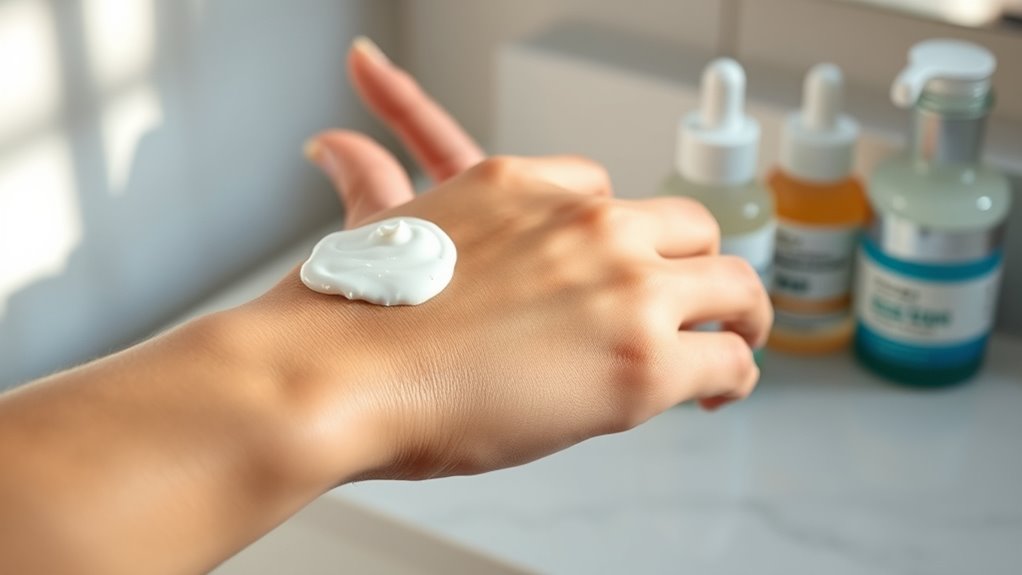
Hyperpigmentation occurs when your skin produces excess melanin, leading to dark patches or spots that can affect your appearance and confidence. To prevent these spots from forming or worsening, sun protection is essential. UV rays stimulate melanin production, so wearing broad-spectrum sunscreen daily is your first line of defense. Opt for a sunscreen with at least SPF 30, and reapply every two hours if you’re outdoors. Wearing protective clothing, hats, and sunglasses also helps shield your skin from harmful rays. Staying in the shade during peak sunlight hours, typically between 10 a.m. and 4 p.m., minimizes your exposure and the risk of developing new hyperpigmentation.
Protect your skin from UV rays with daily broad-spectrum SPF 30+ and protective clothing to prevent hyperpigmentation.
In addition to sun protection, incorporating skin brightening practices can help maintain an even complexion. Skin brightening products often contain ingredients like vitamin C, niacinamide, or licorice extract, which work to reduce melanin production and fade existing dark spots. Regular use of these ingredients can improve your skin’s overall tone and create a more radiant appearance. However, it’s essential to be consistent with your skincare routine, as results take time and patience. You should also be cautious of harsh products that may irritate your skin, making hyperpigmentation worse. Gentle, brightening formulas are more effective and safer for long-term use.
Beyond topical treatments, adopting a healthy skincare routine supports prevention and skin brightening. Use a gentle cleanser to remove dirt and excess oil without stripping your skin’s natural moisture. Follow up with a moisturizer suited to your skin type to keep your skin barrier healthy and resilient. Exfoliating weekly with a mild chemical exfoliant, like AHAs or BHAs, helps remove dead skin cells and promotes cell turnover, which can diminish dark spots over time. Remember, exfoliation also enhances the effectiveness of your brightening products, allowing them to penetrate better. Incorporating attention training techniques can further improve your focus and consistency in skincare routines, making your efforts more effective.
If hyperpigmentation persists or worsens despite these measures, consulting a dermatologist is advisable. They can recommend specialized treatments like chemical peels, laser therapy, or prescription creams tailored to your skin’s needs. These options can target stubborn dark spots more aggressively but should be used under professional supervision. Ultimately, preventing and treating hyperpigmentation involves a combination of sun protection, skin brightening strategies, and consistent skincare. Staying vigilant about UV exposure and nourishing your skin can greatly improve your complexion and boost your confidence.

Neutrogena Clear Face Sunscreen Lotion SPF 30, 3 fl. oz
- Lightweight for Acne-Prone Skin: Breathable, non-clogging sun protection
- Broad Spectrum SPF 30: Protects against UVA and UVB rays
- Non-Comedogenic & Matte Finish: Oil-free, fragrance-free, suitable under makeup
As an affiliate, we earn on qualifying purchases.
As an affiliate, we earn on qualifying purchases.
Frequently Asked Questions
Can Hyperpigmentation Be Completely Cured?
Hyperpigmentation can’t be completely cured because genetic factors influence your skin’s tendency to produce excess melanin, which causes dark spots. However, you can improve its appearance through treatments that promote skin regeneration, like topical creams, chemical peels, and laser therapy. While these methods can markedly reduce hyperpigmentation, some spots may persist or recur, so ongoing care is essential to maintain your skin’s even tone.
Are Natural Remedies More Effective Than Medical Treatments?
Natural remedies like herbal remedies can be helpful for skin lightening, but they often aren’t as effective or fast as medical treatments. You might see some improvement with herbal remedies, but for significant or stubborn hyperpigmentation, medical options like creams or laser treatments usually deliver better results. Always consider consulting a dermatologist to determine the safest and most effective approach tailored to your skin type.
How Long Does It Take to See Results From Treatments?
Oh, patience is a virtue, especially with hyperpigmentation treatments! You’ll typically see visible improvements in 4 to 8 weeks, but some stubborn spots might take up to 12 weeks or more. Treatment timelines vary based on your skin type and chosen method. So, don’t get discouraged if progress feels slow—you’re on the path to clearer skin, just sometimes in slo-mo. Keep at it!
Is Hyperpigmentation Hereditary or Influenced by Genetics?
Hyperpigmentation can be influenced by genetic factors and skin inheritance, meaning you’ll be more prone to it if your family has a history. While genetics play a significant role, environmental factors like sun exposure and skin trauma also contribute. You can’t change your genetics, but you can reduce hyperpigmentation by protecting your skin from UV rays and avoiding skin irritation. Regular skincare can help manage and prevent further darkening.
Can Makeup or Concealer Hide Hyperpigmentation Effectively?
Think of makeup as a magic wand that can hide hyperpigmentation like a veil falling over imperfections. With the right techniques, you can seamlessly blend concealer over darker spots, making them vanish into the background. Apply concealer in thin layers, patting gently for full coverage, then set with powder to keep it in place. Proper concealer application transforms your skin, giving you an even, radiant look that feels like second skin.
Conclusion
By taking gentle steps to protect your skin and embracing consistent care, you can help soften the appearance of uneven tones. Remember, patience and kindness to yourself are key in this journey. With time and a bit of dedication, you’ll nurture a radiant, more even complexion. Celebrate your progress, no matter how small, and trust that your skin’s natural beauty will shine through with gentle love and care.